

Are LED Bulkhead lights really energy efficient? This is one of the most common questions asked by contractors, wholesalers, and project managers today. As energy costs rise and sustainability becomes a priority, lighting is no longer just about illumination-it's about efficiency and long-term savings.
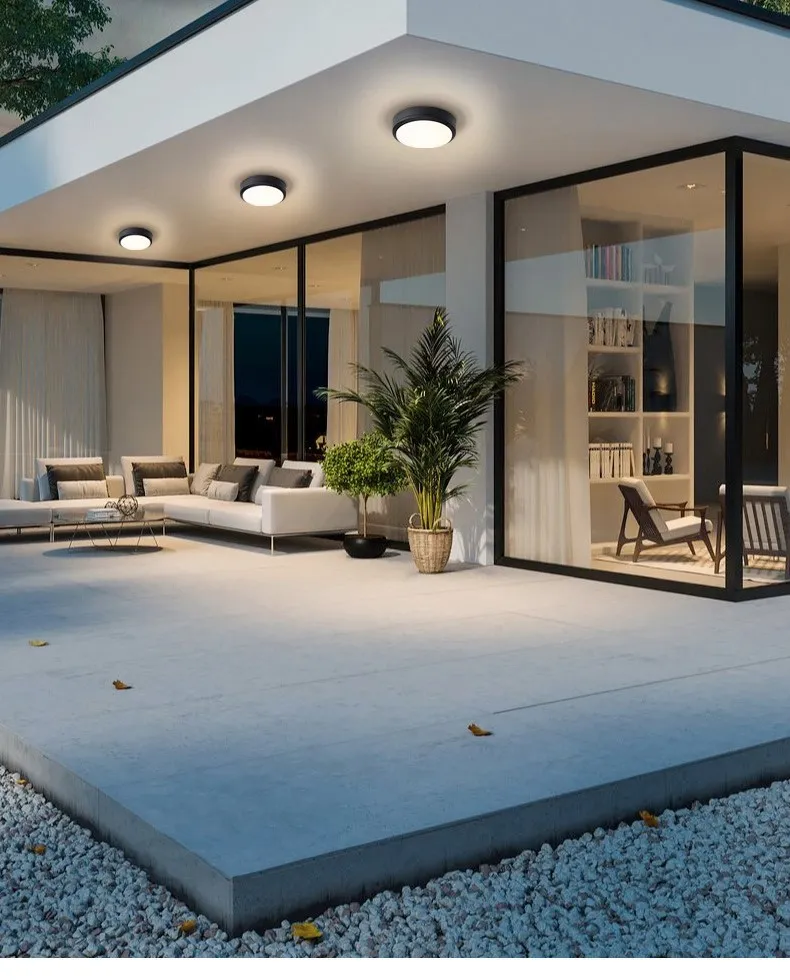
LED technology offers a clear advantage. With luminous efficacy typically ranging from 100 to 150 lumens per watt, LEDs outperform traditional incandescent (10–15 lm/W) and fluorescent lighting (60–90 lm/W). Replacing conventional fixtures with a LED Bulkhead Light Fixture can reduce electricity consumption by 50% to 80%, making it a smart upgrade for commercial and industrial facilities.
For example, switching to a Bulkhead LED Light in corridors or stairwells can cut annual lighting costs by up to 60%. In large buildings, this translates into significant operational savings. Payback periods are often within 1–2 years, depending on usage hours and electricity rates.
Durability is another key factor. LED bulkhead lights typically last over 50,000 hours, compared to 10,000–15,000 hours for traditional lighting. This makes them ideal for high-usage areas like LED Corridor Light and LED Staircase Light, where maintenance access can be challenging and costly.
Environmental resistance also plays a crucial role. High-quality fixtures with IP65 or IP66 ratings ensure reliable performance in damp or dusty conditions. Products like IP65 Waterproof LED Ceiling Lights are widely used in parking garages, outdoor walkways, and building exteriors, helping maintain consistent efficiency without degradation caused by moisture or debris.
Design innovation further enhances performance. Modern LED Surface Mount Light solutions are engineered for better light distribution and minimal loss. For instance, Round Shape Surface LED Ceiling Lights provide uniform illumination with wide beam angles, making them suitable for low-ceiling environments and improving overall lighting efficiency.
Customization is becoming increasingly important in the market. Many buyers now opt for OEM LED Bulkhead Lighting to meet specific project requirements, including wattage, housing materials, and sensor integration. Motion sensors and smart controls can further reduce energy use by 20%–30%, especially in low-traffic areas.
It's important to note that true energy efficiency goes beyond wattage. Proper lighting design-such as spacing, lumen output, and color temperature-directly impacts performance. In applications like LED Entrance Light, over-lighting can waste energy, while optimized design ensures safety without excess consumption.
According to industry data, the global LED lighting market is projected to exceed $150 billion by 2027, with bulkhead lighting playing a growing role in commercial and public infrastructure. This growth reflects increasing demand for solutions that combine efficiency, reliability, and low maintenance.
When selecting LED bulkhead lights, key specifications to evaluate include luminous efficacy, power factor (preferably above 0.9), IP rating (IP65 or higher), color rendering index (CRI >80), and driver quality. These factors collectively determine whether a product delivers real energy savings in practice.
For businesses and project developers, choosing the right LED bulkhead solution is not just about reducing electricity bills-it's about improving long-term operational efficiency and sustainability.





