

Company Profile
Luxsky Lighting Co., Ltd is a high-tech enterprise of mainly focusing on LED lighting products' R&D, production and sales, whose factory locates in the industrial center zone for international LED lighting design and development, lighting trades in Shenzhen. Fast high-tech development, facilitated traffic and beautiful landscape.
With its rapid development in these years, luxsky lighting has imported and adopted new advanced equipments, expended the Plant; big and clean offices,professional research and sales environments, attract many young people to join us to make Luxsky more powerful and fresh, as well as, Luxsky will be a helpful place for these young people to realize their dreams.
Why choose us?
High quality
Our products are manufactured or executed to very high standards, using the finest materials and manufacturing processes.
Customized services
Our team of experts will work closely with you to understand your needs and will provide solutions that are tailored to meet your expectations.
24H Online Service
We try and respond to all concerns within 24 hours and our teams are always at your disposal in case of any emergencies.
Quality control
We have professional personnel to monitor the production process, inspect the products and ensure that the final product meets the required quality level standards, guidelines and specifications.
-
![2400mmx1200mmx20mm Lighting+Decorative+Lighting Multi-function LED Panel Lights]() 2400mmx1200mmx20mm Lighting+Decorative+Lighting Multi-fun...LS-01-PL240120-MP Series are new design panels with muti-functions: lighting+decorative+lighting,Power:48W+70W+48W; Big Size Square Panel 2400x1200mm with different color and functions.high...view more
2400mmx1200mmx20mm Lighting+Decorative+Lighting Multi-fun...LS-01-PL240120-MP Series are new design panels with muti-functions: lighting+decorative+lighting,Power:48W+70W+48W; Big Size Square Panel 2400x1200mm with different color and functions.high...view more -
![800mm Big Round LED Pendant Panel Light]() 800mm Big Round LED Pendant Panel LightLED panel lamp has a unique design, and the light passing through the light guide plate with high light transmittance forms a uniform planar luminous effect, with good uniformity of illumination,...view more
800mm Big Round LED Pendant Panel LightLED panel lamp has a unique design, and the light passing through the light guide plate with high light transmittance forms a uniform planar luminous effect, with good uniformity of illumination,...view more -
![Big Round LED Pendant Panel Light]() Big Round LED Pendant Panel LightLED Round Panel lights with big sizes are our company's new products, which is different from the wholesales small sizes. and it is a series products with high quality and lighting design, soft...view more
Big Round LED Pendant Panel LightLED Round Panel lights with big sizes are our company's new products, which is different from the wholesales small sizes. and it is a series products with high quality and lighting design, soft...view more -
![LED Skyblue Decorative Panel Lights With Many Beautiful Sky Pictures 40W 2'x2' UL TUV SAA Certificates]() LED Skyblue Decorative Panel Lights With Many Beautiful S...LED Scene Panel Lights are our company new design lighting products, which plus an extra functional based on our UL, TUV CE panels. It is not only for lighting, but also for decoration. They are...view more
LED Skyblue Decorative Panel Lights With Many Beautiful S...LED Scene Panel Lights are our company new design lighting products, which plus an extra functional based on our UL, TUV CE panels. It is not only for lighting, but also for decoration. They are...view more -
![IP20 600x600 2'x2' 40W UL LED Panel Light UGR<19 With Emergency Backup]() IP20 600x600 2'x2' 40W UL LED Panel Light UGR<19 With Eme...IP20 UL LED Panels with UGR<19 is a functional panel based on the normal UL panels and create its special application for our clients who have a higher requirement for UGR. such as reading...view more
IP20 600x600 2'x2' 40W UL LED Panel Light UGR<19 With Eme...IP20 UL LED Panels with UGR<19 is a functional panel based on the normal UL panels and create its special application for our clients who have a higher requirement for UGR. such as reading...view more -
![IP65 600x600 2'x2' 40W UL LED Panel Light UGR<19]() IP65 600x600 2'x2' 40W UL LED Panel Light UGR<19IP65 UL LED Panels with UGR<19 is a functional panel based on the normal UL panels and create its special application for our clients who have a higher requirement for waterproof rate. such as the...view more
IP65 600x600 2'x2' 40W UL LED Panel Light UGR<19IP65 UL LED Panels with UGR<19 is a functional panel based on the normal UL panels and create its special application for our clients who have a higher requirement for waterproof rate. such as the...view more -
![Emergency Lighting LED Panels]() Emergency Lighting LED PanelsEmergency Lighting LED Panels are a functional kit for helping the lamps to make shorter lighting time when meet special situations after whole power is off and offer people's convenience for...view more
Emergency Lighting LED PanelsEmergency Lighting LED Panels are a functional kit for helping the lamps to make shorter lighting time when meet special situations after whole power is off and offer people's convenience for...view more -
![LED CCT 2800-6500K Temperature Change And Dimming Panel Light With 40W, 48W,60W By CC Lighting Solution]() LED CCT 2800-6500K Temperature Change And Dimming Panel L...※Features: LED high lumens output, 4 sides view-side light; CCT color adjustive smoothly, no flickering, no humming ; Color temperature 2800K-6500K to change and dimming; AC100-240V, constant...view more
LED CCT 2800-6500K Temperature Change And Dimming Panel L...※Features: LED high lumens output, 4 sides view-side light; CCT color adjustive smoothly, no flickering, no humming ; Color temperature 2800K-6500K to change and dimming; AC100-240V, constant...view more -
![LED Color Dimming CCT Panel Light With 40W By CV 24V Lighting Solution]() LED Color Dimming CCT Panel Light With 40W By CV 24V Ligh...※Features: LED high lumens output, 4 sides view-side light; CCT color adjustive smoothly, no flickering, no humming ; Color temperature 2800K-6500K to change and dimming; AC100-240V, constant...view more
LED Color Dimming CCT Panel Light With 40W By CV 24V Ligh...※Features: LED high lumens output, 4 sides view-side light; CCT color adjustive smoothly, no flickering, no humming ; Color temperature 2800K-6500K to change and dimming; AC100-240V, constant...view more -
![White Aluminum Profile LED Microwave Motion Sensor Panels 18W/6W/40W/48W Light With TUV CE& RoHs]() White Aluminum Profile LED Microwave Motion Sensor Panels...LED Microwave Motion Sensor panelwith 18W, 36W,40W,40W ※Features: Microwave Motion Sensor Dim LED Panel is a new product series of Luxsky Lighting, which not only keeps the traditional panels'...view more
White Aluminum Profile LED Microwave Motion Sensor Panels...LED Microwave Motion Sensor panelwith 18W, 36W,40W,40W ※Features: Microwave Motion Sensor Dim LED Panel is a new product series of Luxsky Lighting, which not only keeps the traditional panels'...view more -
![LED Panel Light With Daylight Sensor Function By White Profile 18W/36W/40W/48W/60W TUV CE]() LED Panel Light With Daylight Sensor Function By White Pr...LED daylight senor LED Panels is to take full advantage of daylight integration,buildings should have automated controls that either turn off or dim artificial light in response to the available...view more
LED Panel Light With Daylight Sensor Function By White Pr...LED daylight senor LED Panels is to take full advantage of daylight integration,buildings should have automated controls that either turn off or dim artificial light in response to the available...view more -
![IP67 Waterproof LED Panel Light]() IP67 Waterproof LED Panel LightWaterproof LED Panels are designed for special places where need higher IP rate for protection of wet air or whether, splashing, raining, etc. Features: 1. 2835 SMD high brightness with...view more
IP67 Waterproof LED Panel LightWaterproof LED Panels are designed for special places where need higher IP rate for protection of wet air or whether, splashing, raining, etc. Features: 1. 2835 SMD high brightness with...view more


What is LED Panel Light?
LED panel light is a flat panel light fixture that is designed to be recessed into a ceiling or suspended from a surface. It is composed of a thin, rectangular board that contains a matrix of small light-emitting diodes (LEDs). LED panel lights are energy-efficient and provide uniform and bright light, making them a popular choice for commercial, industrial, and residential spaces. They come in various sizes, shapes, and colors, and they can be customized to meet specific lighting requirements. LED panel lights offer many benefits, including long lifespan, low maintenance, reduced carbon emissions, and improved aesthetics. They are also dimmable, which allows users to adjust the brightness according to their needs. Overall, LED panel lights are an excellent lighting solution that provides high-quality light while reducing energy consumption and maintenance costs.
Benefits of LED Panel Light
Energy efficiency
LED panel lights are highly energy efficient and consume up to 50% less energy than traditional lighting. This means they can significantly reduce your energy bills.
Long lifespan
LED technology has a much longer lifespan than traditional lighting, which means you will need to replace them less often. LEDs can last up to 50,000 hours or more, compared to the 10,000 hours or less of fluorescent bulbs.
Better lighting quality
LED panel lights offer better lighting quality, with no flickering or humming. They also produce a brighter and more natural light than traditional lighting. This can have a positive impact on your mood and productivity.
Environmentally friendly
LED lighting is more environmentally friendly than traditional lighting. They contain no hazardous materials like mercury and are 100% recyclable, reducing their impact on the environment.
Versatile
LED panel lights can be used in a variety of applications and settings, including homes, offices, schools, hospitals, and retail spaces.
Cost-effective
Although LED panel lights can be initially more expensive than traditional lighting options, their long lifespan and energy efficiency make them cost-effective in the long run.
Types of LED Panel Light
Round LED panel light
Round LED panel lights are a popular choice due to their minimalist design and easy installation. These lights are perfect for spaces with low ceilings as they provide uniform lighting without being too obtrusive.
Square LED panel light
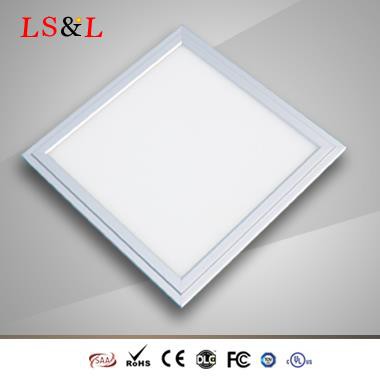
Square LED panel lights are another popular type of LED panel light that is commonly used in homes and offices. These lights offer a contemporary look and can be easily installed in suspended ceiling systems.
Triangular LED panel light
Triangular LED panel lights are a unique type of LED panel light that offers an innovative design that is perfect for modern interior spaces. These lights can be used as a standalone unit or combined with other triangular lights to create a unique lighting arrangement.
Rectangular LED panel light
Rectangular LED panel lights are another popular type of LED panel light that is designed to provide uniform lighting in larger spaces. These lights can be easily installed in a grid pattern to create a clean and sophisticated look.
Dimmable LED panel light
Dimmable LED panel lights are designed to provide adjustable lighting that can be easily controlled with a dimmer switch. These lights are perfect for creating a relaxing atmosphere in homes, hospitals, and other establishments.
RGB LED panel light
RGB LED panel lights are designed to provide a wide range of colors that can be easily controlled using a remote control. These lights are perfect for creating a lively atmosphere in commercial establishments like bars, clubs, and casinos.
Tunable white LED panel light
Tunable white LED panel lights are designed to provide a range of color temperatures that can be adjusted to create different moods and atmospheres. These lights are perfect for use in offices, schools, and hospitals, where lighting plays an important role in productivity and well-being.
Material of LED Panel Light
LED panel lights are available in various materials, each with its own set of advantages and disadvantages. Here are some common materials used to make LED panel lights:
●Polycarbonate: This lightweight material is impact-resistant and suitable for use in areas where the light fixture may be subject to physical damage. Polycarbonate is also transparent, allowing light to pass through easily.
●Acrylic: Acrylic is a popular material for LED panel lights due to its transparency, flexibility, and resistance to chemicals and weathering. Acrylic diffusers can help distribute light evenly, reducing hotspots and glare.
●Aluminum: Aluminum is a strong and lightweight material that is commonly used for the housing of LED panel lights. It is resistant to corrosion and can dissipate heat effectively, helping to extend the lifespan of the LEDs.
●Glass: Glass is a rigid and durable material that can provide a high level of optical clarity for LED panel lights. However, glass is heavier and more fragile than other materials, and it may require additional support and handling precautions during installation.
●Plastic: Plastic is a cost-effective material that is commonly used for budget-friendly LED panel lights. Plastic diffusers can help distribute light evenly, but they may be less durable than other materials and may yellow over time due to exposure to UV radiation.
When choosing an LED panel light, it's important to consider the material of the fixture as well as the specific requirements and conditions of the installation location. Different materials may offer varying levels of durability, optical performance, and heat dissipation, so it's important to select a material that meets the specific needs of your application.
Application of LED Panel Light
LED panel lights are becoming increasingly popular, and are now being used in a variety of applications. These lights are flat, thin, and emit a bright, even light that is perfect for a variety of uses.
One of the most common applications for LED panel lights is in commercial and industrial settings. These lights are used to illuminate large spaces, such as office buildings, retail stores, and warehouses. They are often used in combination with other lighting sources, such as fluorescent lights, to create a bright, well-lit environment.
LED panel lights are also used in residential settings, particularly in modern homes with minimalist designs. They can be used to add a touch of elegance and sophistication to any room, and are often used to provide accent lighting in living rooms, dining rooms, and bedrooms.
Another popular application for LED panel lights is in the healthcare industry. These lights are used in hospitals, clinics, and other medical facilities to provide bright, clear lighting for medical professionals and patients. They are also used in dental offices and other healthcare settings where precision lighting is required.
LED panel lights are also commonly used in the automotive industry. They can be used to illuminate car showrooms, car washes, and other automotive-related facilities. Additionally, they are often used in car headlights, tail lights, and other automotive lighting applications.
Finally, LED panel lights are well-suited for use in outdoor settings. They are durable and weather-resistant, and can be used to provide bright, energy-efficient lighting for parks, streets, and other public spaces. They can also be used to illuminate architectural features on buildings and other structures.
LED panel lights are versatile and can be used in a wide range of applications, from commercial and industrial settings to residential and outdoor settings. They are energy-efficient, long-lasting, and provide bright, even lighting that is perfect for a variety of applications.
Process of LED Panel Light
Design and development
The first step in the manufacturing process of LED panel lights is designing and developing a prototype. The design team works on developing a product according to the customer’s requirement, and set standards issued by regulatory authorities. During this process, product specifications are identified, and required components are listed. The prototype is then developed and tested to ensure that it meets the standards of quality, performance, and durability.
Sourcing and procurement of components
Once the prototype is finalized, the components required for production are sourced from different suppliers. It is vital that the components received are of high quality to ensure the final product’s quality. The main components required for manufacturing LED panel lights include LED chips, printed circuit boards (PCB), transformers, diffusers, and aluminum frames.
PCB assembly
After sourcing the components, the PCB is assembled. The process starts with the application of a thin layer of metal onto the PCB substrate, followed by the printing of the circuit layout on the substrate. Next, the components are fitted onto the PCB, and the soldering of these components completes the PCB assembly process.
LED mounting
Once the PCB is assembled, the LED chips are mounted onto it. The LED chips are placed on the PCB with high precision and soldered onto the board. The process is carried out in a clean environment to avoid any contamination to the PCB and LED chips.
Diffuser and frame assembly
After the LED chips are mounted, the next step is to attach the diffuser and aluminum frame. The diffuser is the translucent cover that creates an even distribution of light, and the aluminum frame provides the structure to support the LED panel light. The diffuser is carefully cut to size, and the aluminum frame designed according to the customer’s requirement to ensure a perfect fit.
Testing and quality control
Before the LED panel light is packed for shipping, it undergoes stringent quality checks. The final testing process ensures that each panel is performing according to the specifications and regulations set by regulatory authorities. The panel is tested for functionality, brightness, color temperature, and color rendering index (CRI).
Components of LED Panel Light
LED chips
LED panel lights use a series of small LED chips to produce light. These chips are typically placed on a circuit board, and they emit light when electricity is passed through them. The quality and quantity of these chips determine the brightness and color temperature of the panel.
Reflector plate
The reflector plate is a component that helps to distribute light evenly across the panel. It is designed to reflect light back towards the front of the panel, ensuring that the entire surface area of the panel is illuminated.
Diffuser plate
The diffuser plate is responsible for creating a uniform and consistent light output. It helps to diffuse and scatter the light emitted from the LED chips, which prevents harsh shadows and glare.
Heat sink
The heat sink is a component that helps to dissipate heat away from the LED chips. LEDs are sensitive to heat and can degrade quickly if they get too hot. The heat sink helps to keep the panel cool, ensuring optimal performance and longevity.
Driver
The driver is an electrical component that regulates the flow of electricity to the LED chips. It ensures that the panel receives the correct amount of power, which helps to maximize energy efficiency and prevent damage to the LEDs.
Frame
The frame is the structural component that holds the panel together. It is typically made from aluminum and is used to support the various elements of the panel.
Working Principle of LED Panel Light
LED panel lights consist of a cluster of high-quality Light Emitting Diodes (LEDs) that are arranged in a uniform pattern on a flat panel. The working principle of this lighting apparatus can be explained as follows:
●LED chips: When a direct current is provided to the LED chips, they get activated and emit light. The LED chips used in the panel light are of high quality and are energy-efficient.
●Reflector plate: The LED chips are strategically placed on a flat surface, known as the reflector plate. The reflector plate is made up of high-grade materials that help to reflect the light uniformly.
●Diffuser: The light emitted from the LED chips can be quite intense and focused. Therefore, to disperse the light uniformly, a diffuser panel is placed above the reflector plate. The diffuser panel ensures that the light is evenly distributed across the surface.
●Driver: LED panel lights require a constant current source to operate, and this is provided by an electronic driver. The driver ensures that the panel light receives a stable amount of electricity and prevents fluctuations that can damage the LED chips.
●Heat sink: LED panel lights generate heat, and this can affect the lifespan of the LED chips. To prevent this, heat sinks are added to the panel light to absorb the heat and dissipate it into the surrounding environment.
The mentioned components work together to ensure that the LED panel light functions efficiently and provides uniform, bright, and reliable lighting solutions. LED panel lights are energy-efficient, long-lasting, and environmentally friendly, making them an ideal choice for both residential and commercial Lighting.
Size
Size is one of the essential factors to consider when choosing an LED panel light. The size of the LED panel light should be based on the space being illuminated. Larger LED panel lights are ideal for larger spaces while smaller ones work best for smaller areas.
Wattage
Wattage determines the amount of power that an LED panel light uses. The wattage of an LED panel light should also be based on the size of the space being illuminated.
Color temperature
The color temperature of an LED panel light determines the color of the light emitted. Choose a color temperature that best suits your lighting needs. For instance, cool white, warm white, and daylight are common choices.
Lumens
Lumens refer to the brightness of the LED panel light. The higher the lumens, the brighter the light. Therefore, choose an LED panel light with adequate lumens for your needs.
Dimming capabilities
Some LED panel lights come with dimming capabilities which allow you to adjust the level of brightness to suit your needs. If you desire a dimmable LED panel light, ensure that it is compatible with your dimmer switch.
Energy efficiency
Look for an LED panel light that is energy efficient to save on energy bills. LED panel lights consume significantly less power compared to traditional lighting.
Warranty
Lastly, check for the warranty and after-sales service provided by the manufacturer. Choose a manufacturer who offers a warranty to protect your investment.
How to Maintain LED Panel Light?
Dust accumulation can dim the light output of your LED panel light over time, making it necessary to clean them periodically. A dry or damp cloth can be used to dust the panel light, and you can use a vacuum cleaner to extract any dirt or dust present on the surface.
LED panel lights are not waterproof, and any water or liquid contact can affect their quality and performance, so you should avoid using water or any chemical cleaning solution. Also, chemicals could cause discoloration or damage to the panel light.
Over time the electrical connections and wiring to your panel lights could become loose and faulty. Regularly checking these will ensure a seamless connection with the light fixtures and fix any faults.
It is essential to regularly check on the light output of your LED panel light to ensure that it is functioning efficiently. Uneven or dim sections on the panel light could indicate an issue, and it is advisable to have them checked by an electrician or a professional.
LED panel lights are not suitable for outdoor use or damp locations, and thus they should be properly placed. The recommended indoor temperature should be 25C or less and should be placed out of direct sunlight.
Certifications


Our Factory
With its rapid development in these years, luxsky lighting has imported and adopted new advanced equipments, expended the Plant; big and clean offices,professional research and sales environments, attract many young people to join us to make Luxsky more powerful and fresh, as well as, Luxsky will be a helpful place for these young people to realize their dreams.


FAQ
Welcome to wholesale the high quality and energy saving led panel light made in China from our factory. We're one of the professional led panel light manufacturers and suppliers in China. We can assure you of its good quality and reliable performance.





