

Bulkhead lights have long been a practical yet often overlooked category in outdoor and semi-outdoor lighting applications. Originally developed for use in ships, tunnels, and industrial facilities, they were designed to provide reliable illumination in harsh environments. With the advancement of LED technology, bulkhead lights have evolved into a versatile solution widely used in commercial buildings, residential exteriors, and public infrastructure. According to Statista, the global LED outdoor lighting market exceeded $25 billion in 2024, with high-protection fixtures such as IP65-rated products representing one of the fastest-growing segments.
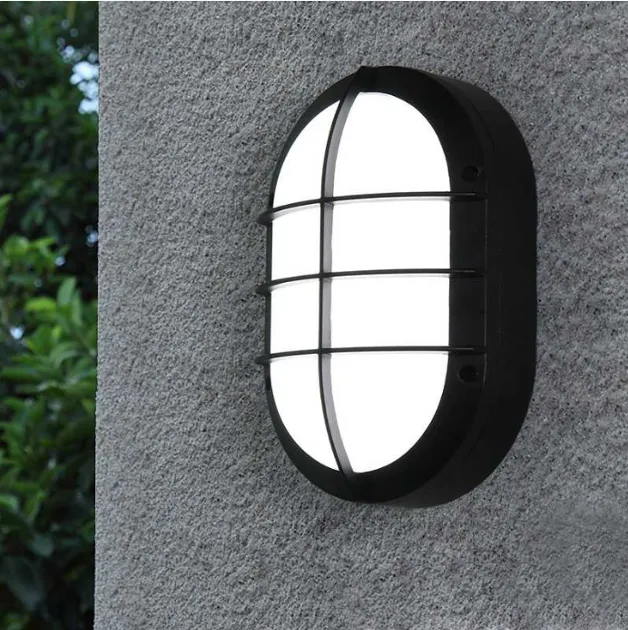
One of the primary advantages of bulkhead lights lies in their robust construction. Unlike open fixtures, they typically feature a sealed housing combined with gaskets or silicone rings, preventing dust, moisture, and even insects from entering the fixture. For example, an IP65 Waterproof LED Ceiling Light is designed to be completely dust-tight and resistant to water jets from any direction, based on IEC standards. This makes it suitable for demanding environments such as underground parking garages, building exteriors, and coastal areas. In commercial properties, where lighting maintenance can account for approximately 8%–12% of operational costs, using high-protection fixtures significantly reduces replacement frequency and long-term expenses.
Safety is another key benefit. Bulkhead lights often incorporate diffused covers made of polycarbonate or glass, which help distribute light evenly and reduce glare. This is particularly important in stairwells, emergency exits, hospitals, and corridors. The UK Health and Safety Executive (HSE) has indicated that poor lighting conditions, including glare and uneven illumination, are a contributing factor in slip and fall accidents. Improving lighting uniformity can reduce such risks by around 20%. Products like Round Shape Surface LED Ceiling Lights, with their simple structure and consistent light output, are therefore widely specified in safety-critical areas.
Installation flexibility also makes bulkhead lights highly attractive, especially for retrofit projects. Most models are surface-mounted, eliminating the need for recessed installation or structural modification. In Europe, more than 60% of lighting renovation projects favor solutions that can be installed without altering existing architecture. Compact shapes-round, oval, or low-profile designs-allow these fixtures to fit easily into tight or constrained spaces such as storage rooms, elevator lobbies, and narrow corridors. At the same time, LED technology enables energy savings of 50%–70% compared to traditional fluorescent lighting, with lifespans ranging from 30,000 to 50,000 hours.
In recent years, bulkhead lights have also expanded beyond purely functional roles into decorative applications. Designers and architects increasingly look for lighting that can complement the overall aesthetic of a space. For instance, a Retro Industrial Style Waterproof Wall Lamp For Cafes, Restaurant Corridors And Outdoors combines durability with visual appeal, making it suitable for hospitality environments such as cafés, restaurant hallways, and outdoor seating areas. According to Grand View Research, demand for design-oriented outdoor lighting products has grown by nearly 35% over the past five years, reflecting a shift from purely functional lighting to experience-driven design.
Another often overlooked advantage is durability in high-traffic environments. Bulkhead lights are typically built with impact-resistant materials and rated at IK08 or higher, meaning they can withstand mechanical shocks. This makes them ideal for locations such as schools, parking facilities, and warehouses, where fixtures are more likely to be exposed to accidental contact. Studies show that in warehouse environments, using impact-resistant lighting can reduce damage rates by up to 40%, minimizing downtime and maintenance disruptions.
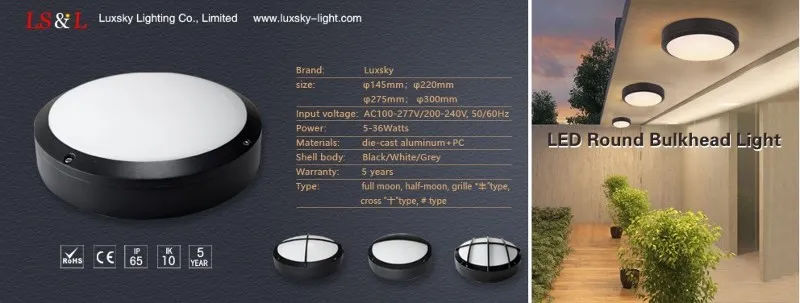
Overall, bulkhead lights have transitioned from being a niche industrial product to a widely adopted lighting solution across multiple sectors. Their combination of durability, safety, energy efficiency, and design adaptability aligns well with current industry demands. As global energy regulations become stricter and the emphasis on long-term cost efficiency increases, lighting solutions that offer both performance and reliability are gaining stronger traction. With continuous improvements in LED efficacy, color rendering, and smart control integration, bulkhead lights are no longer just a basic utility fixture but an integral part of modern lighting systems.





