

With years of industrial lighting export experience, I have worked on numerous projects including food processing plants, washing workshops, humid factory buildings and outdoor site retrofits. Many overseas clients worry that lights will suffer water ingress, internal fogging or short‑circuit failure under humid conditions. A frequent question is whether standard industrial tri‑proof lights can operate reliably long‑term in moisture‑prone factories.
Based on real‑world project experience, this article analyzes their performance in wet settings, applicable ranges and selection pitfalls for engineering reference.
1. Harsh requirements for lights in humid industrial sites
Industrial humidity differs greatly from ordinary indoor dampness. Workshops feature constant high humidity, frequent water washing and accumulated condensation. Conventional LED fixtures have poor sealing. Moisture easily penetrates housings, triggering light decay, driver leakage, flickering and early failure, so they are unsuitable for wet‑zone industrial use.
Genuine LED triproof lamp is engineered for harsh industrial conditions with fully‑integrated sealed structures to block moisture intrusion, making it a mainstream lighting choice for humid workshops.
2. IP65 rating ensures stable performance in wet zones
Lights deployed in humid factories require reliable sealing performance.
Qualified IP65 waterproof light resists water jets, condensation and humid corrosion. It copes with regular floor washing, equipment water spraying and persistent heavy mist. Internal fogging and water pooling are minimized for consistent output, ideal for food‑processing, aquatic‑product and washing workshops.
Superior sealing greatly cuts fixture failure rates and downtime‑related maintenance costs for overseas wet‑area renovation projects.
3. Application in humid warehouse zones
Many buyers overlook warehouse humidity. Coastal or poorly‑ventilated storage facilities tend to stay damp and accelerate light aging. Professional led warehouse light built with tri‑proof sealing features moisture‑resistance, dust‑proofing and anti‑corrosion properties. It delivers stable round‑the‑clock illumination for material sorting and goods handling in humid storage spaces.
4. Selection notes and upgrade suggestions for humid sites
Tri‑proof lights work well for most wet industrial conditions, yet they are not universal.
For locations with permanent water pooling, continuous submersion or heavy high‑pressure spraying, standard IP65 tri‑proof lights are insufficient; upgrade to IP67 fixtures for higher water resistance.
In humid workshops with flammable‑explosive gas or dust, standard tri‑proof lights must be replaced with certified explosion‑proof lighting to guarantee site safety.
Watch out for falsely‑rated low‑cost products. For wet‑zone projects, choose well‑built fixtures from reliable manufacturers with verified waterproof performance to avoid mass‑scale breakdowns.
Standard industrial tri‑proof lights perform reliably in most humid industrial environments. Their excellent sealing, moisture‑proof and anti‑fog properties resolve high failure rates and heavy maintenance burdens in wet premises, serving as a cost‑effective option for factory and warehouse lighting upgrades.
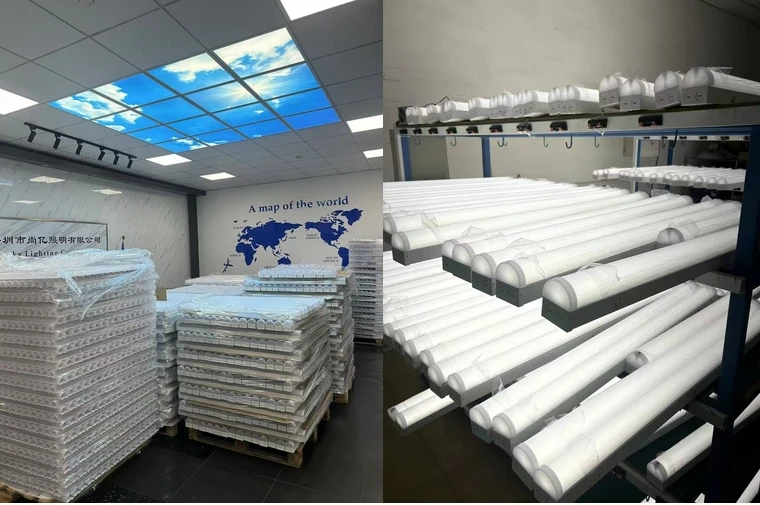
We have solid experience with overseas industrial lighting projects and are familiar with selection standards for various humid‑condition sites. Feel free to contact us for proper fixture recommendations and bulk quotations for your wet‑workshop renovation or warehouse‑retrofit projects.





