Streetlights can be categorized into the following categories based on their core characteristics:
I. Classification by Light Source Type:
High-Pressure Sodium (HPS): The traditional mainstream light source. They emit a warm yellow light, have strong smog-penetrating properties, and have a long lifespan (approximately 20,000 hours). However, they exhibit poor color rendering (low color reproduction) and relatively high energy consumption.
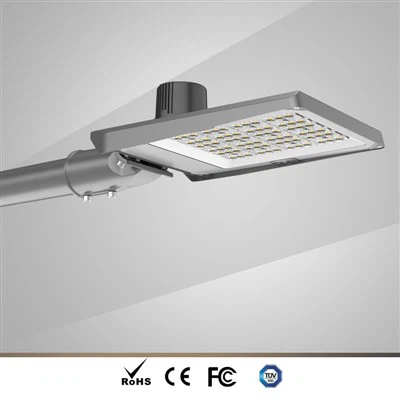
Light-Emitting Diode (LED): The current mainstream light source. They offer high luminous efficacy, low energy consumption (saving 50%-70% or more compared to HPS lamps), a long lifespan (up to 50,000 hours or more), excellent color rendering (closer to natural light), strong directionality (easier to control, reducing light pollution), and a fast response time. They typically produce cool or warm white light.
Metal Halide (MH): They emit a brighter white light with better color rendering than HPS lamps. They were once used in venues requiring high color rendering, such as stadiums and squares. However, they exhibit rapid lumen degradation and a relatively short lifespan (approximately 10,000-15,000 hours), and their use is gradually declining.
High-Pressure Mercury Lamps (HPMV): Early technology, emitting cool white light with a bluish-green tint, with low luminous efficacy and color rendering, and have been largely phased out.
Compact Fluorescent Lamps (CFLs): Primarily used in small garden or decorative streetlights, they offer moderate luminous efficacy, acceptable color rendering, and a moderate lifespan.
II. Classification by Pole and Lamp Structure:
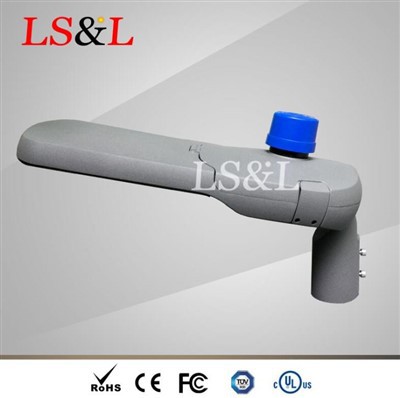
Single-Arm Street Light: The most common type. A cantilever arm extends from the top of the pole toward the road, housing one or more lamps. Suitable for most urban roads and highways.
Dual-Arm Street Light: A cantilever arm extends from the top of the pole toward each side of the road, housing lamps. Primarily used on wider roads or areas requiring two-way lighting.
High-Pole Lights: Pole heights are typically over 15 meters (and can reach tens of meters). Multiple high-power lamps are mounted on top to form a light panel. They are used to illuminate large areas, such as large squares, overpasses, ports, and airport aprons.
Garden/Landscape Lights: These are relatively low in height (usually 3-6 meters) and feature a variety of designs and softer light. They are primarily used in landscaped areas such as parks, courtyards, pedestrian paths, and residential areas.
Combination Lights: These poles may also house street lighting fixtures and other equipment, such as traffic lights, signs, and surveillance cameras.
III. Classification by Power Supply and Control System:
Traditional Mains Electric Street Lights: These are directly connected to the city power grid and are controlled by a timer, photoelectric controller, or manual on/off.
Solar Street Lights: These consist of solar panels, batteries, controllers, and LED lamps. They generate solar energy during the day and store it in batteries, which then provide power at night. They do not require an external power grid, allowing for flexible installation and are suitable for areas with no or limited access to electricity, such as parks and green spaces. They typically include built-in photoelectric and timer controls.
Wind-Solar Hybrid Street Lights: These combine solar and wind power to power street lights, improving power reliability in rainy weather.
Smart Street Lights:
Single-Lamp Control: Each lamp is equipped with a controller that allows for remote on/off and dimming (based on time, traffic flow, etc.), as well as monitoring of lamp status (e.g., fault conditions, energy consumption).
Networking System: Street lights are connected to the Internet of Things, enabling cluster control, data collection and analysis, fault alarms, and energy management through a central management platform.
Multifunctional Integration: Light poles become the backbone of smart cities, integrating various devices such as Wi-Fi hotspots, environmental monitoring sensors (air quality, noise, temperature and humidity), video surveillance, information display screens, and charging stations.
IV. Classification by Light Distribution Type:
The lamp design determines the distribution pattern of light onto the road surface:
Cutoff: Strictly controls light, projecting the vast majority of light onto the road surface with virtually no upward or horizontal light spillage. This offers low glare and is suitable for locations with high glare control requirements, such as highways.
Semi-Cutoff: Projecting the majority of light onto the road surface, allowing for a small amount of horizontal light spillage. This offers moderate glare control and is suitable for urban main and secondary roads.
Non-cutting type: Light is scattered in all directions, including upward and horizontally, with less restriction on the direction of light. This type produces a higher glare and is primarily used in areas with low glare requirements, such as courtyards and sidewalks.
These classification criteria intersect and together determine the performance characteristics and application scenarios of street lights.
Luxsky's new street light has high efficiency and is worth buying.