

As commercial lighting projects place increasing demands on product lifespan, protection performance, and maintenance cost, more clients are paying attention to the housing materials of bulkhead lights.
Currently, the two most common options on the market are die-cast aluminum bulkhead lights and plastic bulkhead lights. Both can meet basic lighting requirements, but they differ significantly in heat dissipation, structural strength, service life, and application scenarios.
So, are die-cast aluminum bulkhead lights better than plastic ones? Let's analyze them from a practical engineering perspective.
What are Die-Cast Aluminum and Plastic Bulkhead Lights?
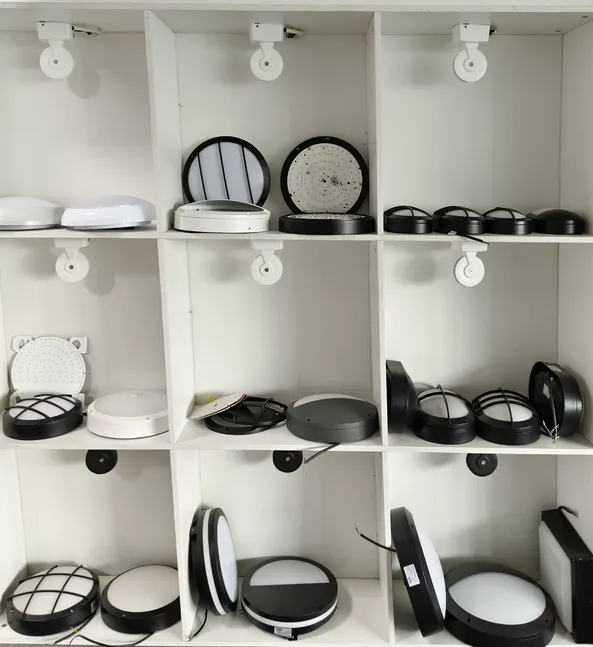
Die-cast aluminum bulkhead lights are made from a high-pressure casting aluminum housing. They offer strong structure, excellent heat dissipation, corrosion resistance, and long service life. They are widely used in commercial lighting, underground parking garages, industrial areas, and outdoor lighting projects.

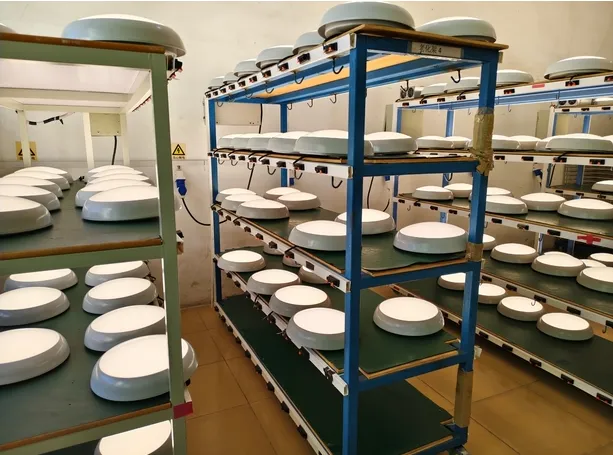
Plastic bulkhead lights are usually made of ABS, PC, or PC+ABS materials. They are lightweight, cost-effective, and easy to install. They are commonly used in apartment corridors, hotel hallways, staircases, and indoor public areas. High-quality plastic versions can also meet the requirements of general indoor lighting projects.

Die-Cast Aluminum vs Plastic: What Are the Main Differences?
1. Heat Dissipation Performance
Temperature is one of the most critical factors affecting LED lifespan. Die-cast aluminum has much better thermal conductivity than plastic, allowing it to dissipate heat from the LED and driver more efficiently, which helps extend service life.

2. Structural Strength and Impact Resistance
Die-cast aluminum offers higher structural strength and is widely used in IK10 bulkhead light applications, especially in schools, parking areas, and public spaces where impact risk is higher. Plastic products can still meet general commercial needs, but their impact resistance is relatively lower.

3. Protection Rating and Outdoor Suitability
Many IP65 LED bulkhead lights use die-cast aluminum bases because the structure is more stable and better suited for long-term waterproof and dustproof performance, especially in outdoor or humid environments.

4. Service Life
Under the same design conditions, die-cast aluminum generally provides better long-term stability, helping reduce light depreciation and maintenance issues.

5. Weight and Installation Cost
Plastic bulkhead lights are lighter and easier to transport and install, making them more suitable for large-scale residential or indoor projects.

6. Procurement Cost
Die-cast aluminum products are usually more expensive due to higher material and manufacturing costs. However, for commercial projects, lifecycle cost is often more important than initial purchase price.
Why Do More Engineering Projects Choose Die-Cast Aluminum Bulkhead Lights?
Although die-cast aluminum products usually have a higher upfront cost, commercial projects care more about long-term stability, maintenance cost, and service life.
In environments such as parking garages, schools, hospitals, and outdoor areas, project owners prefer lighting fixtures that can operate reliably for a long time with minimal maintenance and replacement. As a result, die-cast aluminum bulkhead lights are increasingly becoming the preferred choice in commercial applications.
How to Choose the Right Bulkhead Light for Your Project?
For hotel corridors, apartment hallways, and general indoor areas, high-quality plastic bulkhead lights are usually sufficient.
For outdoor areas, underground parking garages, schools, hospitals, and industrial environments, die-cast aluminum bulkhead lights are a more reliable option.

There is no best material, only the most suitable one for the application.
FAQ
Are die-cast aluminum bulkhead lights always better than plastic ones?
Not always. It depends on the application and budget.
Why do many IP65 bulkhead lights use die-cast aluminum?
Because the structure is more stable and better for long-term waterproof performance.
Will die-cast aluminum rust?
High-quality die-cast aluminum with surface treatment has good corrosion resistance.
Where are plastic bulkhead lights suitable?
Apartments, hotels, and office indoor areas.
Which material is more recommended for commercial projects?
Die-cast aluminum is generally preferred for outdoor and high-demand environments.
Luxsky Lighting offers a wide range of die-cast aluminum and plastic bulkhead lights for different commercial and project applications.

If you are looking for a trusted bulkhead light supplier, welcome to contact us for more details. Please click https://www.luxsky-light.com/led-ceiling-lights/.





