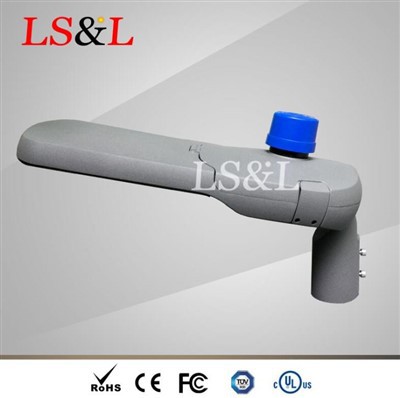
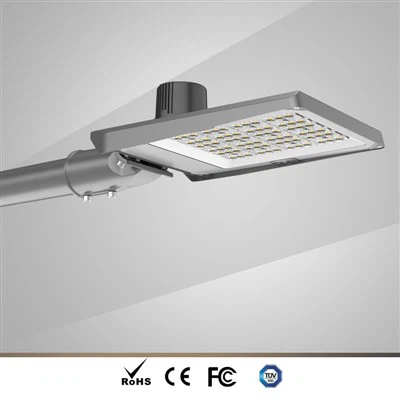
A street lamp is a type of eye-protection lamp, an upgraded version of a desk lamp. While desk lamps are limited to the desk, street lamps offer a wider illumination range, providing greater illumination and uniformity in larger spaces. If your child's bedroom lacks natural daylight during the day and is dimly lit at night, a street lamp is a perfect solution.
So, in this issue, let's take a look at what these street lamp specifications mean and which cost-effective street lamps are worth buying.
I. Street Lamp Parameter Guide
1) Illuminance and Uniformity
Illuminance refers to the amount of light received per unit area on a surface, measured in lux. The greater the illuminance, the higher the brightness per unit area. However, brightness isn't always better; uniformity is also an important criterion.
The country has clear standards for eye-protection desk lamps. GB/T 9473-2017, "Performance Requirements for Reading and Writing Desk Lamps," specifies illumination requirements: horizontal illuminance in the center area ≥ 500 lx, total horizontal illuminance ≥ 250 lx, maximum illuminance no higher than 2500 lx, and illumination uniformity ≤ 3.
National Grade A: Illuminance within a 30cm radius from the center must not be less than 300 lx, and within a 30-50cm radius from the edge, it must not be less than 150 lx.
National Grade AA: Illuminance within a 30cm radius from the center must not be less than 500 lx, and within a 30-50cm radius from the edge, it must not be less than 250 lx.
Currently, reputable large street lamps on the market boast illumination levels above 1000 lx and uniformity levels that meet the highest AA standard. Effectively prevents visual fatigue caused by a narrow illumination range and uneven brightness, which can result in some areas being too bright and some being too dark, causing pupils to constantly adjust in size.
2) Anti-glare
Sometimes, we feel a beam of light is very glaring, which is technically called glare. The same reason applies to the glare caused by bright light directly reflecting off paper. Therefore, we assign an index, UGR, to the glare level.
The lower the UGR value, the lower the glare. Large streetlights generally have a UGR between 10 and 13, with higher-quality lamps reaching over 10. Anti-glare lamps provide soft, even light, reducing eye fatigue and ensuring comfortable viewing for children even when using lights for extended periods.
3) Full-spectrum and Blue Light Protection
The term "full-spectrum" is likely familiar to everyone. Another term is a solar-like spectrum. Natural light is the most beneficial light source for vision health, but excessive blue light from lamps can lead to various problems, including myopia, eye fatigue, and sleep disorders.
High-quality full-spectrum lighting aligns with the solar spectrum while reducing blue light and supplementing it with red or green light, which are most beneficial to eye health. Taking the full spectrum chart of UNDER SKY as an example,
IEC62778 (National Standard GB/T 20145-2006) stipulates that RG0 is an exemption level for blue light. Light that meets this standard has little to no effect on the eyes.
Rich red light can promote blood circulation, increase cell metabolism, and regulate the human immune system, among other benefits. Many brands now focus on the role of red light values.
4) Color Temperature
Color temperature refers to the intuitive perception of the color of a light source. Different color temperatures can affect a person's psychological state.
The International Commission on Illumination (CIE) and related standards organizations recommend that for long-term reading and working environments, the color temperature should be between 3300K and 5300K, with around 4000K considered ideal.
5) High Color Rendering Index
Color rendering index can be simply understood as a light source's ability to reproduce the natural color of an object, expressed in Ra.
Light sources with a high color rendering index (CRI) are closer to natural light, helping to reduce visual fatigue and improve mental and physical health. In educational settings, high CRI lighting helps students discern colors more accurately, preventing the decline in color discrimination caused by long-term color distortion.
The CRI of eye-protection lamps should be above Ra90. Ordinary ceiling lamps typically meet the national standard of Ra80. Generally, differences above Ra95 are barely perceptible to the naked eye.
6) Other Indicators
Flicker-free: The new national standard, CQC1601-2016 IEESTD789, stipulates that the flicker percentage must be below 3.2% to be considered flicker-free.
Full-spectrum chips and bulbs: American Bridgelight chips are generally recognized as the most stable, but some brands also offer independently developed chips with excellent stability. The most important thing is to look for the five Süddeutsche Lumière certifications. Stepless dimming: Everyone adapts to light brightness differently, and stepless dimming can help everyone adjust to the brightness that suits you best.