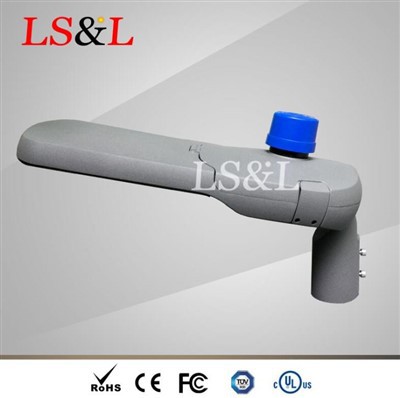
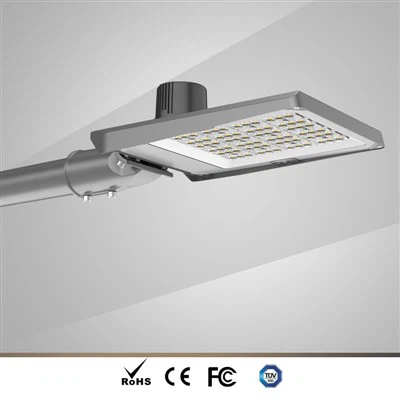
I've spent over a decade in the street lighting export trade, and thunderstorms at coastal ports are among the problems that give clients the biggest headaches. I covered lightning protection for airports earlier, but ports are a more special case: open terrain, proximity to water, lots of high masts, plus large quay cranes, gantries, and long power supply lines - making lightning protection considerably harder than in typical scenarios. Let me focus on ports today and explain how thunderstorms actually affect street lights, and how to protect against them.
Why Lightning Risk Is Higher at Ports
A port is typically a wide-open flat area where high masts and quay cranes stand out sharply, easily becoming discharge targets for lightning. Port power supply lines are also often very long, with cables laid across large sites, so induced surges from a lightning strike travel along the lines and affect fixtures along the way. Add in humid, salt-laden coastal air that lowers insulation performance, and the chance of lightning damage rises further.
Two Ways Lightning Affects Street Lights
As in other scenarios, lightning impact falls into direct strikes and induced strikes. Direct strikes are highly destructive but relatively rare; induced strikes happen frequently and are the main cause of batch-wide driver damage. At a port, with long lines and a lot of equipment, the reach of an induced strike is often wider - it's not uncommon for an entire area's fixtures to fail at the same time after one storm.
Protection Needs Layers: Coordinated Multi-Stage Surge Protection
Port lightning protection can't rely solely on a fixture's built-in protection - it needs coordinated multi-stage design. A mature approach is to install surge protective devices of different ratings at the substation entrance, distribution boxes, pole bases, and inside the fixture itself, discharging and reducing energy stage by stage to protect downstream roadway LED lighting equipment. The driver's own surge protection rating is best specified at 10kV or higher, with confirmation that the lightning protection components used are reliable in spec - a detail that low-cost products easily skip under a strict quality control LED engineering lighting program.
Grounding Systems: Ports Have Special Considerations
Good grounding is the foundation of lightning protection. Port pole grounding must be equipotentially bonded with the overall lightning protection grounding system, avoiding potential differences between separate grounding bodies that could cause flashover. Coastal soil has high salt content and good conductivity, which helps lower grounding resistance, but salt also accelerates corrosion of ground electrodes - so grounding materials should be corrosion-resistant grades, with grounding resistance checked periodically to ensure it stays effective long-term.
Hazardous Goods Areas Demand More
If a port includes areas for oil, chemicals, or other hazardous goods storage or handling, requirements for lightning protection and static control are generally stricter and need to follow higher-grade local lightning protection codes. During selection, it's worth confirming the protection level required for each zone with the project owner upfront.
Smart System Communication Lines Need Protection Too
If a project uses a Smart outdoor light control system, the communication modules, sensors, and signal lines such as RS485 are also prone to damage from induced lightning and need signal surge protectors installed, so the smart system doesn't go down entirely after a storm.
Post-Storm Inspection and Maintenance
After a thunderstorm, it's worth scheduling an inspection, focusing on the status indicators of surge protectors, fixture operation, and the integrity of grounding connections. Some surge protectors lose performance after absorbing a strike and need prompt replacement, so they don't leave the system unprotected for the next one.
What We Do
At Luxsky Lighting, we hold to strict quality control and LED engineering lighting standards. Our port series fixtures have driver surge protection rated above 10kV, we provide coordinated multi-stage lightning protection recommendations, and smart systems are equipped with signal protection too, helping clients keep thunderstorm risk as low as possible.
Conclusion
Thunderstorms genuinely do affect port street lights, but with multi-stage surge protection, reliable grounding, and the fixture's own protective design, the risk is entirely controllable. Luxsky Lighting has focused on LED street light engineering for years, holding to strict quality control to deliver dependable roadway LED lighting solutions to clients worldwide. If you're planning lightning protection for a port project, reach out to us for a detailed protection plan and a quote.