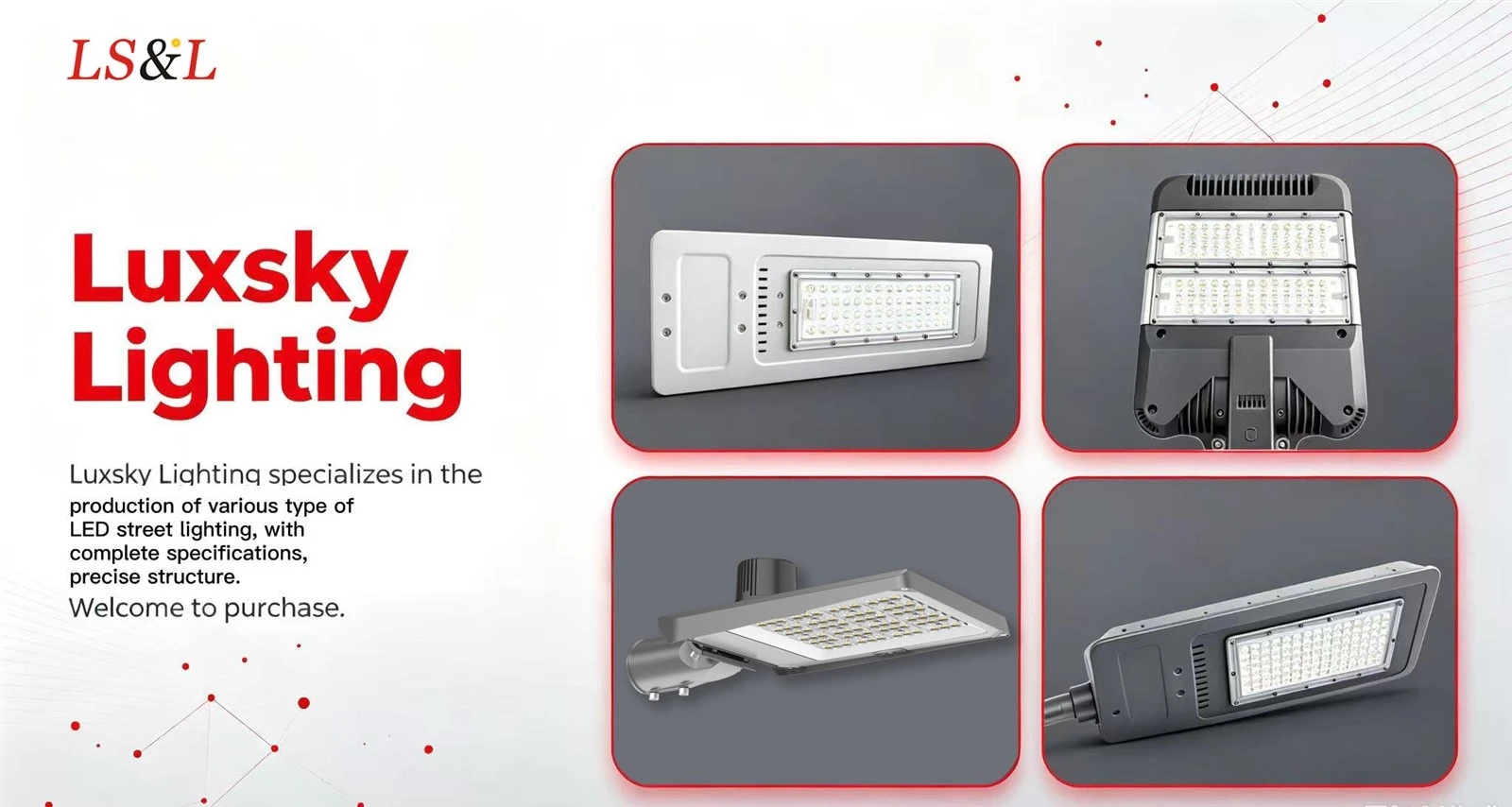
After more than twenty years in foreign trade, I have handled quite a few hospital smart-campus and outdoor lighting projects. Many hospitals already have security, energy, or integrated management platforms. If street lights can also connect to the IoT, remote monitoring, on-demand dimming, and fault alerts become possible, and operations become much easier. Drawing from practical experience, here is how LED Street Lights can be integrated with hospital IoT systems.
First Confirm Communication Methods and Platform Interfaces
Common options include LoRa, NB-IoT, Zigbee, 4G/5G, or wired networks, depending on the hospital's existing coverage and platform protocols. The luminaire side needs corresponding smart modules that can connect with the hospital's system. An experienced LED street light manufacturer can usually offer multiple communication options and lower the barrier to integration.
Enable Remote Monitoring and Control
Once connected, on/off status, power, and energy use can be viewed on the platform, with remote switching or dimming. Abnormalities at night no longer rely only on manual patrols-the system can actively alert and shorten dark periods in critical areas such as emergency lanes and entrances. A capable LED lighting OEM manufacturer provides better assurance of module stability and data accuracy.
Support Zonal Strategies and Energy Management
With IoT, different lighting strategies can be set for outpatient areas, inpatient areas, parking lots, and so on, while electricity data is recorded to support energy-saving upgrades. Selecting an LED lighting supplier with 5 year warranty ensures more reliable long-term operation and more useful platform data.
Optional Linkage with Security and Other Systems
Where conditions allow, street lights can link with security events-for example, raising brightness in an area during an alarm-as a safety support measure. Permissions and trigger logic should be clearly defined beforehand to avoid false actions.
Product Reliability Remains the Foundation
No matter how strong the IoT functions are, if protection, heat dissipation, and driver quality are inadequate, failures will still be frequent. Network security, data access rights, and after-sales technical support must also be confirmed so the system can operate long term.
Conclusion
Integrating LED Street Lights with hospital IoT systems enables remote monitoring, zonal dimming, and fault alerts, improving management efficiency and energy performance. Selecting a reliable LED street light manufacturer and a capable LED lighting OEM manufacturer, especially an LED lighting supplier with 5 year warranty, helps make integration more stable and longer-lasting. Luxsky Lighting specializes in LED street lights with stable quality and solid after-sales support. If you are planning the integration of hospital street lights with IoT, feel free to contact us directly for tailored smart LED street light solutions and quotations-reliable products that help you truly implement intelligent lighting.