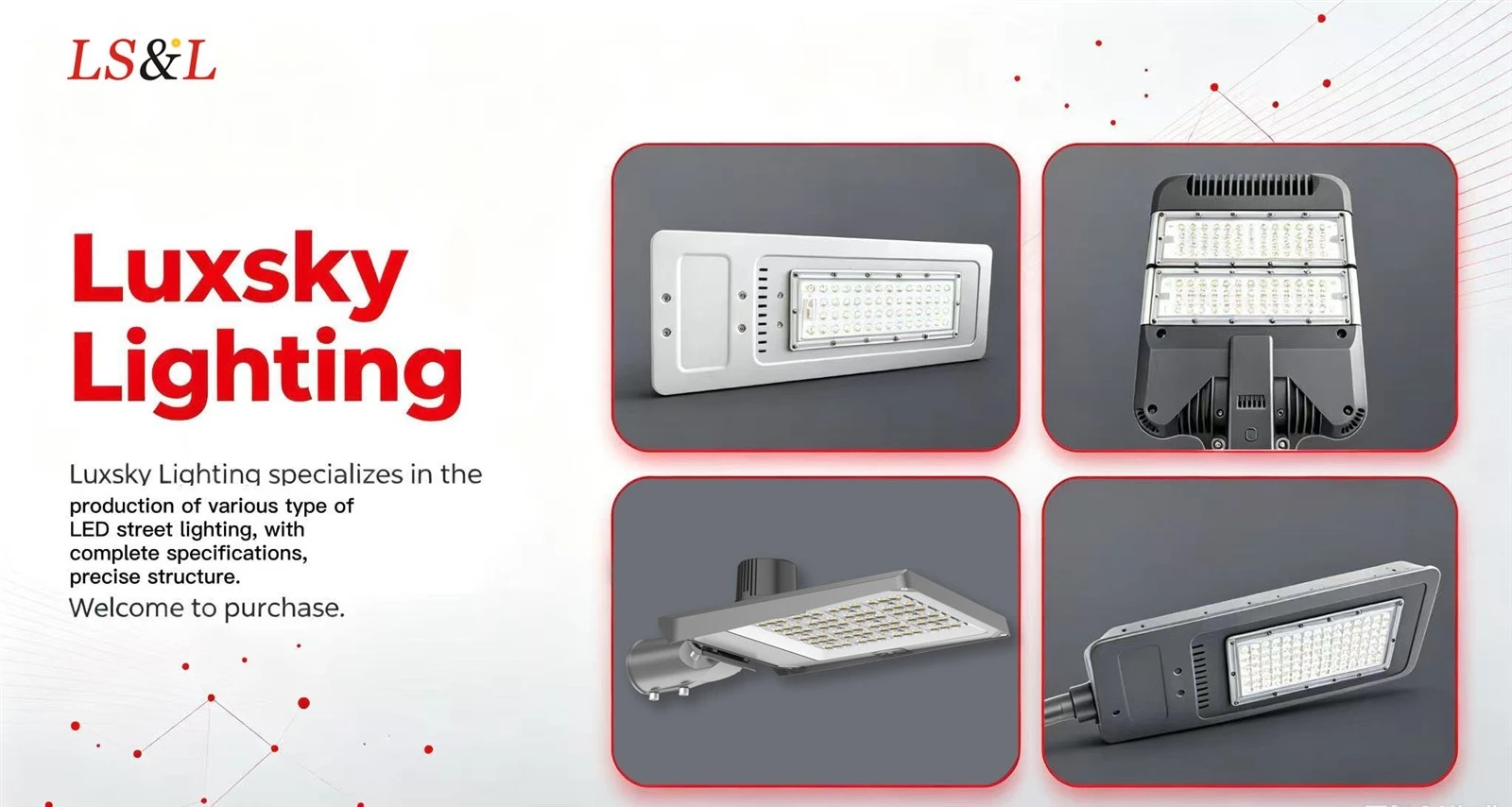
I've spent over a decade in the street lighting export trade, and I've noticed that port clients tend to focus on purchase price and electricity costs while underestimating maintenance costs. Port poles are tall, the areas are vast, and operations can't easily stop - a single fixture replacement often means lifting platforms, labor scheduling, and coordination to work around operations, and the bill adds up to more than the fixture itself. Let me walk you through how LED street lights can genuinely cut long-term maintenance costs at a port.
First, See Where Maintenance Costs Actually Go
Port street light maintenance costs mainly include labor, rental and operation of lifting platforms or aerial work equipment, spare parts, the time cost of coordinating around operations, and the safety risk while a fixture is out of service. Equipment and labor usually take the biggest share, so the core idea behind lowering maintenance cost is "fewer dispatches, faster repairs, fewer replacements."
Approach 1: Cut Replacement Frequency With Longer Lifespan
The most direct way is to make the lights last longer. If an LED street light is built to genuinely high quality, with long life and stable lumen decay, replacement frequency drops significantly. This depends on a strict quality control LED engineering lighting system: stable chip brands, drivers with long-life components, and solid protection and anti-corrosion design. Every extra year of fixture lifespan means one less round of aerial work - and the savings are very real.
Approach 2: Modular Design - Make Repairs "Fast and Light"
A well-designed roadway LED lighting product takes serviceability into account. For example, the driver and light source module use a modular, tool-free or low-tool structure, so when a fault occurs only the faulty module needs replacing instead of the whole fixture; wiring uses quick-connect terminals to reduce time spent working at height. The shorter the repair, the less time equipment and labor are tied up, and the lower the cost.
Approach 3: Pair High Mast Lights With a Lowering System
Port high mast lights are numerous and set at great heights, and every maintenance visit means working at height. With a luminaire ring lowering system, maintenance staff can bring the fixture ring down to ground level to work on it, with no lifting platform needed - safer, faster, and cheaper. The lowering system adds some upfront cost, but for a port project operating long-term, that investment usually pays back quickly.
Approach 4: Use Smart Systems to Avoid "Wasted Trips"
Traditional maintenance relies on manual night patrols: find the lights that are out, then send someone to fix them - often needing to visit the site first to confirm the fault before deciding which spare parts to bring. With a Smart outdoor light control system, each fixture's status and fault type can be monitored remotely, so before maintenance crews head out, they already know which parts to bring and where to go, sharply reducing ineffective dispatches and repeat visits. Day to day, operating data can also reveal abnormal trends so planned repairs can be scheduled ahead of time.
Approach 5: Standardization and Spare Parts Strategy
For port projects, it's best to standardize fixture models and key component specifications as much as possible, reducing the variety of spare parts, lowering inventory management costs, and simplifying repairs. At the same time, keeping a sensible stock of wear items means a failed unit can be replaced immediately, avoiding longer outages while waiting for parts.
Approach 6: Decide Based on Lifecycle Cost
When purchasing, don't compare unit prices alone - put maintenance costs into the total. A cheap but failure-prone fixture might need maintenance multiple times a year, and over ten years, the total cost far exceeds that of a higher-quality product. Evaluating on a total cost of ownership (TCO) basis leads to a more cost-effective choice.
Approach 7: Make Warranty and Service Terms Clear
A supplier's warranty period, response speed, spare parts supply, and technical support also affect maintenance costs. A supplier with clear warranty terms and prompt response shares the risk when something goes wrong and shortens the time to resolution.
What We Do
At Luxsky Lighting, we adhere to strict quality control LED engineering lighting standards. Our products use long-life components and modular design, support matching high mast lowering systems, and come with smart monitoring solutions, spare parts support, and clear warranty terms, helping clients keep long-term maintenance costs at a reasonable level.
Conclusion
Lowering port maintenance costs comes from long-life, serviceable design, smart remote diagnostics, and sensible spare parts and warranty strategies - with fixture quality as the foundation for all of it. Luxsky Lighting has focused on LED street light engineering for years, holding to strict quality control to deliver dependable roadway LED lighting solutions to clients worldwide. If you're evaluating a port lighting project, reach out to us for a lifecycle cost analysis and a quote.