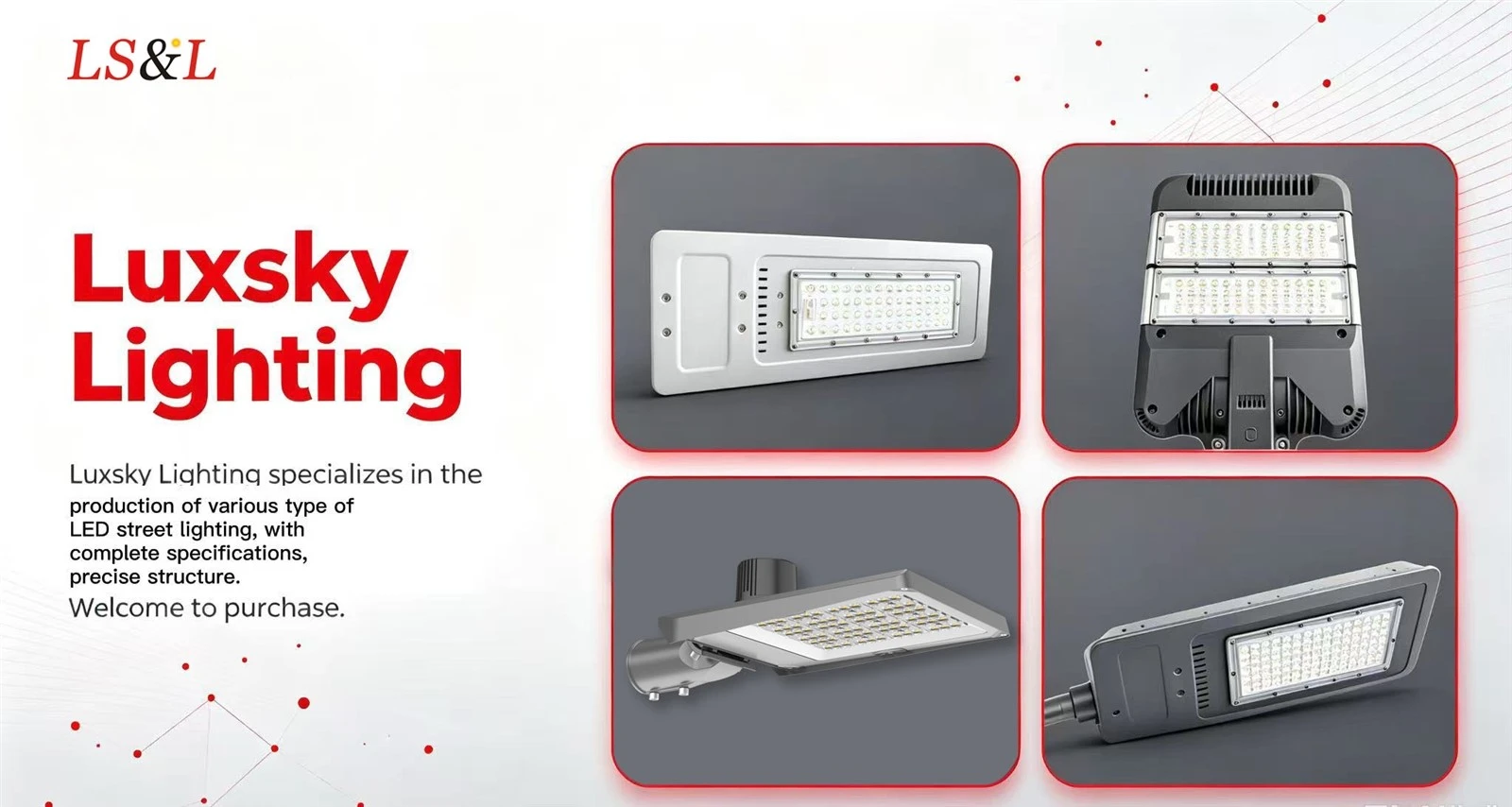
As an LED street light manufacturer with more than twelve years of export experience, I have supplied lighting to logistics parks, ports and industrial zones in the Middle East, Southeast Asia, Africa and South America. Many buyers tell me: "LED already saves a lot. Do I really need smart dimming?" My answer is that LED is the first step, and smart dimming is the second. A logistics park does not need full brightness every minute of the night, and the savings from this simple idea are often larger than customers expect. Here is how it works.
Why Full Brightness All Night Wastes Energy
Trucks and workers are busiest during shifts, but at 2 or 3 a.m. many roads, parking areas and perimeters are almost empty. Running every light at 100% during these hours wastes electricity and shortens fixture life. Smart dimming lets you match the light level to the real activity, so you pay only for the light you need.
Four Practical Dimming Methods
The simplest method is time-based dimming: for example, 100% until midnight, 50% until 4 a.m., then back to full output before the morning shift. Motion-sensor dimming keeps lights low until a vehicle or person approaches, then raises them to full brightness. Zone control sets different profiles for docks, trunk roads and perimeters. Remote monitoring adds fault alerts and energy reports. Good LED street lights for logistics parks should support 0-10V, DALI or PWM dimming, so they can work with different control systems.
How Much Can You Save?
Compared with old metal halide or sodium lamps, quality LEDs already save about 50% to 70% electricity. Smart dimming can add another 20% to 40% on top, depending on how many quiet hours the park has. For example, a 150W fixture dimmed to 50% for five hours each night saves roughly 375Wh per night, and across 100 lights that is about 13,700 kWh per year. These numbers are for illustration, so use your own operating hours and tariff for a real estimate.
Keep Safety First
Saving energy must never create dark spots. Keep docks, gates, intersections and reversing areas at a stable base level while work is going on, and dim only the areas with low activity. Set a minimum level, usually 30% to 50%, so CCTV cameras still record clear images and drivers can see the road. A DIALux simulation based on real IES files can confirm that the dimmed level still meets your safety target.
Choose Reliable Hardware and a Supplier Who Stands Behind It
Dimming only works well if the driver and controller are reliable. A cheap driver may flicker, fail or lose its dimming function after a year or two. Replacing one fixture on a 10-meter pole means hiring a lift, closing a lane and losing working hours, so I suggest an LED lighting supplier with 5 year warranty and a real factory behind it. As an LED lighting OEM manufacturer, we also customize wattage, beam angle, color temperature and branding for project buyers and distributors. Our quality standard includes:
- Branded LED chips and dimmable drivers, 100% aging test before packing
- Die-cast aluminum housing, IP66 / IK08, 6kV to 10kV surge protection, CE and RoHS certified, with real IES files and test reports for DIALux design
When a customer asks me for a 5-year warranty, I can say yes with confidence, because we test before shipment, not after complaints.
Conclusion
Smart dimming cuts energy use by matching light to real activity, while keeping safety at the busy points and extending the life of the fixtures. Our LED street lights are built with strict quality control, so they stay bright, stable and energy-efficient for years.
If you are planning a new logistics park or upgrading an old one, choose Luxsky Lighting. Contact us today for a free DIALux layout and a competitive quote.