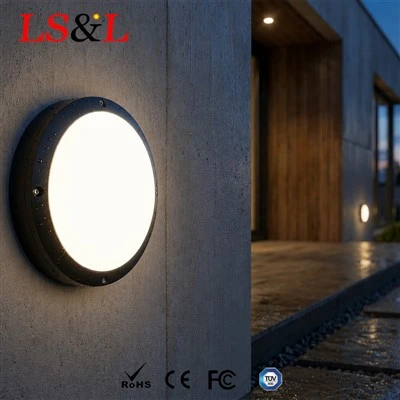
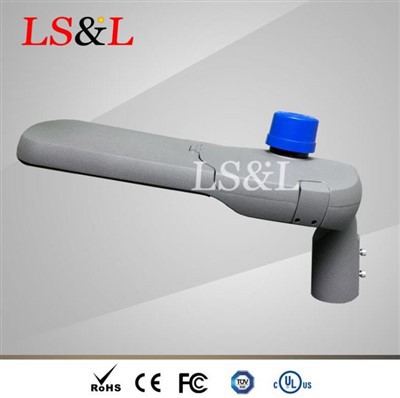
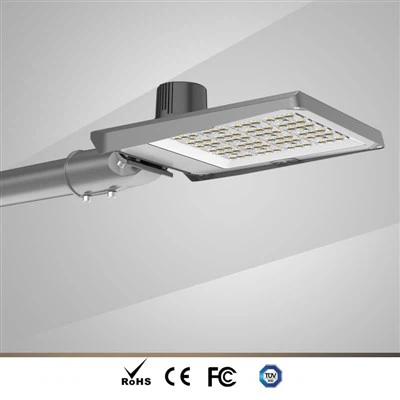
Many overseas clients overlook the impact of ambient temperature, assuming fixtures will run reliably as long as the ingress rating is sufficient. In fact, ambient temperature is one of the key factors governing fixture lifespan. Drawing on years of industrial project experience, we will explain how temperature affects the service life of a bulkhead light.
1. High ambient temperature accelerates LED lumen depreciation
LED chips are highly sensitive to heat. As surrounding temperature rises, junction temperature climbs, luminous efficiency drops gradually and brightness fades over time. Continuous exposure in hot workshops, near furnaces or sun-baked outdoor areas sharply cuts the usable life of LED chips. For outdoor IP66 bulkhead light, summer direct sunlight plus heat trapped inside the sealed housing speeds up this depreciation significantly.
2. High heat shortens the operational life of LED drivers
Electrolytic capacitors inside drivers are the components most vulnerable to temperature changes. A widely accepted industry rule: capacitor life roughly halves with every 10°C rise in temperature. Sustained high heat causes bulging and capacity loss, triggering unstable output, flickering and eventual driver failure. Premature fixture failure can often be traced back to drivers running continuously above rated temperature.
3. Low temperatures create hidden risks
Cold conditions do not burn out fixtures instantly, yet they carry hidden hazards. Seals and plastic housings turn stiff and brittle at low temperatures and lose elasticity, weakening sealing performance. Alternating hot and cold cycles make condensation inside the housing far more likely. When selecting led bulkhead light for northern winter sites or high-altitude outdoor locations, verify that housing and gasket materials support low-temperature operation to avoid cracking and water ingress.
4. Frequent temperature swings worsen condensation and structural stress
Factories and warehouses with large day-night temperature shifts force fixtures to heat up and cool down repeatedly. Negative pressure forms inside the cavity and draws in moist air, which condenses into droplets and corrodes circuit boards. Repeated thermal expansion and contraction also widen sealing gaps over time, lowering ingress protection and raising failure risks.
5. Thermal design sets the fixture's temperature tolerance limit
At the same ambient temperature, thermal performance decides internal temperature rise. Poor heat dissipation or heavy dust buildup traps heat, pushing internal temperatures far above the surrounding air. Do not only check site temperature during selection; review the fixture's thermal rise data and leave sufficient thermal margin.
6. Mounting arrangements further alter heat dissipation
Mounting against insulated walls, enclosing fixtures in tight spaces or blocking airflow with other equipment restricts ventilation. Even well-specified fixtures will suffer heat buildup and shorter service life if installed improperly.

Temperature affects fixtures slowly and continuously, and most failures stem from long-term heat accumulation. Select fixtures rated for your site temperature range, follow standard installation practice and clean dust regularly to preserve lifespan and cut maintenance costs. If you need help choosing fixtures suited to your workshop heat levels or outdoor temperature variations, share your site conditions and we will prepare a matching solution for you.