

After more than a decade in lighting exports, I often discuss an overlooked issue with factory clients: color rendering. Many workshops have enough brightness, yet colors appear dull or shifted, which creates problems in inspection and assembly. Here is how color rendering actually affects manufacturing work, based on field experience.
What Color Rendering Means
The Color Rendering Index (CRI) measures how accurately a light source shows the true colors of objects, with higher numbers closer to natural daylight. A CRI of around 80 is usually acceptable for general industrial tasks, but areas that involve color judgment, surface inspection, or precision assembly benefit from CRI 90 or higher.
Low color rendering can make important colors such as reds and blues look muted or distorted, forcing workers to strain harder and increasing the chance of mistakes.
Impact on Inspection and Assembly
Quality inspection relies heavily on accurate color perception. Paint variations, wire colors, plastic shades, and surface defects can be hidden or misread under low-CRI light. This leads either to missed defects or to good parts being rejected.
During assembly, unclear wire or marking colors raise the risk of incorrect connections or wrong components. Several clients have reported fewer rework and complaint cases after improving color rendering.
Effect on Worker Comfort
Spending long hours under light that distorts colors forces the eyes to compensate continuously, which increases fatigue. Posts that require fine color discrimination feel the burden more quickly, and concentration can drop as a result.
Better color rendering makes colors appear more natural, so details are easier to see and longer shifts feel less tiring.
Choosing for Factory Conditions
Factories are often dusty and humid, so fixtures need to be durable. Many workshops select an ip65 led tri proof light that resists dust and water while delivering stable light. Linear options such as a weatherproof led batten light suit aisles and production lines and help keep distribution more even.
When selecting, look beyond the main CRI number and check that R9 (saturated red rendering) is not too low, as this helps inspection accuracy. Color temperatures between 4000K and 5000K usually provide clear yet comfortable light. Where emergency coverage is needed, weatherproof lights with backup function can be considered.
Practical Recommendations
- General assembly and material handling: CRI 80 or above is normally sufficient
- Inspection, precision assembly, and color-matching zones: prioritize CRI 90 or higher
- Combine color rendering with adequate illuminance and uniformity-high CRI alone cannot overcome dim or uneven light
Many factories focus only on brightness at first and later see higher inspection errors and worker fatigue. Including color rendering in the selection criteria often produces more reliable results.
From years of working with factory clients, I know lighting needs to be both bright and accurate. When colors are rendered correctly, inspection becomes more dependable and workers stay more comfortable.
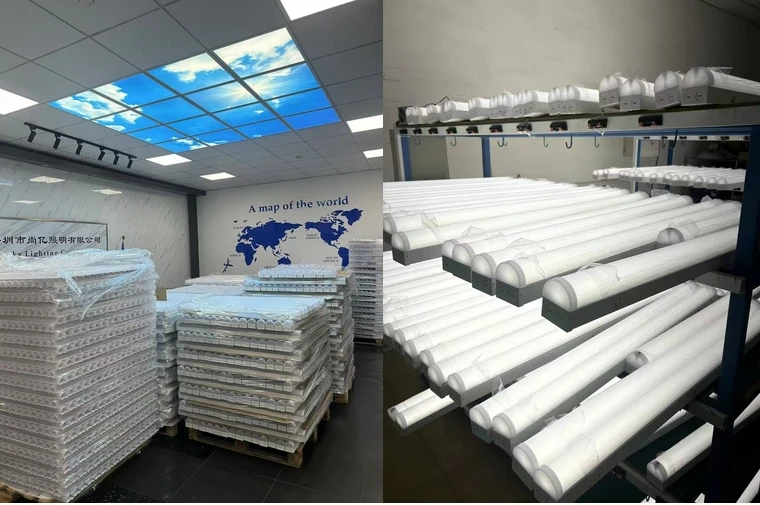
If you are improving lighting in inspection or assembly areas, share the specific tasks and requirements. I can help identify suitable tri proof lights that improve color accuracy and overall light quality for manufacturing work.





