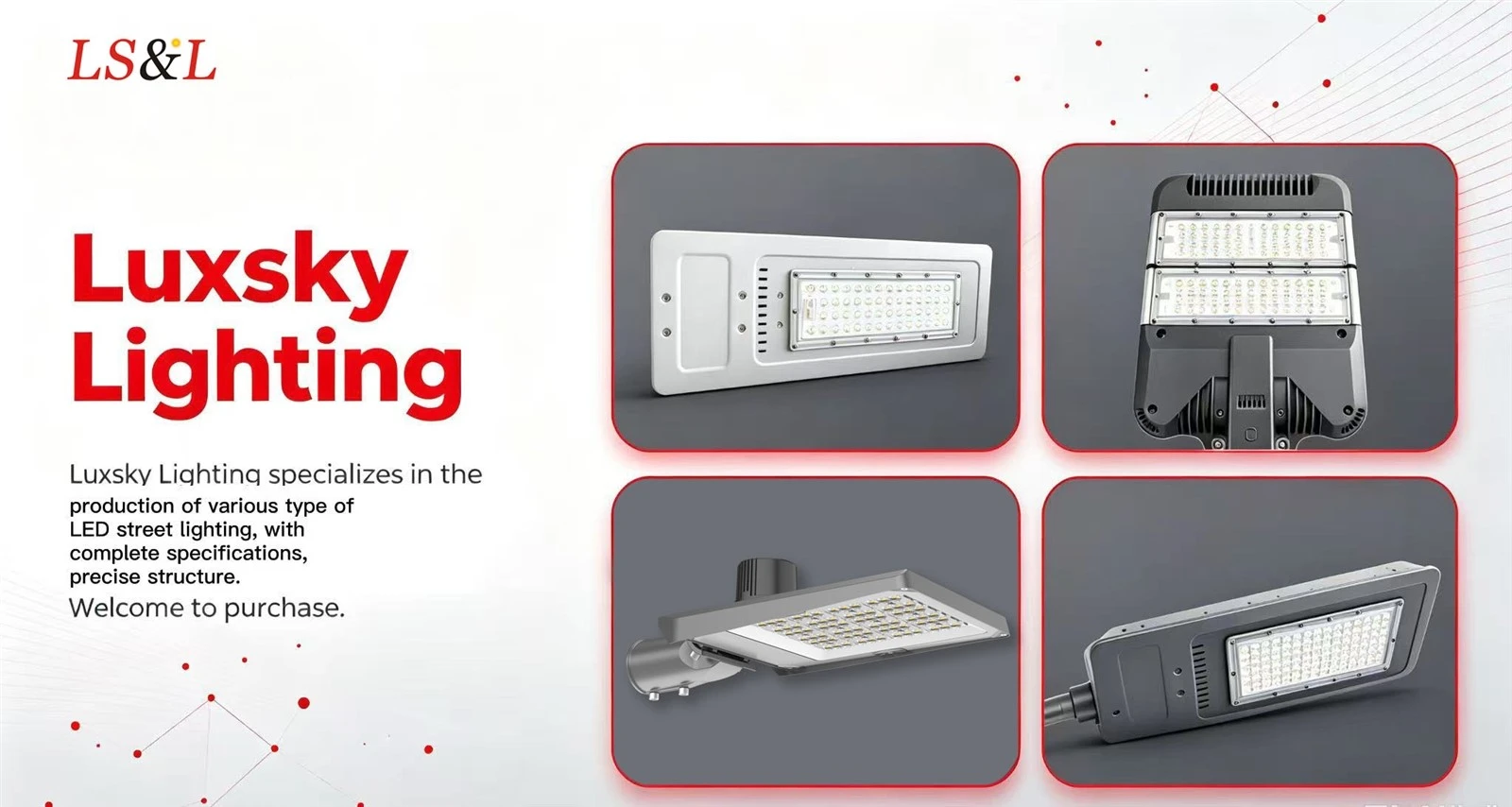
I've been in the street lighting export trade for years, and almost every new client's first question during an inquiry is: "My road is this many meters long - roughly how many fixtures do I need?" Honestly, there's no one-size-fits-all formula that spits out a direct answer - it depends on several variables working together. Let me walk you through the estimation logic based on years of hands-on experience, so you can get a realistic ballpark figure.
Step 1: Determine the Road Classification and Illuminance Standard
Different classes of roads have completely different lighting standards. Major arterial roads, secondary roads, local streets, and residential roads each require different average illuminance and uniformity levels, typically referencing national road lighting standards (such as EN 13201 in Europe or IES RP-8 in North America). A higher illuminance standard means tighter pole spacing and higher wattage per fixture - this is the first foundational variable in estimating fixture quantity.
Step 2: Determine the Pole Layout Pattern
There are three common layout patterns: single-sided, symmetrical double-sided, and staggered double-sided. Road width determines which pattern fits best - for example, a two-way road wider than 12 meters generally needs a double-sided layout to maintain illuminance uniformity, while a narrower road can get by with a single-sided layout. Once the layout is set, it directly affects how many fixtures are needed per kilometer.
Step 3: Calculate Pole Spacing
Pole spacing is typically 3-4 times the mounting height, further refined based on the fixture's luminous flux and photometric distribution curve. For example, a roadway LED lighting product mounted at 10 meters typically uses a spacing of around 30-35 meters; switching to a higher-wattage, higher-efficacy fixture can extend that spacing to 35-40 meters, reducing the number of poles needed and lowering overall project cost. This is exactly why clients shouldn't judge fixtures on unit price alone - luminous efficacy and beam distribution design matter just as much.
A Simple Estimation Formula
Here's a rough way to think about it: Number of fixtures ≈ Total road length ÷ Pole spacing × Layout factor (1 for single-sided, 2 for double-sided). For example, a 2km, six-lane, two-way arterial road with a staggered double-sided layout and 35-meter spacing would need roughly 2000÷35×2 ≈ 114 fixtures. This is just a rough estimate, of course - actual projects need local adjustments for curves, intersections, and crosswalks that may require denser spacing.
Do Smart Features Change the Fixture Count?
If a project requires Smart outdoor light capability - such as automatic dimming based on traffic flow - this generally doesn't change the pole layout or fixture count, but it does add sensor and communication module density to the plan. Typically, one sensor node per 3-5 fixtures is enough to meet data collection needs, without requiring a sensor on every single fixture - keeping the cost of smart upgrades under control.
What We Can Do for Clients
At Luxsky Lighting, we don't just sell fixtures - based on the road parameters clients provide (width, classification, local lighting standards), we offer free lighting design plans and photometric calculation reports, helping clients nail down fixture count, spacing, and wattage selection early in the project to avoid costly rework later. We hold to strict quality control LED engineering lighting standards, ensuring every fixture in our design plans genuinely holds up to long-term use.
Conclusion
Estimating fixture quantity is fundamentally about balancing lighting design with cost control. Luxsky Lighting has focused on LED street light engineering for years, holding to strict quality control, and can offer clients worldwide professional lighting design support alongside dependable roadway LED lighting products. If you're planning a road lighting project, reach out to us for a free lighting design plan and a product quote - we're glad to offer professional advice for your project.