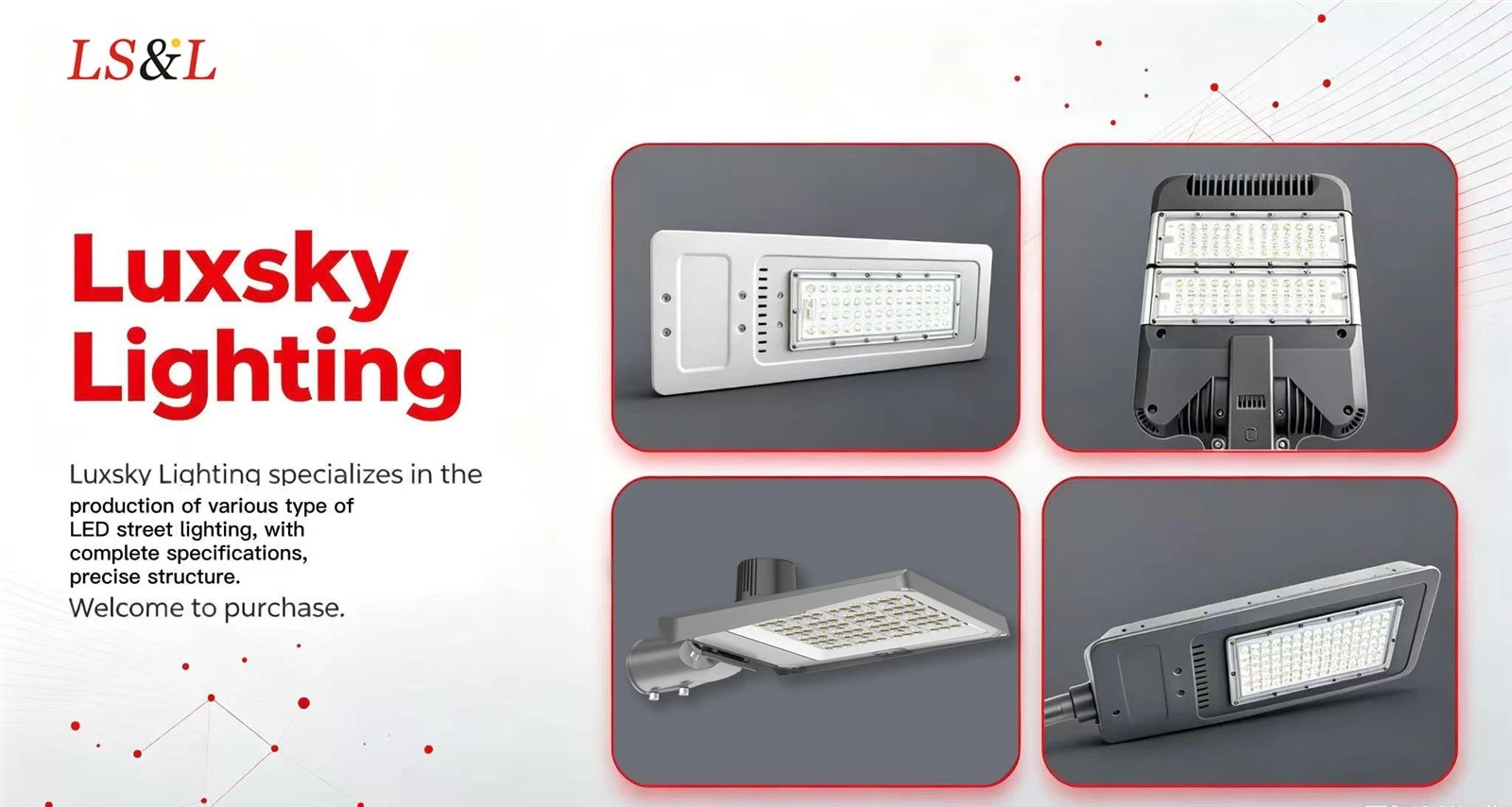
As an LED street light manufacturer with more than twelve years of export experience, I have supplied lighting to logistics parks, ports and industrial zones in the Middle East, Southeast Asia, Africa and South America. Buyers often ask me, "How many lumens do I need?" Some compare only watts, others only lumens. In my experience, lumens are just one part of the answer. The real goal is the right light on the road surface, and that depends on pole height, spacing, beam pattern and road type. Here is how I explain it to my customers.
Lumens Are Not the Same as Lux
Lumens measure how much light a fixture produces. Lux measures how much light actually reaches the ground. A high-lumen light with poor optics can still leave dark gaps and create glare. That is why I always tell customers to start from the lux target and work backwards. Good LED street lights for logistics parks should come with IES files, so your designer can check the result in DIALux before you order.
Reference Lumen Ranges by Road Type
With a luminous efficacy of about 150 lm/W, these are the starting points I usually share:
- Trunk roads (8 to 10 m poles): about 18,000 to 30,000 lumens, roughly 120W to 200W
- Branch roads (6 to 8 m poles): about 9,000 to 15,000 lumens, roughly 60W to 100W
- Intersections and gates: about 22,000 to 30,000 lumens, with a wider beam
- Staff walkways (4 to 6 m poles): about 4,500 to 9,000 lumens, roughly 30W to 60W
These are reference figures only. Different projects need different results, so always confirm them with a simulation.
Check Efficacy, Not Just Lumens
Two lights can both say 30,000 lumens, yet one uses 200W and the other 250W. Higher efficacy means less electricity and less heat, which also helps the driver and the LED chips last longer. Quality LEDs already save 50% to 70% electricity compared with old sodium or metal halide lamps, and smart dimming with motion sensors saves even more late at night.
Do Not Chase Maximum Brightness
More lumens do not always mean a better road. Too much light causes glare, and a driver in a high truck cab can be dazzled, even for two seconds. Uniformity matters more than peak brightness, so choose the right beam type and keep pole spacing at about 3.5 to 4 times the mounting height. Also check that the lumen figure is real. Some low-cost suppliers exaggerate it, so ask for a test report.
Choose a Supplier Whose Numbers You Can Trust
A fixture that loses brightness after one year ruins your design. Replacing one on a 10-meter pole means hiring a lift, closing a lane and losing working hours. That is why I suggest an LED lighting supplier with 5 year warranty and a real factory behind it. As an LED lighting OEM manufacturer, we also customize wattage, beam angle, color temperature and branding for project buyers and distributors. Our quality standards include:
- Branded LED chips and drivers, 100% aging test before packing
- Die-cast aluminum housing, IP66 / IK08, 6kV to 10kV surge protection, CE and RoHS certified, with IES files and test reports for DIALux design
When a customer asks me for a 5-year warranty, I can say yes with confidence, because we test before shipment, not after complaints.
Conclusion
Choose lumens by road type, then confirm the lux level, uniformity and glare with simulation. Our LED street lights are built with strict quality control, so their real output stays bright, stable and reliable for years.
If you are planning a new logistics park or upgrading an old one, choose Luxsky Lighting. Contact us today for a free DIALux layout and a competitive quote.