

Different applications need different wattage. So, here is a detailed overview of some applications and required wattage.
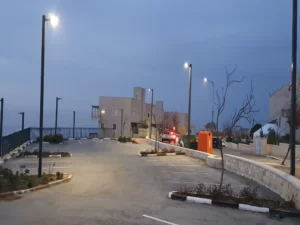
30- 60W: Residential and Small Road Lighting
These lights work best for homes, parks, and small streets. They fit on poles 5-7 meters tall and light up roads 6-10 meters wide with 1-2 lanes. The 30W lights are good for 5-meter poles on narrow roads. Meanwhile, 50W options work better on 6-7 meter poles for slightly wider areas. They give enough light for areas with less traffic while reducing light pollution in neighborhoods. Additionally, they use only about 25% of the power that old sodium lights needed for the same areas.
80- 120W: Secondary Roads and Industrial Areas
This middle range works well for city streets and industrial zones. These lights go on 7-10 meter poles and can light up roads 8-10 meters wide with 2-3 lanes. Moreover, you can space 80- 100W lights on 8-meter poles about 20-24 meters apart for even lighting. Also, the 100- 120W options are great for industrial parks and town roads where good visibility matters. In fact, these lights replace old 150-250W sodium lamps but give better light quality.
150- 200W: Main Roads and Large Areas
These brighter lights fit main roads, big parking lots, and places needing more light. They go on taller 10-12 meter poles and can light up wider roads with 3-4 lanes. With their strong output, furthermore, these lights provide excellent visibility for busy city streets. For example, a 150W LED equals a 400W sodium lamp. It uses only 37.5% of the energy. You can place these lights farther apart (32-36 meters for 12-meter poles). That's how you will need fewer fixtures while keeping light levels even.
250- 300W: Highways and High Mast Applications
Specifically, these powerful LEDs go on poles over 12 meters tall and light up very wide roads with many lanes. For special needs like ports, these lights can go on high masts reaching 20-50 meters to cover huge areas. Safety is important, and consequently, the high brightness of these 250 – 300 watt lights makes up the right spot. However, they exceeded those old models, which were 600-1000 watts with a saving feature.
LED Street Light Wattage Comparison Table
| Wattage (W) | Typical Application | Pole Height (m) | Area Coverage |
| 30–60 | Residential, parks, pathways | 4–6 | Small/narrow roads |
| 80–120 | Secondary roads, industrial | 6–8 | Medium roads |
| 150–200 | Main roads, large parking | 8–12 | Wide roads |
| 250–300 | Highways, high mast areas | 12+ | Large areas |
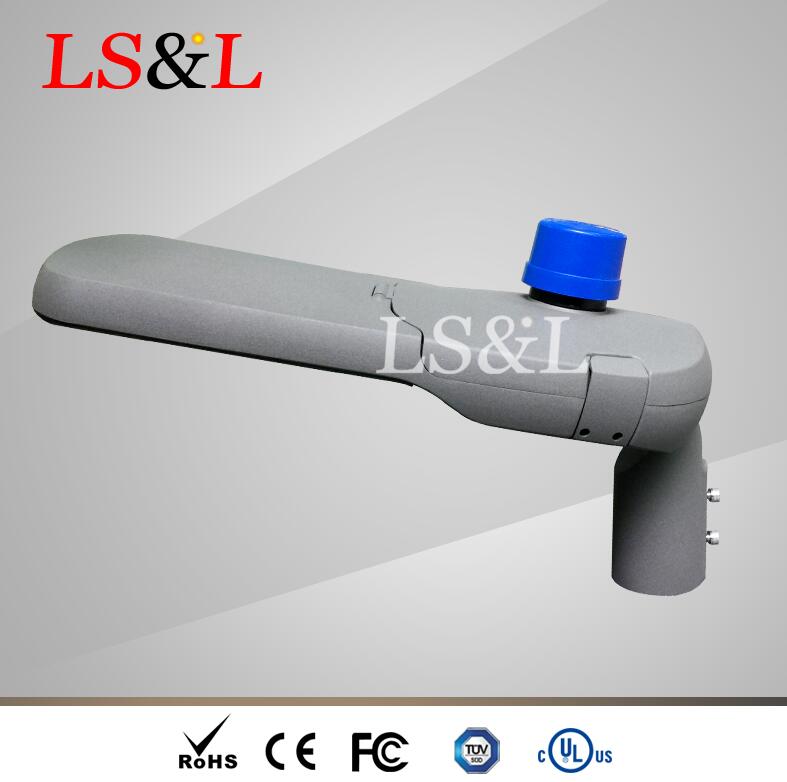
Best choice to choose--Luxsky Lighting ' s New Street Light
1. External integrated power supply with a unified interface reduces maintenance costs.

2. NFC wireless programming requires no wiring and cuts installation costs.

3. 94.5% efficiency and automatic dimming enable round-the-clock energy savings and lower electricity costs.
If you're interested, please click https://www.luxsky-light.com/led-street-lights/the-innovative-design-of-led-street-lights.html.





