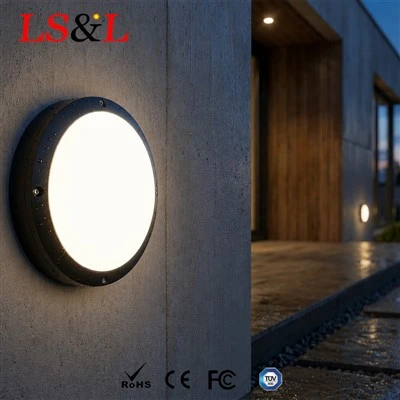
Many factory owners and contractors ask how much they can save by swapping old bulkhead lights for LED versions. Over my years in export, I have handled countless retrofit projects. Power savings are only part of the picture; ongoing maintenance and spare part costs also matter a lot. The return on investment for an LED bulkhead light should be calculated across electricity bills, servicing and downtime losses.
Electricity cost is the most obvious saving
Traditional fluorescent or halogen bulkhead fixtures have low luminous efficacy and draw high power to deliver the same illuminance. For example, an old 36W fluorescent bulkhead can be replaced by a matching bulkhead light running at only 12–18W. Many factory corridors and stairwells stay on 24/7, so the difference adds up steadily over time. Savings grow even larger for sites with a big fixture count and time-of-use electricity tariffs.
Lower maintenance cuts downtime risks
Legacy light sources have short lifespans, with frequent failures in tubes and ballasts that require regular electrician visits. Replacing wall-mounted fixtures at height incurs labour costs, plus extra charges for forklifts and access equipment. Quality LED units can last over 50,000 hours, drastically reducing service calls. For perimeter site paths fitted with an outdoor bulkhead light, harsh external conditions make old models break down far more often, so the maintenance advantage after upgrading is even greater.
Often overlooked extra benefits
Older fixtures suffer from slow startup and flickering. Many fluorescent variants contain mercury, so disposal must follow hazardous waste rules and carries extra fees. LEDs are mercury-free and turn on instantly. They can also be paired with motion sensors to brighten only when needed and dim when empty, unlocking further power savings. Newer housings feature improved sealing. Whether you pick an IP65 bulkhead light or IP66 bulkhead light, better dust and moisture resistance keeps failure rates down.
Simple calculation method for ROI
Gather three figures first: total number of existing fixtures, original wattage per unit and daily operating hours. Compare this with the new LED wattage and local electricity rates to work out annual kWh saved. Add labour and spare part savings, subtract the upfront fixture cost, and you get the payback period. Most standard industrial retrofits pay for themselves within 1–3 years, and 24-hour sites recoup investment faster.
Key pitfalls to avoid
Do not simply chase the lowest price. Cheap LEDs with exaggerated efficacy claims and poor thermal design suffer rapid lumen depreciation. Brightness drops sharply within two years, undermining your energy savings. For retrofit jobs, ask for official photometric reports and match IP and IK ratings to site conditions.
Final thoughts
Upgrading old bulkhead lights to LED cuts more than electricity costs. It also reduces labour, spare parts and hazardous waste disposal expenses. Retrofit projects deliver the strongest returns for walkways, stairwells and perimeter zones that run nonstop. Still, reliable fixtures are essential - otherwise, the money you save will go straight back into after-sales repairs.

Share your fixture quantity, original wattage and daily runtime, and I can run a quick energy-saving calculation, assess ROI and recommend suitable replacement options.