In all my years working in street light export, almost every new client asks the same question during the inquiry stage: how much electricity does an LED street light actually save compared to a traditional high-pressure sodium lamp? It sounds like a simple question, but to give a genuinely responsible answer, you need to work through power consumption, luminous efficacy, service life, and maintenance cost together - not just throw out a single percentage figure. Here's the full calculation logic we actually use with clients when running these numbers on real projects.
First, Understand the Fundamental Difference Between the Two Light Sources
High-pressure sodium (HPS) lamps are gas-discharge light sources - they produce light through sodium vapor discharge. This type of light source typically has a luminous efficacy of around 90–130 lm/W, and lumen depreciation accelerates noticeably with use; luminous flux usually drops significantly after about a year of operation. LED street lights, on the other hand, rely on semiconductor light-emission principles. Mainstream street light chips today already achieve 150–190 lm/W, with some high-end products going even higher. This gap in luminous efficacy is the fundamental technical reason LED street lights save energy - it's not just a marketing claim.
Actual Power Comparison: How Much Can You Save at the Same Illuminance Level
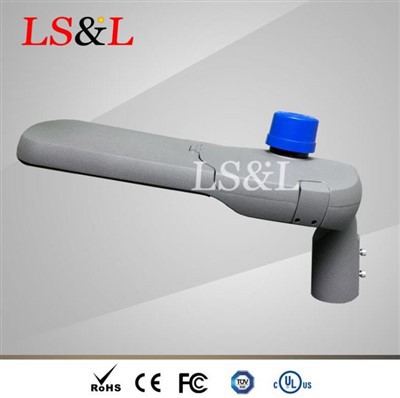
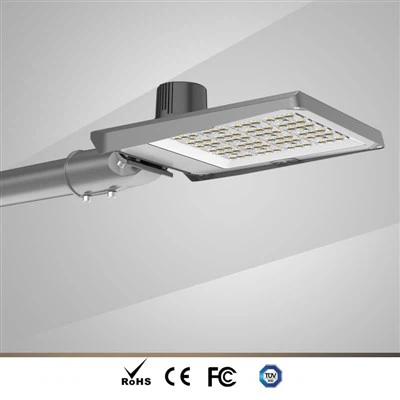
Take a common road lighting scenario as an example: a four-lane urban road with two-way traffic used to typically require 250W HPS lamps spaced roughly 30 meters apart to meet the illuminance levels required by national standards. Switching to LED street lights, the same illuminance conditions can usually be met - or even exceeded - with just 100–120W LED fixtures, a power reduction generally in the 50%–60% range. We've run actual measured comparisons across multiple municipal street light retrofit projects in Southeast Asia and Africa, and the overall energy savings consistently land around 55%, with some projects that use better-optimized light distribution designs reaching over 65%. This is exactly why, over the past few years, replacing sodium lamps with LEDs has become close to the default approach on overseas municipal lighting retrofit projects.
How to Calculate Annual Operating Costs in a Way That Actually Convinces the Property Owner
1. Calculate Annual Energy Consumption Based on Actual Operating Hours
Assuming an average of 10 operating hours per day over 365 days a year, a 250W sodium lamp consumes approximately 912.5 kWh per year. Switching to a 120W LED street light brings that down to roughly 438 kWh per year - a savings of nearly 475 kWh per fixture, per year. Multiply that figure by the actual number of fixtures on a given project, and you get the real annual electricity cost savings for the property owner.
2. Convert Savings Into Actual Currency Based on Local Electricity Rates
Electricity prices vary significantly between countries - industrial electricity rates in parts of the Middle East are relatively low, while rates in Europe and the US tend to run higher. We recommend clients calculate savings based on their actual local electricity rate, since the resulting annual savings figure becomes far more persuasive and makes it much easier for the property owner to secure a retrofit budget from the finance department.
3. Don't Overlook the Hidden Cost of Maintenance
Traditional sodium lamps typically have a service life of around 15,000–20,000 hours and depreciate quickly, usually requiring light source replacement every 2–3 years - and the labor plus materials cost of that replacement is far from negligible. LED street lights, by comparison, generally have a light source lifespan of 50,000+ hours, with some higher-quality products reaching 60,000+ hours. At 10 operating hours a day, that translates to essentially over a decade of operation without needing to replace the light source. The maintenance labor and materials savings from this alone are often even more substantial than the direct electricity savings - which is exactly why total lifecycle cost is such a closely watched metric in many international tender projects.
Beyond Energy Savings: Additional Value That's Easy to Overlook
Beyond the obvious advantage of lower power consumption, LED street lights generally achieve a CRI of 70–80 or higher, with some products exceeding 80 - a notable improvement over the yellowish light typical of traditional sodium lamps, which translates into better road-surface detail visibility, a real benefit for both nighttime driving and pedestrian safety. LED street lights also commonly support smart dimming and time-based lighting control, automatically reducing power output during late-night hours when traffic volume is low, further cutting actual electricity usage - a capability traditional sodium lamps simply cannot offer, and one that's explicitly required in the technical specifications of many smart city tender documents.
Conclusion
Taking power consumption, luminous efficacy, maintenance cost, and service life together, LED street lights typically deliver energy savings of 50%–65% compared to traditional high-pressure sodium lamps, and when combined with the maintenance cost savings from a much longer light source lifespan, the overall lifecycle cost advantage becomes very clear. This is exactly why LED replacement has become the go-to choice for municipal lighting retrofit projects worldwide in recent years.
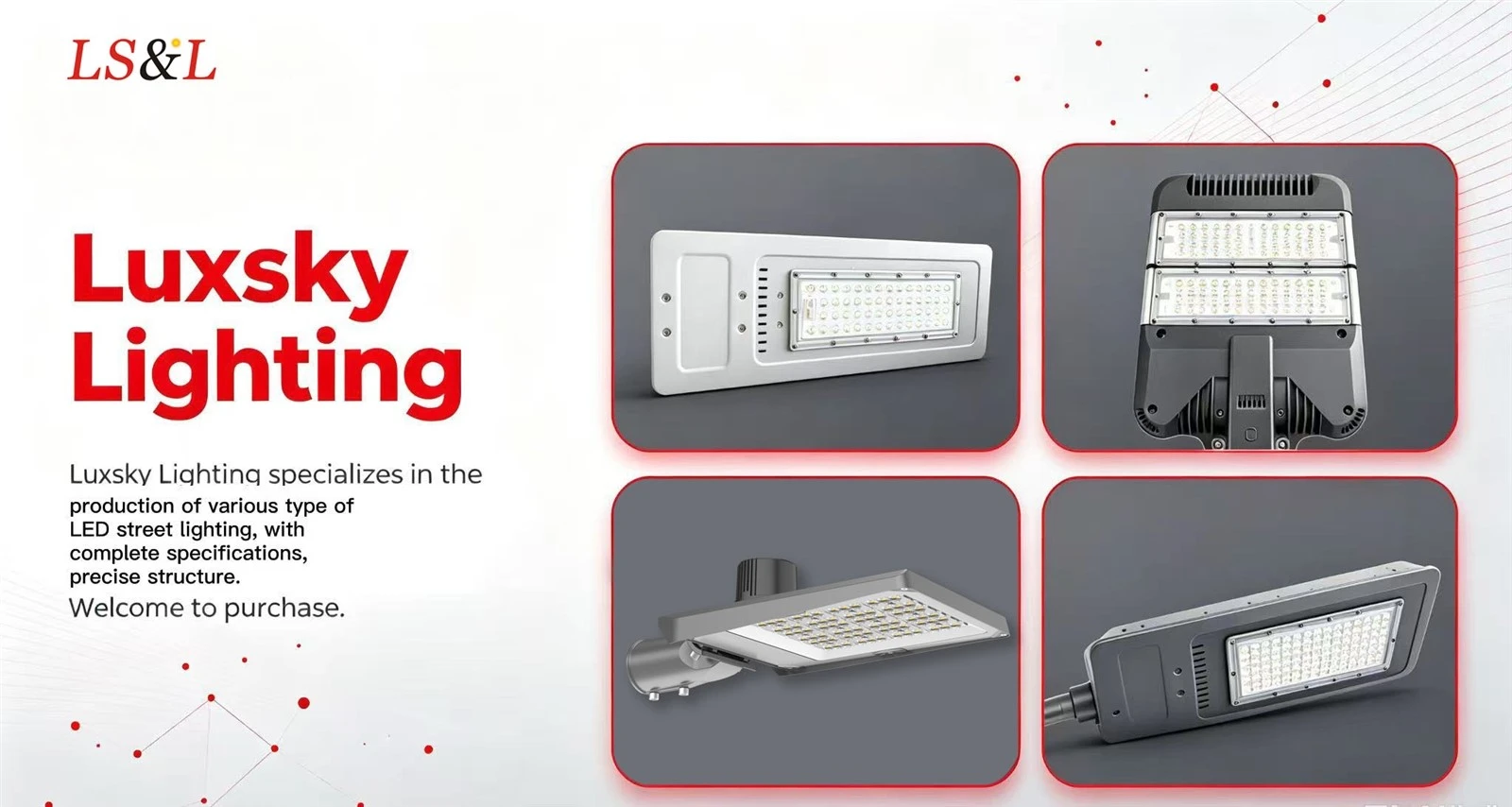
At Luxsky Lighting, we consistently use high-efficacy, high-CRI raw materials in our chip selection and overall fixture light distribution design, with measured luminous efficacy stable above 150 lm/W. Our drivers use a wide-voltage design that adapts to different countries' grid environments, and product quality has been proven through long-term use across multiple overseas municipal projects, with failure rates and lumen depreciation control that lead the industry. If you're planning a street light retrofit or new lighting project, feel free to reach out to our team - we can provide a detailed energy-savings calculation report and customized product recommendations based on your region's electricity rates, road classification, and lighting standards, helping you build a more convincing case when applying for a retrofit budget from the property owner or finance department. Get in touch anytime.