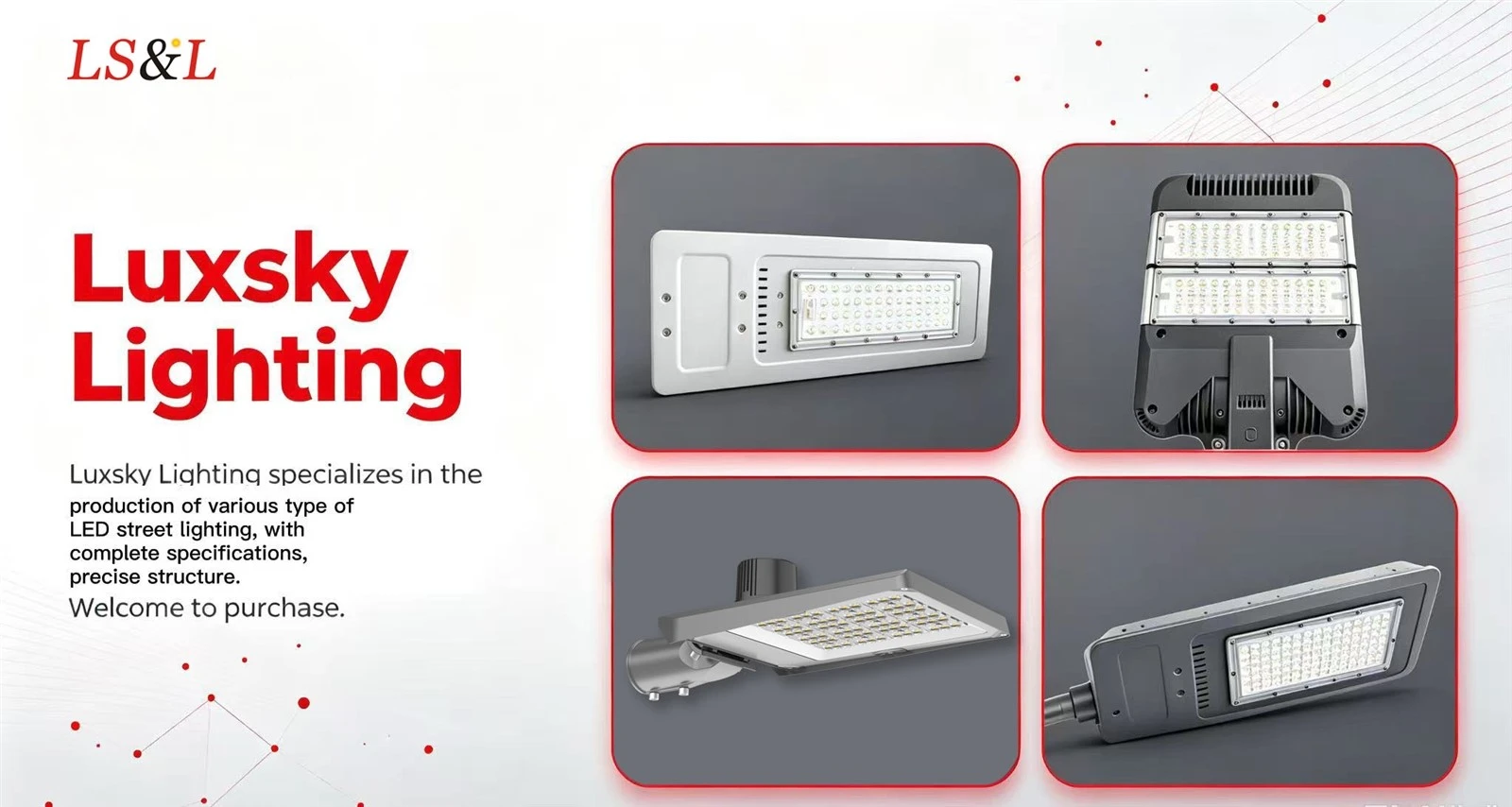
As an LED street light manufacturer with more than twelve years of export experience, I have supplied lighting to farms, logistics parks, hospitals and industrial zones in the Middle East, Southeast Asia, Africa and South America. The first question many farm owners ask me is: "If we change our old lamps to LED, how much electricity will we really save?" The honest answer is that it depends on what you replace, how long the lights run and how you control them. Here is how I explain it to my customers.
Typical Savings Compared with Old Lamps
Many farms still use high-pressure sodium, metal halide or even old mercury floodlights outdoors. A 250W or 400W old fixture can often be replaced by a 100W to 150W LED street light with similar or better light on the ground. That means savings of roughly 50% to 70% in electricity. The exact number depends on the old lamp, the ballast loss and the new design, so treat these figures as a general reference and not a promise.
A Simple Example You Can Calculate
Take 60 old 250W lamps (about 280W with ballast) replaced by 60 LED fixtures of 100W. The saving is about 180W per light, or 10.8kW for the whole farm. At about 10 hours per night, that is around 39,400 kWh per year. At USD 0.10 per kWh, you save about USD 3,900 every year, before counting maintenance. Use your own wattage, hours and tariff for a real number. Good LED street lights for farms should come with real IES files, so the lower wattage still delivers the light you need.
Lower Load Matters on Weak Farm Power
Energy saving on a farm is not only about the bill. Many farms have long cable runs and limited transformer capacity, so lower wattage reduces voltage drop and lets you add more lights, pumps or cold rooms without upgrading the supply. Solar versions also become more practical, because every watt saved reduces panel and battery size for remote roads and fence lines.
Smart Control Adds More Savings
A farm does not need full brightness all night. Photocells switch lights on and off exactly at dusk and dawn, and motion sensors and dimming keep quiet roads and fence lines low until a vehicle or worker arrives. In many projects this adds another 20% to 30% saving on top of the LED upgrade. Keep gates, loading areas and machinery yards at a stable level while work is going on, because safety comes before savings. Many of my customers recover the investment in about two to four years, depending on tariff and operating hours.
Savings Only Last if the Product Lasts
A cheap LED that fades or fails in two years destroys your saving. Dust, humidity, heavy rain and lightning are everyday risks on farms, so I recommend IP66, IK08 and surge protection of 6kV to 10kV. Replacing one fixture on a 6-meter pole means hiring equipment and stopping work, so I suggest an LED lighting supplier with 5 year warranty and a real factory behind it. As an LED lighting OEM manufacturer, we also customize wattage, beam angle, color temperature and branding for project buyers and distributors. Our quality standard includes:
- Branded LED chips and drivers, 100% aging test before packing
- Die-cast aluminum housing, IP66 / IK08, 6kV to 10kV surge protection, CE and RoHS certified, with real IES files and test reports for DIALux design
When a customer asks me for a 5-year warranty, I can say yes with confidence, because we test before shipment, not after complaints.
Conclusion
Switching to LED can cut a farm's outdoor lighting electricity by about 50% to 70%, and smart control can save even more, while maintenance cost also drops. Our LED street lights are built with strict quality control, so the savings stay real, year after year.
If you are planning a new farm project or upgrading an old one, choose Luxsky Lighting. Contact us today for a free DIALux layout and a competitive quote.