

With years of experience in industrial lighting foreign trade and project implementation, I have witnessed many overseas warehouse projects suffering failed acceptance, frequent repairs and budget overruns due to poorly selected low-quality LED tri-proof lights. Though cheap fixtures seem to cut procurement costs, they often bring strobing, water ingress burnout and rapid lumen depreciation. Drawing on my on-site inspection and project experience, I will share practical methods to help you steer clear of substandard warehouse lighting products.
1. Reject Falsified Parameters and Verify Actual Lighting Performance
Most low-grade lighting products on the market exaggerate power, brightness and luminous efficiency. Their nominal parameters look good on paper, yet they deliver insufficient illumination and high energy consumption in real use. Once installed in bulk, uneven and dim lighting will disrupt warehouse sorting and inventory work.
Genuine industrial-grade tri proof lights feature truthful and compliant specifications with stable light output and no harmful flicker. They maintain consistent brightness during long 24-hour operation without excessive lumen decay, meeting lighting requirements for various warehouse construction projects.
2. Check Sealing Workmanship to Prevent Failed Dust & Water Protection
Warehouses are typically dusty, humid and subject to sharp temperature changes. Sealing quality determines the reliability of the lighting fixture. Inferior products use thin gaskets and rough assembly. They look identical to premium versions externally, yet gaps in sealing cause dust accumulation and water penetration within months, burning out drivers.
For harsh warehouse working conditions, choose well-crafted IP65 LED tri proof light. Its integrated seamless sealing delivers reliable dustproof and waterproof performance, with strong resistance to vibration and temperature fluctuation. It runs steadily in warehouse environments and eliminates quality risks caused by compromised protection.
3. Inspect Raw Materials & Components to Prevent Cost-Cutting
Cheap low-quality lights always cut corners, adopting poor LED chips, simple drivers and weak heat dissipation housings. Such fixtures build up heat rapidly during continuous operation, accelerating component aging. Their brightness drops sharply and units fail in batches within half a year.
Premium LED tri proof lamp comes with thick industrial housing, efficient thermal structure and branded constant-current drivers. Made with solid materials, it offers outstanding heat dissipation, anti-aging and anti-decay properties, greatly reducing maintenance and replacement frequency for warehouse lighting systems.
4. Validate Certifications & Test Reports, Stay Away from Uncertified Products
Many small manufacturers hold no formal testing qualifications. Their products lack international electrical, protection and energy efficiency certifications. These uncertified items carry quality risks, may be detained during export customs clearance, and fail overseas safety audits, directly delaying projects and triggering rework.
Before bulk procurement, always request complete IP rating, electrical safety and energy efficiency test reports, and verify batch inspection data. Avoid uncertified, untested fixtures to guarantee compliant project delivery.
To avoid poor LED tri-proof lights for warehouse projects, do not prioritize low prices. Focus on quality and compliance. By checking lighting performance, sealing craftsmanship, material quality and certification documents, you can select reliable fixtures and prevent later quality failures, failed acceptance and excessive maintenance costs.
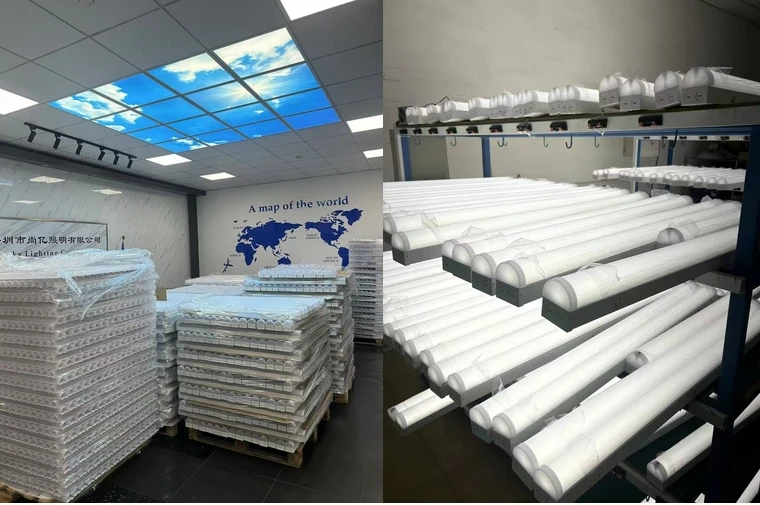
If you are preparing warehouse lighting procurement and worry about buying defective products, feel free to reach out. With years of foreign trade engineering experience, I can provide professional fixture selection and inspection standards to ensure smooth project delivery.





