

When upgrading warehouse lighting to LED, the first question is usually how long it will take to pay back. A clear ROI calculation supports better decisions and makes discussion with management or purchasing easier. Here's a practical way to break down the steps.
1. Establish the current annual lighting cost
Add up the number of existing fixtures, their wattage, daily operating hours, electricity price and annual replacement/maintenance costs.
A basic formula is:
Annual energy cost ≈ total power (kW) × hours per day × 365 × electricity price
Then include the yearly cost of lamps and labour to arrive at the total annual expenditure of the present system.
2. Estimate the annual cost of the LED option
New LED fixtures typically draw significantly less power. Calculate the new annual energy cost the same way and add the expected maintenance cost (usually much lower than with traditional tubes). An LED tri proof light is a common choice in warehouses because of its low consumption and longer service intervals.
3. Calculate the annual saving
Annual saving = current annual total cost - LED annual total cost
This is the key figure on which payback is based.
4. Determine the initial investment
Include fixture purchase, installation labour and any accessories or minor wiring adjustments. Linear products such as a weatherproof LED batten light often keep installation costs manageable and should be included in the total.
5. Calculate the simple payback period
Payback (years) ≈ initial investment ÷ annual saving
Most warehouse LED projects fall between one and three years, depending on the efficiency of the old system, electricity price and operating hours.
6. Additional factors worth considering
- Hidden costs of lumen depreciation: older tubes need more frequent replacement to maintain light levels
- Better-protected products (such as an IP65 LED tri proof light) reduce extra maintenance caused by failures
- Possible energy-efficiency incentives from government or utilities
- Improvements in lighting quality that support productivity or safety (harder to quantify but useful to note)
Simple example
Current system annual energy + maintenance = 80,000; LED solution = 35,000; annual saving = 45,000.
Initial investment = 90,000.
Payback ≈ 90,000 ÷ 45,000 = 2 years.
After two years the savings become net benefit.
Use real operating data rather than brochure ideals. Warehouses with long running hours, high electricity prices or inefficient existing lights usually see faster returns.
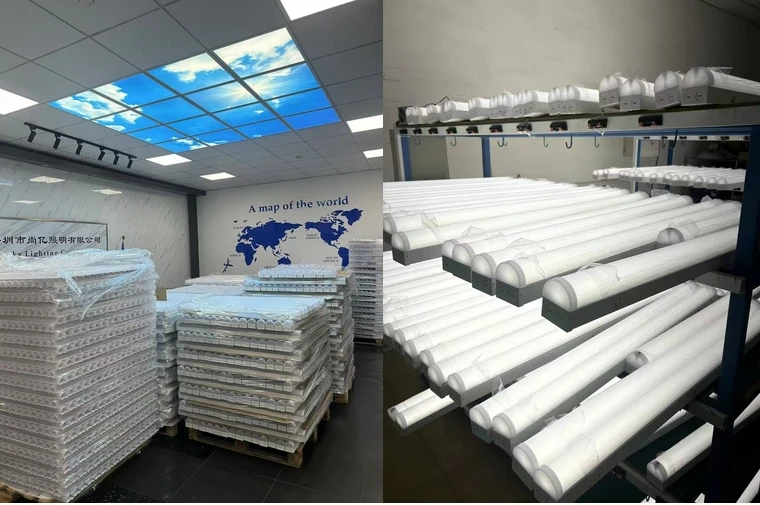
A clear ROI figure gives the upgrade decision more confidence. If you are evaluating a warehouse LED project, share the current fixture wattages, quantities, daily operating hours and approximate electricity price. I can help run a rough saving and payback estimate. When the numbers are transparent, the project moves forward more easily.





