

Once a warehouse lighting project starts, choosing the right supplier often matters more than simply comparing prices. Stable products, reliable delivery and responsive after-sales support keep the project on track. After years in foreign trade and project support, I have seen delays and extra costs caused by poor supplier choices. Here are practical points to consider.
1. Focus on product fit, not price alone
Warehouse environments demand proper protection, heat dissipation and impact resistance. Check whether the supplier can provide an LED tri proof light genuinely suited to warehouse use rather than a generic model. Asking for specific protection ratings, materials and efficacy data is more useful than listening only to the quotation.
2. Review real project experience
Has the supplier handled similar warehouses or logistics centres? Can they share site photos or operating feedback? Experienced suppliers understand how mounting height, spacing, dust and humidity affect performance, and their proposals tend to be more practical.
3. Confirm certifications and warranty
Are the necessary safety and protection certifications in place? Is the warranty period and coverage clearly stated? For export or cross-regional projects these points directly affect later risk. An IP65 LED tri proof light is commonly used in warehouses-verify that the supplier can maintain steady supply and matching warranty terms.
4. Evaluate delivery and communication
Can lead times be committed to? How quickly do they respond to order changes? Is communication smooth in English or the local language? Sites usually work to fixed schedules, so supplier cooperation directly influences installation progress.
5. Look at after-sales and technical support
Who responds when a fixture has a problem? Do they offer installation guidance or basic troubleshooting advice? A supplier with weak after-sales support can turn a low purchase price into higher long-term costs.
6. Compare total cost of ownership
Consider product price together with expected lifespan, energy use and maintenance frequency. Options that look cheap at first but depreciate quickly or fail often raise overall expenditure. Linear fixtures such as a weatherproof LED batten light are frequently used in long aisles; consistent batch quality from the supplier should also form part of the comparison.
In our work at Luxsky Lighting we focus on warehouse and industrial projects. The team is familiar with how tri-proof lights perform under dust, humidity and long operating hours, and we provide practical recommendations based on mounting height, zone function and budget, backed by corresponding warranty and after-sales support. Many clients tell us that communication efficiency and problem response are key reasons they continue the cooperation.
There is no single correct supplier, yet reviewing product fit, project experience, delivery capability and after-sales support greatly reduces risk. Price matters, but it is not the only measure.
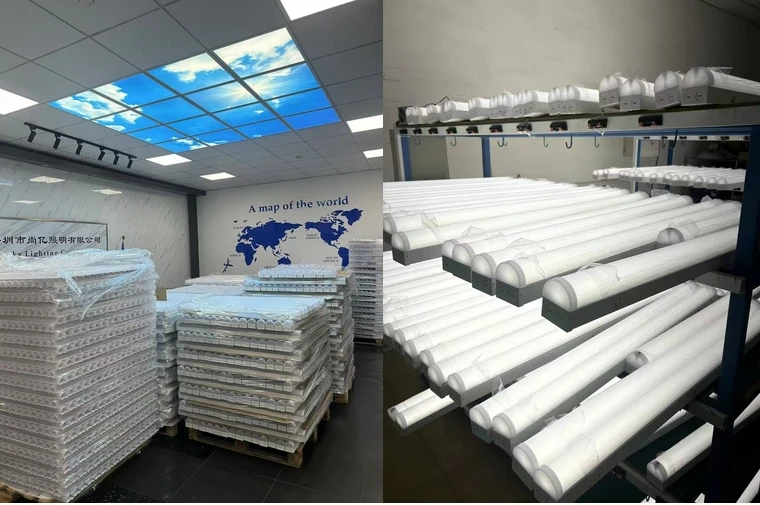
If you are selecting an LED tri-proof light supplier for a warehouse project or comparing several quotations, share the approximate scale, mounting height and main environmental conditions. We are happy to help prioritise the key points and welcome you to learn more about Luxsky Lighting's products and services. Choosing the right partner makes the whole project more secure.





