

Food-processing areas are not only humid and frequently washed down; some zones also contact cleaning agents, salt or mildly acidic substances. If fixtures lack adequate corrosion resistance, housings rust, seals age and water ingress soon follows. Choosing the right corrosion-resistant lighting clearly extends service life. Here are practical selection points.
1. Identify the source and severity of corrosion
First establish whether the main agents are water vapour, cleaning chemicals, salt mist or other substances. Ordinary wet zones, intensive wash-down areas and locations near curing or seasoning processes place different demands on materials. Once the corrosion source is clear, product selection has a proper direction.
2. Prioritise overall protective design
Corrosion resistance is not only a matter of housing material; sealing structure is equally critical. Once vapour or chemical gases enter the fixture, internal components fail faster.
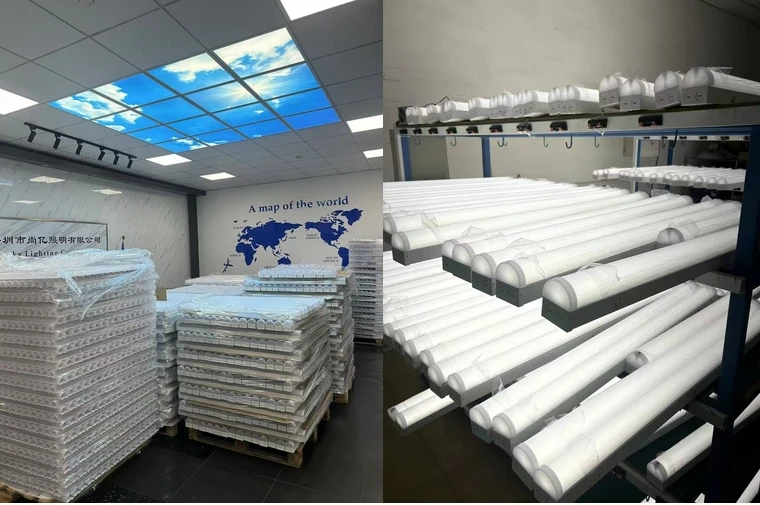
Tri proof lights incorporate enhanced sealing that limits the entry of corrosive media and are a common choice in food environments.
3. Pay attention to housing and gasket materials
PC or thickened engineering-plastic housings are widely used in general food workshops because they are light and do not rust. Any metal parts need reliable surface treatment. Gaskets must resist ageing and cleaning agents.
A robust LED tri proof lamp with well-matched materials delivers more stable long-term performance.
4. Match the protection rating to wash-down intensity
For everyday splashing and humidity, IP65 is usually sufficient. Where high-pressure hoses are used at close range, higher protection or improved installation sealing may be required. Look beyond the stated rating and confirm the actual construction and test data.
5. Easy-to-clean surfaces also matter
Even a corrosion-resistant fixture will age faster if dirt and cleaner residues remain on the surface. Smooth faces with minimal crevices suit food plants better.
A weatherproof LED light used in linear runs offers higher cleaning efficiency and helps preserve protective performance.
Corrosion-resistant lighting is not determined by a single specification. It results from protective design, materials and installation maintenance working together. Evaluating the corrosive environment, product construction and cleaning convenience together greatly improves the chance of choosing correctly.
If fixtures in your food plant show rust, aged seals or early water ingress, share the main processes and cleaning methods. I can help identify where protection needs to be strengthened. When materials and protection match the conditions, the lights last much longer.





