

Lighting in logistics centres must cope with long operating hours, dust, humidity and forklift traffic. Reliability matters more than peak brightness alone. The right choice reduces failures, lowers maintenance and keeps the working environment stable. After years of project support, here are practical points that help in selection.
1. Clarify the environment and needs first
Conditions vary widely across a logistics centre. Storage areas are often dusty, loading zones may face rain or moisture, and picking aisles need even illuminance. Identify the main issues-frequent failures, insufficient light or difficult maintenance-so that later choices stay focused.
2. Give priority to protection performance
Dust and water resistance are fundamental. IP65 meets the everyday dust and cleaning requirements of most logistics centres. Look beyond the stated rating and check the sealing design and real test data. An LED tri proof light is built for these conditions and usually offers more dependable sealing and structural strength.
3. Pay attention to thermal design and lifespan
Fixtures in logistics centres run many hours each day; poor heat dissipation accelerates lumen depreciation and driver ageing. Prefer products with effective thermal design and controlled light-output maintenance. Aluminium housings or well-engineered PC housings generally deliver better long-term stability.
4. Consider impact resistance and mounting method
Forklift movement brings the risk of contact. Housing strength and secure fixing are both essential. Linear fixtures such as a weatherproof LED batten light are widely used in long aisles; they provide good continuity after installation and are relatively easy to maintain.
5. Evaluate total cost of ownership
A low initial price can be offset by higher failure rates or faster lumen drop, raising energy and maintenance costs later. Compare power consumption, expected life, warranty and maintenance frequency together rather than unit price alone. A well-protected IP65 LED tri proof light reduces dust and moisture ingress while also cutting how often service is needed.
6. Confirm the supplier's support capability
Even a good product causes problems if supply is unstable or after-sales support is weak. Ask about warranty scope, response times and experience with similar projects to gauge cooperation risk.
A reliable lighting system results from matching the environment, solid product performance and dependable supplier support. Asking for real data and case references is more useful than relying on brochure claims.
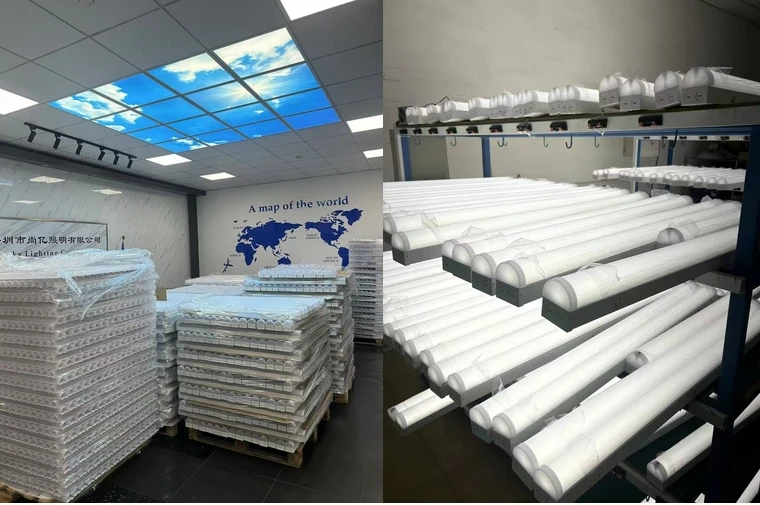
If you are selecting LED lighting for a logistics centre or are dissatisfied with the reliability of current fixtures, share the main environmental conditions and operating issues. I can help prioritise the key parameters and points to watch based on similar projects. The right choice makes later operation far more straightforward.





