

With years of experience in industrial lighting foreign trade, I've found most failed warehouse lighting project inspections stem from non-standard specifications, vague parameters and improper product selection. A professional warehouse lighting specification serves as a unified standard for procurement, installation and acceptance. It helps avoid exaggerated specs, mismatched fixtures and inconsistent quality. Drawing on engineering experience, I outline key steps to create a standardized warehouse lighting specification.
1. Define site conditions and basic lighting requirements
Start by recording accurate site data: humidity, dust level, operating hours and mounting height. Environments vary greatly, so protection, weather resistance and vibration standards differ accordingly. Ambiguous descriptions leave room for suppliers to deliver unsuitable products.
For regular dry storage zones, specify basic industrial lighting in your document. The weatherproof LED light adapts to typical warehouse temperature and humidity with stable dust and moisture resistance. It meets general lighting requirements for large storage spaces and is widely specified for standard warehouses.
2. Clarify core fixture parameters and protection ratings
Vague parameters are the biggest flaw in many specifications. Many buyers only list power and brightness while ignoring IP ratings, color temperature, lumen depreciation and electrical indexes, which often leads to falsely advertised goods. Clearly state IP class, CRI, temperature range and constant-current driver requirements.
For high-standard dusty, humid or high-ceiling warehouses, specify high-protection fixtures in technical clauses. The IP65 LED tri proof light delivers full dust and water resistance with anti-vibration and anti-aging performance. Its well-defined parameters make it suitable for high-end warehouse projects and harsh industrial environments.
3. Standardize fixture types and installation requirements
Your specification should define fixture models, mounting methods, lamp base compatibility and wiring rules. For old warehouse retrofits, note circuit compatibility and fitting standards to prevent mismatches and costly rework after delivery.
Long aisles and sorting areas suit linear fixtures. The weatherproof LED batten light features simple installation and wiring with even illumination. It works well for both new builds and retrofits. Standardizing fixture models ensures consistent lighting across the whole warehouse.
4. Add clauses for certifications, warranty and acceptance
A complete specification must cover compliance requirements, including mandatory international certifications, factory test standards, warranty periods and acceptance criteria. This keeps uncertified or refurbished poor-quality products out and ensures consistent mass quality for overseas site audits.
A qualified warehouse lighting specification covers site requirements, fixture parameters, installation rules, certifications and warranty terms. Quantified indexes and clear clauses align expectations between buyers and suppliers, lowering procurement risks and long-term maintenance costs.
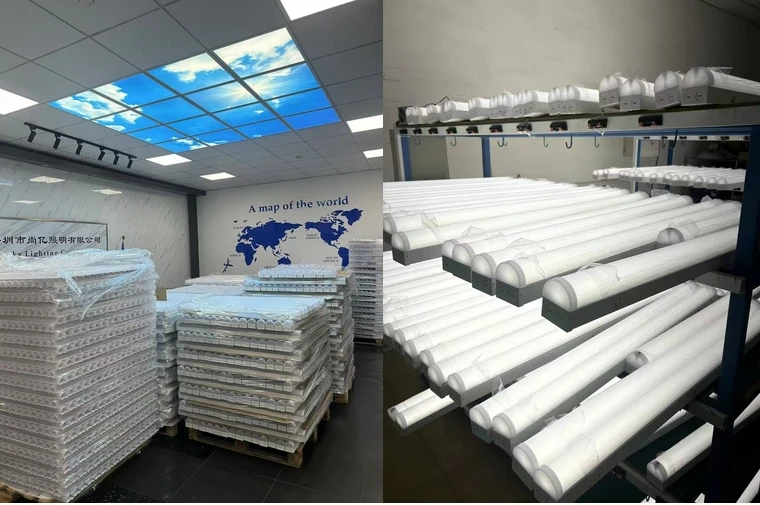
If you need help drafting a professional warehouse lighting specification or require templates and parameter configuration, feel free to reach out. With rich experience delivering overseas warehouse lighting projects, I can create compliant lighting solutions tailored to your site conditions.





