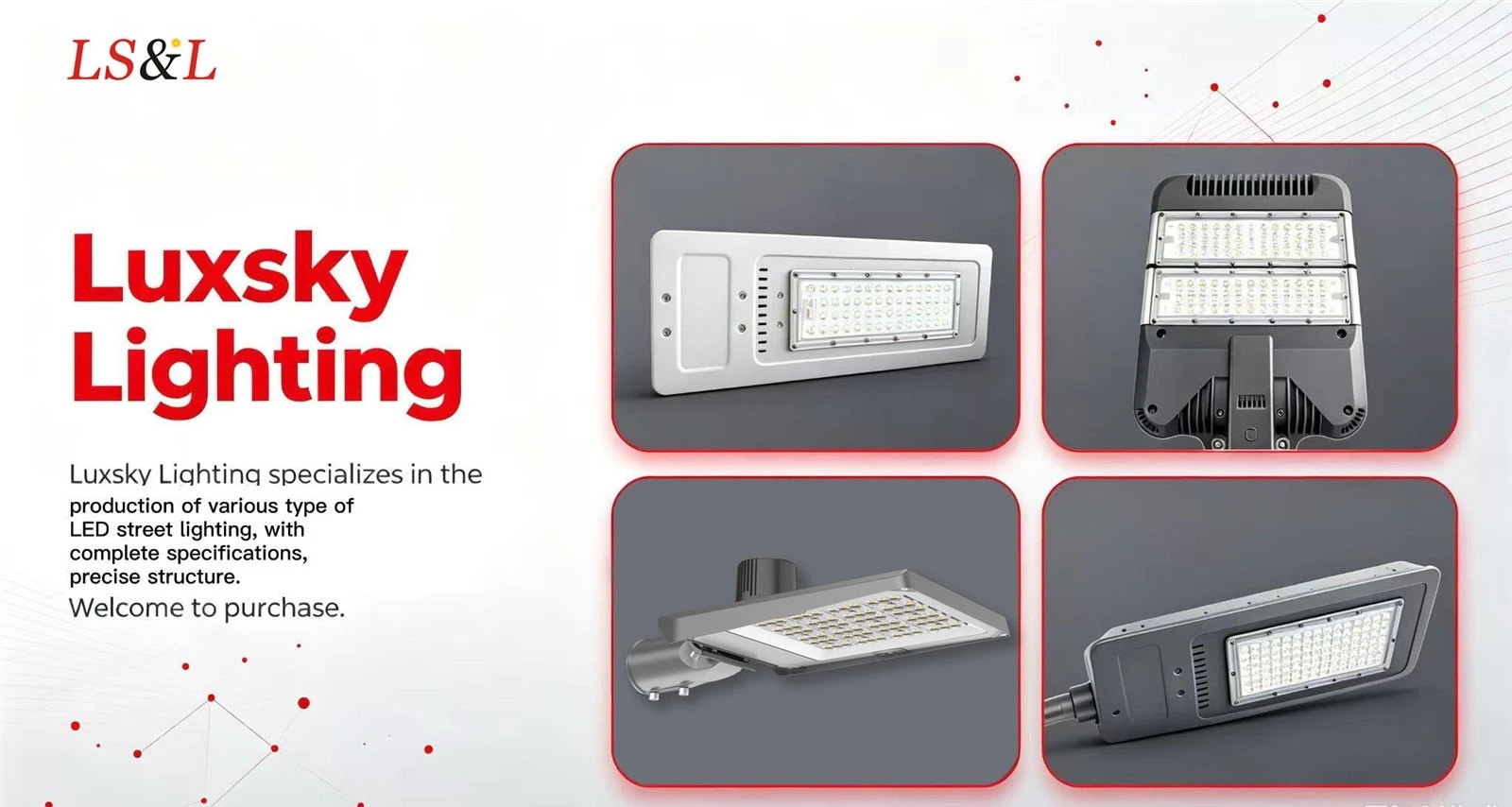
I've spent over a decade in the street lighting export trade, and glare is one of the most frequent complaints I hear - especially from clients in Europe and North America, where municipal tenders often specify a UGR (Unified Glare Rating) requirement outright. Glare sounds like a simple "it's blinding" problem, but it actually involves several factors: optical design, mounting angle, and fixture selection. Let me walk you through how to solve it properly.
What Causes Glare in the First Place
Simply put, glare happens when the contrast between a light source's brightness and its surrounding environment is too high, causing eye discomfort or even temporary visual impairment. LED sources have a small emitting surface with concentrated brightness - if mounted bare without proper optical treatment, they easily create a harsh bright spot right in a driver's line of sight. This is exactly why so many low-cost roadway LED lighting products, which skip proper lens and shielding design to cut costs, generate so many "glaring" complaints once installed on the road.
Solution 1: Proper Optical Lens Design
A professional street light manufacturer designs application-specific optical lenses that redistribute the light emitted from the LED source, concentrating it on the road surface rather than shining directly into the sightlines of drivers and pedestrians. A well-designed lens not only reduces glare but also improves light utilization and reduces unnecessary light loss - this is exactly the optical design detail that needs close attention under a genuine strict quality control LED engineering lighting program.
Solution 2: Anti-Glare Shields or Louvers
For projects with especially strict glare requirements - roads near hospitals or schools, for instance - anti-glare shields or louver structures can be added to the fixture to further block the source's direct viewing angle, pushing the UGR value even lower. These add-ons increase material cost somewhat, but they're well worth the investment for high-pedestrian-traffic, glare-sensitive stretches of road.
Solution 3: Properly Control Mounting Angle and Height
An excessive mounting tilt angle or an unsuitable mounting height can also make glare worse. As a general rule, mounting tilt should be kept within 0-15 degrees, with the exact angle calculated based on the fixture's beam distribution curve and road width - avoiding the temptation to over-tilt the fixture just to extend illuminance coverage, which ends up sending direct glare straight into the eyes of drivers and cyclists.
Solution 4: Choose Color Temperature Wisely
Color temperature also affects how much glare the human eye perceives subjectively - at the same brightness level, a higher color temperature (6000K or above, cool white) tends to produce more noticeable glare than a mid-to-low color temperature (3000K-4000K). Many European and North American municipal projects are now shifting toward a neutral white around 4000K, balancing lighting performance with reduced glare discomfort.
Smart Dimming Also Helps Reduce Perceived Glare
If a project uses Smart outdoor light capability, brightness can be automatically lowered during low-traffic periods, reducing the brightness contrast between the light source and its surroundings, which indirectly reduces the glare intensity perceived by drivers and pedestrians - an added benefit of smart dimming beyond just energy savings.
How We Control Glare
At Luxsky Lighting, we hold to strict quality control LED engineering lighting standards, equipping all products with professional optical lenses and providing UGR test reports based on each client's project needs, helping keep glare within a reasonable range right from the lighting design stage.
Conclusion
Glare might seem like a minor detail, but it directly affects road user experience and driving safety. Luxsky Lighting has focused on LED street light engineering for years, holding to strict quality control and professional optical design to deliver dependable roadway LED lighting solutions to clients worldwide. If you're selecting fixtures for a project, reach out to us for UGR test reports and a quote.