

Lighting can account for a noticeable share of warehouse operating costs, especially in facilities that run long hours. Many older sites still rely on traditional tubes that consume more power and deliver lower efficacy, driving up both electricity and replacement expenses. Switching to LED usually brings a clear reduction in energy use. Here's how to cut warehouse electricity costs effectively with LED lighting, based on practical experience.
1. Choose high-efficacy LED products
Higher efficacy means less power is needed to reach the same light level. Quality LED fixtures typically far outperform traditional tubes in this respect, forming the foundation of energy savings. For aisles and work zones, prioritise a stable LED tri proof light that maintains brightness while keeping power draw under control.
2. Design illuminance and layout according to need
Brighter is not always better. Set realistic target levels for each zone-higher for main aisles and picking areas, moderate for general racking. Correct spacing and mounting height prevent over-lighting and the waste that comes with it. Linear options such as an LED tri proof lamp can often cover longer runs with fewer fixtures when the layout is well planned.
3. Use zoning and sensing controls
Not every area requires full output all day. Partitioned switching, timers or occupancy sensors allow lights to run at full power only when needed and to dim or switch off otherwise. In larger warehouses this additional saving can be substantial.
4. Limit hidden waste from lumen depreciation and maintenance
Traditional tubes depreciate quickly, forcing earlier replacement or extra fixtures to maintain levels. LEDs depreciate more slowly, and well-protected products reduce output loss caused by dust or moisture. A weatherproof LED light helps sustain performance in dusty or humid conditions, supporting lower long-term energy use.
5. Pay attention to overall system efficiency
Driver efficiency, supply stability and wiring losses also affect actual consumption. Selecting matched drivers and checking circuits helps avoid unnecessary extra draw.
6. Calculate the payback period
Before replacement, make a simple estimate: total existing power, daily operating hours and electricity price versus the LED proposal's consumption and investment. Most warehouses recover the cost within one to three years, after which the savings continue.
Reducing electricity costs is not achieved by changing lamps alone. It results from high-efficacy products, thoughtful design and practical controls working together. The right approach usually lowers both energy bills and maintenance effort.
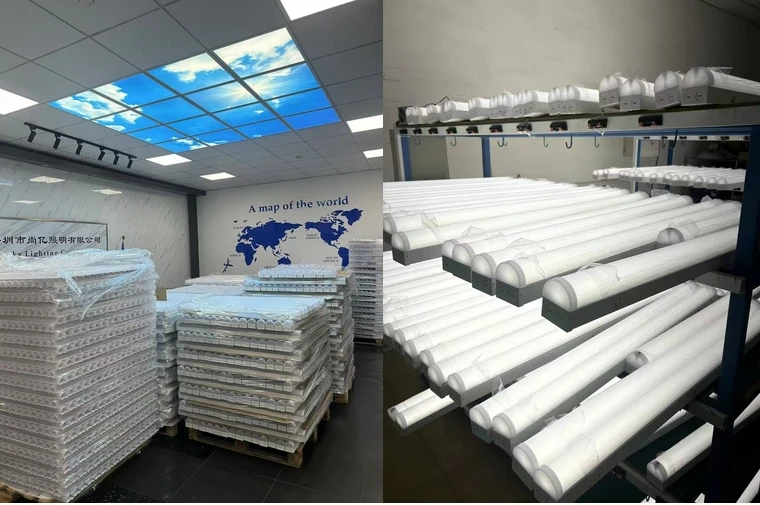
If electricity costs are a concern at your warehouse or you are planning a lighting upgrade, share the approximate number of fixtures, operating hours and main zones. I can help estimate the saving potential and priority areas based on similar projects. Lower energy costs make long-term operations noticeably easier.





