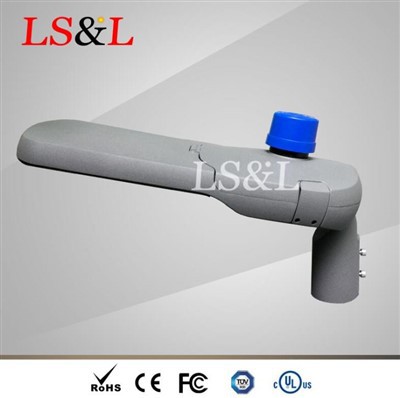
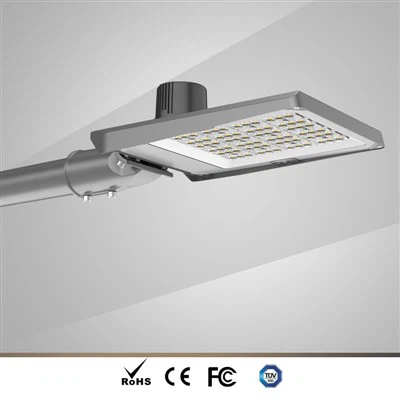
In all my years exporting street lights, IK impact protection rating is one of those parameters that often gets left off inquiry sheets, only to become a sticking point during acceptance inspection later. Most buyers are quite familiar with IP ingress protection ratings - they can rattle off IP65 or IP66 without thinking twice - but ask them about IK rating and plenty of them draw a blank. In reality, IK rating matters just as much, especially for street lights, which sit long-term outdoors, take a beating from wind and flying debris, and can even face vandalism or falling object impacts from height. If the housing's impact resistance falls short, the light-duty consequence is a cracked housing that lets water in; the worst case is the entire fixture coming loose and injuring a pedestrian below. That's a genuine liability issue, not a spec-sheet formality. Drawing on years of export project experience at our factory, let's walk through the logic behind IK rating selection and how to prevent falling object risks.
What IK Rating Actually Is, and How It Differs from IP Rating
IK rating, short for the impact protection rating of an enclosure, is defined by the IEC 62262 standard from the International Electrotechnical Commission. It measures how much impact energy a fixture's housing can withstand without damage, running from IK00 to IK10 across eleven levels - the higher the number, the stronger the impact resistance. IK08 corresponds to an impact energy of 5 joules, roughly equivalent to a 5kg weight free-falling from about 0.1 meters and striking the housing. IK10 corresponds to 20 joules, four times the impact resistance of IK08.
Many clients tend to conflate IP and IK ratings, but they measure entirely different things. IP rating measures dust and water ingress protection; IK rating measures resistance to mechanical impact. A fixture can achieve both IP66 and IK08 simultaneously, but it's also entirely possible for a product to have a high IP rating paired with a low IK rating - this is especially common with lower-cost products that prioritize sealing but use thinner housing materials, which tend to crack more easily under hail, flying stones, or intentional impact. That's why these two parameters need to be verified separately during fixture selection - a high IP rating alone doesn't guarantee the fixture's overall protection is up to standard.
Should Street Lights Require a Minimum of IK08? Standards Vary by Application
This is the question clients ask most often, and my answer is: IK08 is currently the widely accepted baseline recommendation for street light housing internationally, but it's not a fixed requirement for every scenario - it really depends on the installation environment and risk level.
For standard municipal roads and residential street lighting, where the surrounding environment is relatively controlled, most international standards and procurement specifications treat IK08 as the baseline threshold, and outdoor lighting products under EU CE certification generally reference this figure in practice as well. However, for street lights installed near sports stadiums, school playgrounds, or ball courts, where there's a real risk of ball impacts, we'd recommend stepping up to IK09 or even IK10. For installations in areas with poor security conditions and a higher likelihood of vandalism - certain projects in the Middle East and Africa, for example - clients often proactively request IK10 or even higher custom housing solutions; we've had clients request anti-tamper screws and reinforced lens covers on top of that. Conversely, for fixtures mounted at the top of high-mast poles, well out of reach of pedestrians and vehicles, the IK requirement can reasonably be relaxed, with more attention instead directed toward anti-fall structural design.
How to Prevent Falling Object Risks
IK rating addresses whether the housing can withstand an external object striking it, but falling object risk is actually a different dimension of the problem - it refers to the risk of the fixture itself, or a fixture component, detaching from height and striking pedestrians or vehicles below. This is also a key focus during acceptance inspections in street light export projects, particularly in the European and North American markets, which have specific installation regulations governing fall protection for fixtures.
Based on years of experience at our factory, preventing falling object risk generally comes down to three areas. First is redundant structural design: beyond the primary mounting bolts connecting the fixture to the arm, we recommend adding a secondary safety wire or fall-prevention chain, so that even if the primary mounting structure fails due to aging or impact, the fixture won't detach and fall directly to the ground - this is already a mandatory requirement under a number of European and American road lighting standards. Second is anti-loosening treatment for fasteners: street lights are exposed to wind-induced vibration long-term, and standard screws tend to loosen over time, so we generally recommend clients use fasteners with anti-loosening washers or thread-locking treatment, along with a clearly defined inspection interval specified in the installation manual. Third is material aging management: if the fixture housing and lens material become brittle from prolonged UV exposure, impact resistance degrades year over year - which is why we recommend clients pay attention to the UV resistance rating and service life documentation of the housing material during procurement, rather than relying solely on the IK test report issued at the time of manufacture.
Selection Recommendations and Common Mistakes
Quite a few clients overlook IK rating during the inquiry stage, only to trace the issue back to the supplier after installation, once a lens cracks or water damage occurs. By that point, the back-and-forth communication and replacement costs far exceed what it would have cost to select an IK08 or even IK09 product from the start. On the other hand, some clients swing to the opposite extreme, insisting on IK10 regardless of the application - which, for a standard municipal road, amounts to over-specification and unnecessary added cost.
Our recommendation is to first identify the fixture's installation location and surrounding risk level: IK08 as the baseline for standard roads, stepping up to IK09 or IK10 near sports facilities or in higher-security-risk areas - and don't overlook the two complementary measures of fall-prevention structural design and fastener aging management, since housing impact resistance alone can't fully eliminate falling object risk. If you're planning a street light export project and aren't sure what IK rating and fall-protection requirements apply in your target market, feel free to share the destination country and installation environment with us. We can check it against local standards and provide a matched housing material and anti-fall structural solution, ensuring your product is both genuinely safe and compliant - without spending extra on specifications you don't actually need.