After more than a decade in lighting exports, factory clients often ask whether industrial bulkheads should be IK08 or IK10. One step in impact rating changes both budget and where the lamp belongs. Here is the practical difference and how to choose on a plant, based on field experience.
IK Rates Resistance to Mechanical Impact
IK describes how well the enclosure withstands impact. Higher values mean higher impact energy under the standard test. It is separate from IP dust and water ratings-neither replaces the other.
When selecting an LED bulkhead light, read IK together with mounting height and proximity to vehicle traffic-not as a single maximum figure copied into every line.
IK08: Common on Typical Routes and Plant Rooms
Where mounting is relatively high, contact is mostly accidental, and forklifts rarely pass close, IK08 is often enough. It covers routine impact risk for much industrial support lighting and keeps cost under control.
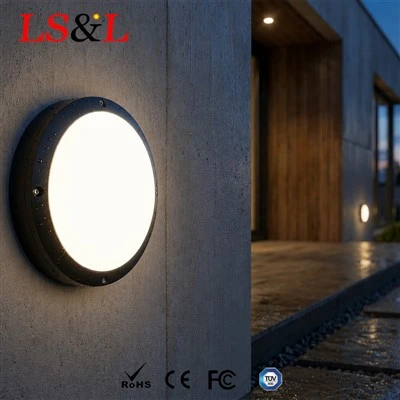
When a round bulkhead light is used on general link corridors, IK08 with a sensible mounting height usually balances protection and price.
IK10: Better for Low, High-Contact Points
Near logistics routes, loading doors, low mounting heights, or positions scraped by tools, IK10 is worth prioritising. Higher impact resistance helps limit cover fractures and dust or water ingress after a hit.
Whether the whole site should standardise on IK10 depends on real collision probability; high points away from traffic do not always need the top rating.
Write IK with Protection and Materials in the Spec
High IK with weak sealing can still leak after impact. Industrial projects should state IK, IP, and cover material together, and list high-contact zones separately.
Semi-outdoor points also need weathering requirements; raising IK alone does not solve wind-driven rain.
Practical Selection Tips
- General routes and higher mounting: IK08 is common and often enough
- Low positions, logistics edges, high-contact points: prioritise IK10
- Grade by point; do not force one IK site-wide
- Design IK together with IP and mounting height
Whether industrial bulkheads need IK08 or IK10 depends on impact risk and mounting height. IK08 covers most routine points; IK10 is for places that truly get hit-so the specification stays practical.
From years of working with factory and export clients, I know impact ratings are for forklifts and tools, not for a tidier datasheet. When point risk is clear, the number is chosen once and correctly.

If you are setting IK ratings for plant bulkheads, share mounting height and whether points sit near vehicle traffic. I can help identify which bulkhead light fits better and how to allocate IK08 versus IK10.
FAQ
Q: Is IK10 always more durable than IK08?
A: It resists impact better; it does not automatically mean a longer-lasting driver or slower lumen depreciation. Review the full luminaire design.
Q: Do stairwells without vehicle traffic need IK10?
A: Usually not. On mainly pedestrian routes with accidental contact only, IK08 at a suitable height is often acceptable.
Q: Can a specification list only IK or only IP?
A: No. One addresses impact, the other dust and water. Industrial specifications should state both.
Q: Can a glass cover achieve IK10?
A: High IK is more common with high-strength PC and similar materials. For glass, rely on the manufacturer's real tests and structure-do not assume performance.
Q: Does protection still hold after an impact?
A: It depends on whether the structure and seals remain intact. A higher IK aims to reduce fractures that lead to loss of ingress protection after a hit.