

Depending on the application, the right LED street light selection means the right wattage.
Wattage is not just a number. It provides the right illuminance, safety, cost-saving, and sustainability. Selecting the correct number transforms your lighting project.
So, you get 30–300 watt light sources for different LED street light applications. Which one to choose? Various factors are involved in selecting the right LED street light wattage. This guide is all about eliminating this confusion.
In this guide, you'll understand the wattage for street lights and the correct wattage for various applications. Also, we'll discuss all the factors that impact the wattage of these street lights. So, let's start with the basics.
Understanding LED Street Light Wattage
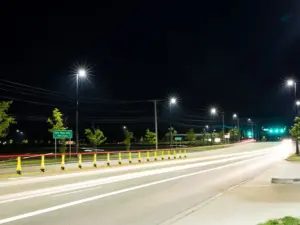
What is the Wattage in LED Street Lights?
The power that the light consumes is wattage. Higher wattage reflects more electricity consumption, but results in more brightness.
Now, LEDs are replacing the older alternatives. So, low-wattage lights now give the same high brightness, meaning LEDs are much more efficient. This efficiency is due to better light conversion – LEDs waste less energy as heat.
Typical Wattage Ranges
Here are some wattage ranges used for LED streetlights.
30- 60W: It is good for lower lighting requirements.
80- 120W: It provides moderate lighting.
150- 200W: This higher wattage is suitable for bright lighting needs.
250- 300W: This wattage gives a high level of brightness.
Calculating LED Street Light Wattage
Here is the basic formula to calculate the correct wattage for streetlights.
Required Wattage = Luminous Flux (lumens) / Luminous Efficacy (lm/W),
where luminous flux depends on your area and desired brightness
Factors Influencing LED Street Light Wattage
Application Area
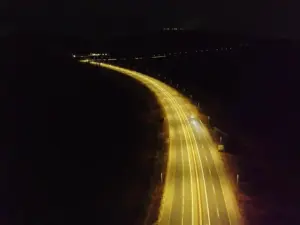
Area plays an important role here. Different locations have different wattage requirements. Usually, residential streets only need low wattage. And that within 30-60 watts would be enough. City streets, however, receive 60-100 watts. In large roads and industrial areas, use 100-200 watt lights. The particular requirements for any area depend on traffic and the safety level.
Pole Height and Distance
Taller poles need higher wattage lights to reach the ground effectively. For example, 10 watt LEDs work well on 2.5- 3-meter poles. In contrast, poles between 3-4.5 meters tall need 15-20 watt lights. The distance between poles also matters. Wider spacing means each light needs more power to prevent dark spots between fixtures.
Road or Area Width
Wider roads require more powerful lights to cover the entire surface. On a narrow path, 30 watts can be enough. On the contrary, it takes 150-200 watts or more to burn a 4-lane highway efficiently. The width directly affects how much area each light must cover.
Luminous Efficacy
It is a measure of how efficiently the conversion of electricity into visible light takes place (lumens per watt). Therefore, it directly affects the power requirement. Higher efficacy LEDs (100-200 lm/W) require less wattage. At the same time, these produce the same brightness as traditional lights.
Required Brightness (Illuminance)
The needed brightness level, measured in lux, drives wattage selection. Areas requiring higher visibility, like intersections, need brighter lights with higher wattage. While less critical areas can use lower wattage options while still maintaining safety standards.
Light Distribution and Uniformity
Higher-wattage LED street lights often provide better light distribution. This ensures even lighting across the entire area. In contrast, Poor distribution creates dangerous dark spots between lights. So, the right wattage helps maintain consistent illumination throughout the space.
Energy Efficiency Goals
Higher wattage means light, but with that, more electricity is consumed. Many cities aim to reduce energy use while maintaining proper lighting. LED lights already use 50-70% less energy than traditional options. Choosing the optimal wattage further improves these savings.
Maintenance and Operating Costs
When it comes to costs, wattage makes immediate and long-term expenditures. However, fixtures with higher wattage are more expensive in the first place. However, they may make it possible to achieve greater coverage with a smaller number of lights. Optimal lighting wattage range also extends their lifespan, reducing replacement frequency.
Local Standards and Regulations
Many areas have specific lighting requirements for different zones. These standards often specify minimum illumination levels, which directly affect wattage needs. So, always check local regulations before selecting street light wattage to ensure compliance.
Considering these factors, you'll get the wattage just according to the application. As a result, perfect illumination will be achieved with maximum energy efficiency and cost savings.
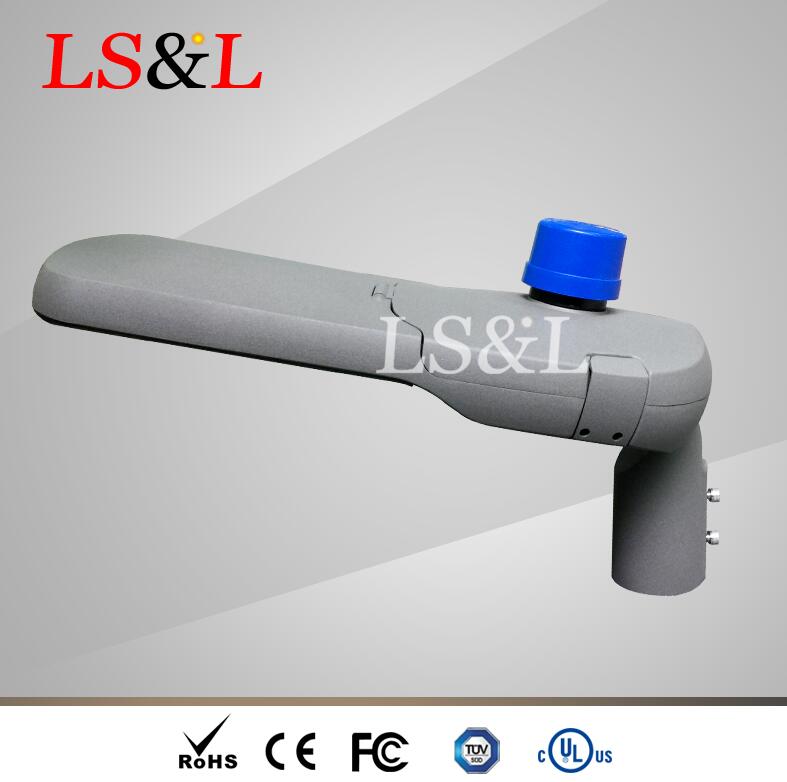
Best choice to choose--Luxsky Lighting ' s New Street Light
1. External integrated power supply with a unified interface reduces maintenance costs.

2. NFC wireless programming requires no wiring and cuts installation costs.

3. 94.5% efficiency and automatic dimming enable round-the-clock energy savings and lower electricity costs.
If you're interested, please click https://www.luxsky-light.com/led-street-lights/the-innovative-design-of-led-street-lights.html.





