

When upgrading lighting in food-processing workshops, clients often hesitate between LED tri-proof lights and traditional fluorescent tubes. Fluorescent lights are familiar and cheaper at the outset; LED tri-proof lights cost more but perform differently in humid, wash-down environments. Here's a practical comparison to help decide which suits the application better.
Protection differs clearly
Food plants are washed down regularly and humidity stays high. Fluorescent tubes and their fittings usually have limited sealing at the ends and along the body, so moisture enters over time and causes flickering or early failure.
An LED tri proof light is designed with overall sealing and copes better with dampness and splashing, typically showing a lower failure rate.
Energy use and efficacy
For the same illuminance, LEDs draw significantly less power. Food factories often run lighting for long hours, so the electricity gap widens quickly. Fluorescent tubes also depreciate faster; maintaining brightness frequently means earlier replacement or extra fixtures, which indirectly raises both energy and maintenance costs.
Maintenance workload
Fluorescent lamps need changing more often in food environments, each time involving labour and possible disruption to production.
A robust weatherproof LED batten light used above production lines extends service intervals and is relatively easy to clean-advantages in areas with strict hygiene rules.
Light quality and stability
LEDs reach full output quickly, have less flicker and hold colour more steadily. Fluorescent lamps can show start-up delay or colour shift as they age. For workstations that must judge raw materials and packaging details accurately, stable light is more helpful.
Long-term cost matters most
Fluorescent tubes have a lower purchase price, yet in the high-humidity, long-running conditions of food processing the ongoing costs of electricity, replacements and labour keep accumulating.
Selecting a well-protected IP65 LED tri proof light means higher initial outlay, but most projects recover the difference through savings within one to three years.
In short, fluorescent lamps can still serve temporary or dry areas. In genuine wet food-processing zones, however, LED tri-proof lights generally hold the advantage in reliability, energy use and maintenance.
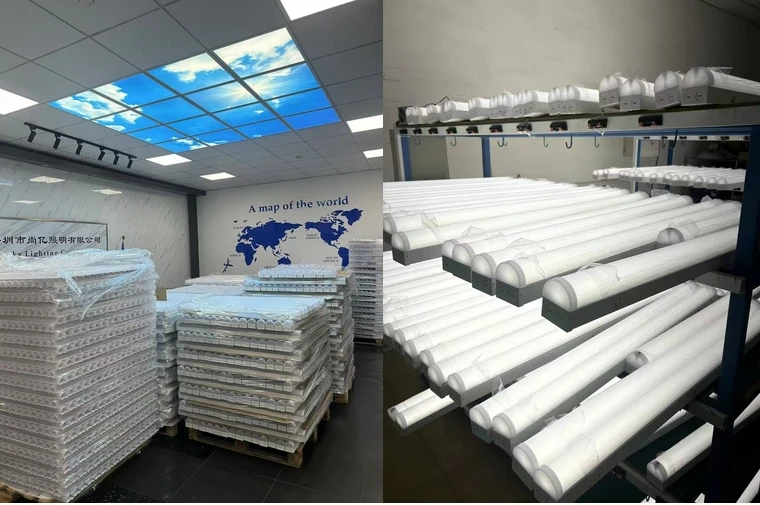
If your workshop is comparing the two options, share the main zones and daily operating hours. I can help analyse which direction is more suitable based on experience. The right choice makes later operation far more straightforward.





