

After more than a decade in lighting exports, warehouse clients often ask whether tri-proof lights or LED tubes are better for warehouses. Both use LED technology, yet they differ clearly in structure, protection, and daily performance. Here is a direct comparison based on field experience.
Clear Difference in Protection
Warehouses often have dust and unstable humidity, especially near loading areas or where temperatures shift. Ordinary LED tubes have limited sealing, so dirt and moisture quickly cause lumen drop and failures. Tri-proof lights offer better overall sealing and reduce these problems.
Many warehouses choose an IP65 LED tri proof light that resists dust and water while keeping output stable, giving greater confidence for long-term use.
Installation and Maintenance
LED tubes usually fit existing fixtures, making replacement simple and initial cost lower. However, aging brackets or poor contacts can create recurring issues. Tri-proof lights are independent fixtures with flexible mounting-surface or suspended.
Linear models such as a weatherproof LED batten light follow a layout similar to traditional tubes. Placed along aisles they deliver continuous light with fewer dark zones. They also have fewer failure points, so high-level replacements become less frequent.
Light Quality and Lifespan
Both can achieve high efficacy. Tri-proof lights generally control lumen depreciation more steadily because the driver and light source are designed as one unit, which helps during long operating hours. LED tubes can be affected by remaining brackets, ballast remnants, or limited heat dissipation, so real lifespan sometimes falls short of the rated figure.
In warehouses that run for extended periods, stability often matters more than the initial unit price.
Cost and Best-Fit Scenarios
LED tubes cost less upfront and suit cleaner, drier areas with limited budgets. Tri-proof lights carry a higher unit price, yet when electricity, maintenance, and failure costs are added up, they frequently prove more economical in dusty or humid warehouses.
Zones that need emergency coverage can use weatherproof lights with backup function, covering both daily and emergency needs in one step.
Dusty, humid, or continuously running warehouses usually favor tri-proof lights. Cleaner spaces with sound existing fixtures can still use LED tubes as a practical option. Matching the choice to the real environment and operating hours gives the clearest result.
From years of working with warehouse clients, I know the decision is less about the fixture shape and more about protection and long-term cost. Putting those factors first makes the better option easier to see.
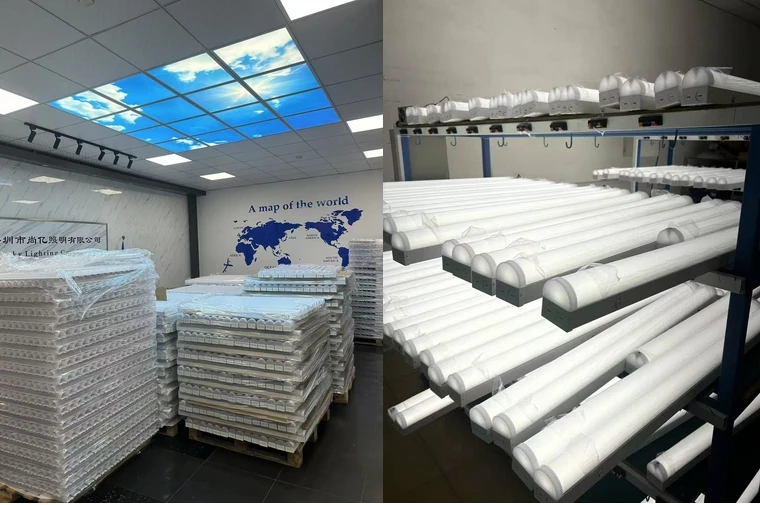
If you are comparing tri-proof lights and LED tubes, share the warehouse conditions and current fixtures. I can help identify which tri proof lights fit better and support a more accurate choice.





