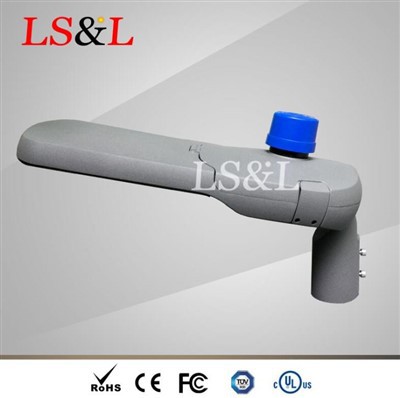
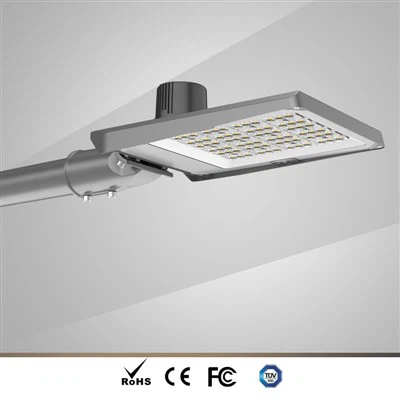
The main components of a street light can be clearly divided into the following parts:
Lamp holder (lamp housing):
The main part that supports and secures the light.
It is generally round or rectangular in shape and is usually made of highly corrosion-resistant, high-strength windshield glass, plastic, or tempered glass.
The lamp cover is the exterior part of the lamp holder, protecting it from rain and dust, and adding to its aesthetic appeal.
The lampshade controls the distribution and direction of light and can be replaced with different shapes, colors, and materials as needed.
Lamp base:
The component that secures the lamp holder and supports the chip and heat sink.
It serves to disperse light, facilitate connections, and mount and secure the lamp holder.
Common materials include ceramic, aluminum, or magnesium alloy.
Light source:
The key component of a street light that generates illumination.
Common light sources include LEDs, fluorescent lamps, halogen lamps, mercury lamps, and sodium lamps.
LEDs are becoming increasingly popular in street lighting, offering advantages such as low energy consumption, long life, and high brightness.
Electronic components:
The control and drive components within the street light. Typically includes a power supply, circuit board, power cable, and insulation sleeve.
The quality and working condition of these components directly impact the performance and lifespan of the entire street light.
Light pole:
The main structural component supporting the street light.
It typically consists of the pole body, foundation, and mounting bracket.
The height and structural design of the pole depend on the street light's operating environment and requirements.
Battery (solar panel):
The core component of a solar street light, converting solar energy into electricity.
The quality and performance of the solar panel directly impact the efficiency and stability of the entire system.
Charge control:
Responsible for controlling the charging and discharging process of the solar panel.
An effective charge control strategy can extend the battery life and improve the overall efficiency of the system.
Controller:
The intelligent chip in the street light controls parameters such as brightness and operating time, achieving energy conservation and environmental protection.
Common intelligent controllers include stand-alone controllers, photosensors, and infrared detectors.
Cable:
The power transmission line of the street light typically uses high-voltage cables, low-voltage cables, or integrated power supplies to transmit electricity to the lamp head. To prevent others from coming into contact with the power cord at night, a protective casing is placed around it.
These are the main components of a street light, working together to provide nighttime illumination. With the continuous advancement of technology, the structure and function of street lights are also constantly improving, providing people with a safer, more comfortable, and more environmentally friendly nighttime lighting experience.
Luxsky light's new street light has high efficiency and low energy consumption,