Why are street lights purple? Is this change harmless?
Apart from appearing mysterious, purple street lights can cause real problems in our daily lives.
The main purpose of installing street lights is to improve visibility. Drivers and pedestrians need good lighting to be safe. However, purple lights do not illuminate as well as white lights. The light emitted by these lamps only covers a limited range of the colour spectrum. The resulting dark areas and shadows can hide potential hazards that directly affect road safety, especially in bad weather.
Unusual violet light on the road can also distract drivers who are not used to this colour, taking their eyes off the road and causing dangerous situations. Studies have shown that sudden changes in light can slow reaction times and reduce driving concentration.
Purple lights also pose a problem for security. Police are concerned that these lights can obscure details in surveillance footage, making it difficult to identify people or vehicles during investigations.
In addition, residents in the vicinity of the purple lights often suffer from sleep disturbances. Many residents report that the unusual purple light coming through their windows affects their rest. Prolonged sleep deprivation can cause fatigue and damage to health.
Why Street Lights Flood Purple: The Beginning and End
The purple light problem began with a major change in street lighting. Cities began gradually replacing traditional high-pressure sodium lamps (yellow-orange light sources) with LED technology. The shift was logical - LED lights are 50 to 70 per cent more energy efficient than traditional fixtures and provide better visibility than the old yellow-orange light. As a result, some argue that LED lights are more effective in improving safety and security.
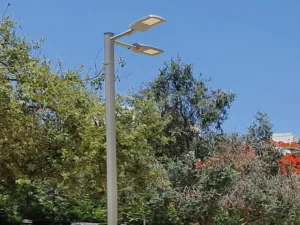
Federal programmes with government funding support such as energy efficiency grants have accelerated the urban transformation process. However, the rush to retrofit can lead to production problems. As demand for LED lights in cities surges, manufacturers have to speed up production to meet market demand. As a result, the current purple light is an unintended side effect of rapid technological upgrades.
How to solve this problem
Purple street lights do present real challenges. But they also give cities valuable experience in managing large-scale infrastructure retrofits.
Cities today require manufacturers to provide higher quality testing and include stricter warranty terms in their contracts to reduce errors. These changes will allow cities to update their lighting systems.
The best solution to this problem is to purchase street lights from Luxsky Lighting.
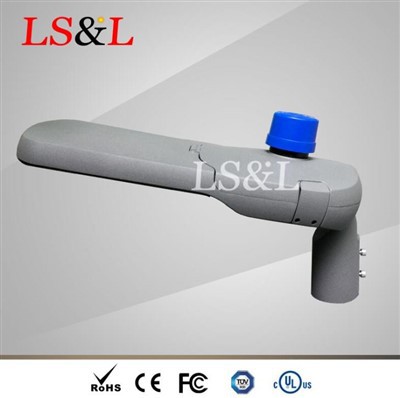
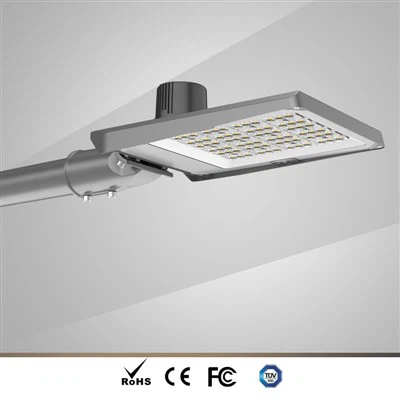
Most purple street lights result from unstable phosphor coatings and inadequate quality control. Luxsky Lighting's new streetlights, with upgraded coating materials and enhanced production testing, eliminate purple discoloration at the source and provide cities with stable, long-lasting quality lighting.

If you're interested, please click https://www.luxsky-light.com/led-street-lights/the-innovative-design-of-led-street-lights.html.