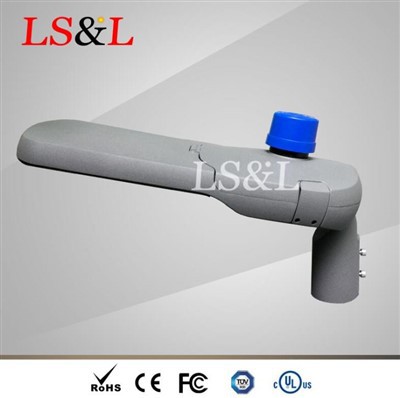
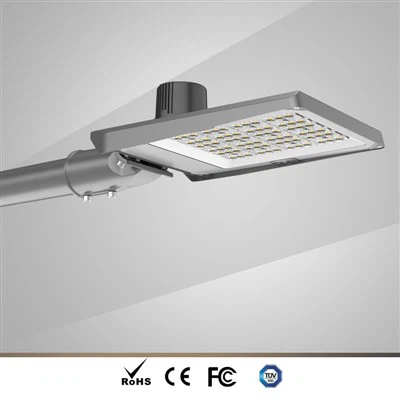
After years of exporting LED street lights, I often get clients holding the same fixture spec sheet asking me: "It's the same 100W - so why does one project call for Type II distribution and another needs Type III? Does the light distribution type actually matter if the wattage is identical?" This question actually touches on one of the most overlooked but critical parts of street light selection. Many buyers focus purely on wattage and luminous efficacy when choosing fixtures, only remembering to ask about light distribution type as an afterthought - and end up discovering after installation that illumination is uneven along the road, with dark spots in pedestrian areas, leading to rework costs that exceed the price of the fixtures themselves. Drawing on years of helping clients design lighting layouts, let's walk through where Type I, Type II, and Type III beam distributions are actually meant to be used.
What Is Light Distribution Type, and Why Does It Matter Even at the Same Wattage?
Light distribution type refers to how the light emitted by a fixture spreads across space, which directly determines the shape, width, and uniformity of the illuminated area. Two LED street lights with identical wattage can produce completely different light patterns depending on their distribution design - some cast a narrow, elongated beam, while others spread wide and flat. The Illuminating Engineering Society of North America (IESNA) classifies common roadway lighting distributions into Types I through V, each suited to a different road width and pole placement scenario. This is also a technical parameter frequently specified in international street lighting project tender documents.
Type I Distribution: Best for Narrow Roads and Sidewalks
Type I distribution produces a narrow, elongated beam pattern, spreading symmetrically along both sides of the road with a relatively limited illumination width. This type suits narrow roadways, residential alleys, park pathways, and sidewalks - settings where road width is limited and poles are typically placed at the center or along one side of the road. Because the beam is narrow, it effectively prevents light spill onto adjacent buildings or landscaped areas, reducing light pollution while maintaining even illumination in pedestrian zones. Using Type I distribution on a wide municipal arterial road, on the other hand, tends to create uneven illumination - bright in the center, dark on the edges - often requiring more fixtures to compensate, which drives up overall project cost.
Type II Distribution: Suited to Medium-Width Roads
Type II distribution produces a slightly wider beam than Type I, with an asymmetric spread - illumination extends further on one side than the other. This type is typically used when poles are mounted along one side of the road in medium-width settings, such as internal residential streets, secondary roads, and roads around parking areas. Type II distribution allows a fixture to cover a wider illumination area on the pole side while still providing adequate baseline illumination on the opposite side, reducing the number of poles needed. It's often the most cost-effective distribution choice for medium-scale municipal lighting projects.
Type III Distribution: Ideal for Wide Arterial Roads and Intersections
Type III distribution spreads light across a significantly wider area than both Type I and Type II, making it well-suited to scenarios where poles are placed on one side of the road but need to cover a wider road surface - such as urban arterial roads, multi-lane two-way highways, and areas around large intersections. Because of its wider coverage, Type III distribution allows for greater spacing between poles while still meeting the same illumination standards, reducing both the total number of fixtures needed and installation costs. This is one of the main reasons many large municipal road lighting projects lean toward Type III distribution.
What Happens If You Choose the Wrong Distribution Type at the Same Wattage?
Based on years of handling real project cases, the most direct consequence of choosing the wrong light distribution type is uneven illumination - either overly bright in the middle with dark edges, or noticeable dark zones along the road. This not only compromises road lighting performance and driving safety, but can also cause a project to fail final inspection. Poor distribution choices can also lead to light pollution or glare issues - for example, using a wide-distribution fixture on a narrow road can send excess light spilling into nearby residential areas, triggering complaints from residents. Before purchasing street lights, buyers should first confirm basic project data - road width, pole spacing, and mounting height - then select the appropriate distribution type based on IESNA standards, rather than comparing wattage and price alone.
Procurement Tips: How to Confirm the Right Distribution Type with Your Supplier
First, provide the supplier with actual project data - road width, pole spacing, and mounting height - so they can recommend the appropriate distribution type based on IESNA standards. Second, request the fixture's photometric distribution curve and illuminance simulation report to confirm the actual lighting performance meets project requirements. Third, for large-scale projects, it's worth doing a small-scale trial installation to verify real-world distribution performance on-site before placing a bulk order - this avoids discovering a distribution mismatch only after the full shipment has arrived.
Conclusion
Light distribution type may seem like a minor technical detail, but it directly determines the lighting performance and long-term usability of a street lighting project. Luxsky Lighting offers Type I through Type V distribution options across our product line, and our team can provide professional distribution recommendations based on your project's road width and installation scenario. Combined with premium light sources and stable electrical performance, our LED street lights have been exported to municipal road lighting projects in numerous countries. If you're looking for the right LED street light for your project, feel free to reach out to Luxsky Lighting - our team will design a professional distribution solution based on your actual road conditions and provide competitive pricing.