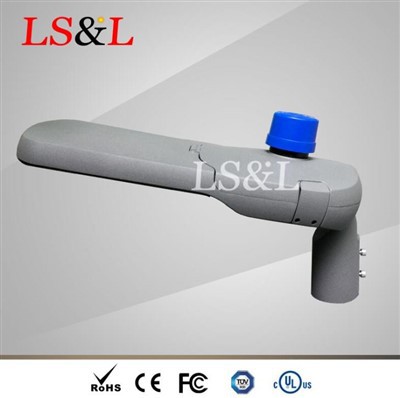
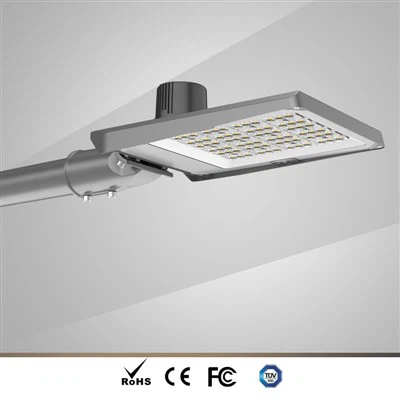
In urban roadway lighting projects, many clients ask the same question: Can sidewalks and vehicle lanes simply use the same LED street light? As a seasoned foreign-trade professional with years of hands-on experience in the lighting industry, I have seen quite a few projects run into problems-insufficient illuminance, glare complaints, or unnecessary energy waste-because of this choice. Today, let's clarify the issue from a practical application perspective.
The Fundamental Differences in Lighting Requirements
The core goal of vehicle-lane lighting is safe passage. Vehicles travel at higher speeds, so drivers need clear visibility of lane markings, obstacles, and the road ahead. This places high demands on illuminance uniformity, glare control, and long-distance guidance. Sidewalk lighting, by contrast, prioritizes comfort and pedestrian safety. People move more slowly and care more about facial recognition, ground details, and overall atmosphere; they are also more sensitive to glare.
Forcing the same roadway LED lighting product on both areas often leads to one of two outcomes: either the vehicle lane has barely adequate illuminance while the sidewalk becomes overly bright or suffers from glare, or the sidewalk feels comfortable while the vehicle lane develops dark zones. Professional lighting design matches different photometric distributions and power levels to different road functions.
Why Completely Identical Luminaires Are Not Recommended
Significant differences in photometric curves
Vehicle lanes generally require stronger longitudinal guidance and asymmetric optics that direct more light onto the road surface and the forward path of travel. Sidewalks benefit more from wide-beam, low-glare symmetric or semi-symmetric distributions that emphasize lateral uniformity and visual comfort. A single optic can rarely satisfy both needs at once.
Different power and illuminance standards
Vehicle lanes, especially arterial roads, typically demand higher illuminance levels. Sidewalk standards are usually lower; over-lighting wastes energy and creates light pollution. Strict quality control LED engineering lighting products offer precise power and optic options, avoiding a one-size-fits-all approach.
Different smart-control requirements
Modern urban lighting increasingly emphasizes lighting on demand. Smart outdoor light systems can dim vehicle-lane luminaires according to traffic volume, while sidewalks are better suited to pedestrian sensors or timed scene modes. Using identical fixtures without differentiated control greatly reduces the value of the smart system.
The Correct Approach: Differentiated Configuration with Consistent Quality
In real projects, a better practice is:
Select professional roadway LED lighting for vehicle lanes, focusing on photometric accuracy and glare control;
Choose more comfortable, low-glare LED street lights or pedestrian-oriented fixtures for sidewalks;
Source both from the same brand and the same quality-control system so that maintenance and spare-parts management remain straightforward.
Key points to check when selecting: availability of genuine IES photometric files, rigorous optical and electrical testing, and compatibility with smart control systems. These details directly determine long-term stability and safety.
Long-Term Value That Overseas Buyers Should Prioritize
Many overseas clients initially choose a single model for convenience, only to face higher maintenance costs and more complaints later. Experienced suppliers recommend differentiated solutions based on road function while ensuring every product meets Strict quality control and LED engineering lighting standards-from the light source and driver to the complete luminaire assembly. This approach meets functional needs while lowering total life-cycle cost.
Conclusion
Sidewalks and vehicle lanes serve different purposes, so forcing identical LED street lights is rarely the optimal solution. Matching the right optic and power to each road function, then ensuring consistent high quality across the project, is the more professional and economical approach.
We consistently uphold Strict quality control and LED engineering lighting standards. From optical design through manufacturing, every step is strictly controlled so that each roadway LED lighting and Smart outdoor light product performs reliably across different road scenarios.
If you are currently selecting luminaires for sidewalk and vehicle-lane projects, feel free to contact us to learn more about Luxsky Lighting's LED street light solutions. Professional advice combined with dependable quality is the only way to get lighting right.