

With over 12 years supplying lighting solutions to factories and industrial zones across Europe, the Middle East, and Southeast Asia, I've seen the same issues repeatedly: high electricity bills, costly maintenance, and lights blazing through the night in empty areas.
Industrial parks are especially vulnerable. Large open spaces stay fully illuminated long after workers leave, manual checks are expensive, and old sodium lamps waste enormous amounts of power. Here's how smart LED street lights paired with intelligent controls are helping park operators solve these problems in practice.

Why Traditional Lighting Drains So Much Energy
Most older systems rely on high-wattage sodium lamps that run at full brightness around the clock. Without sensors or scheduling, there's no way to adapt to actual usage. Maintenance teams only discover failed fixtures during patrols, which means wasted energy and unnecessary safety risks. These inefficiencies are exactly why many park managers are now exploring upgrades.
The Advantages of Smart LED Street Lights:
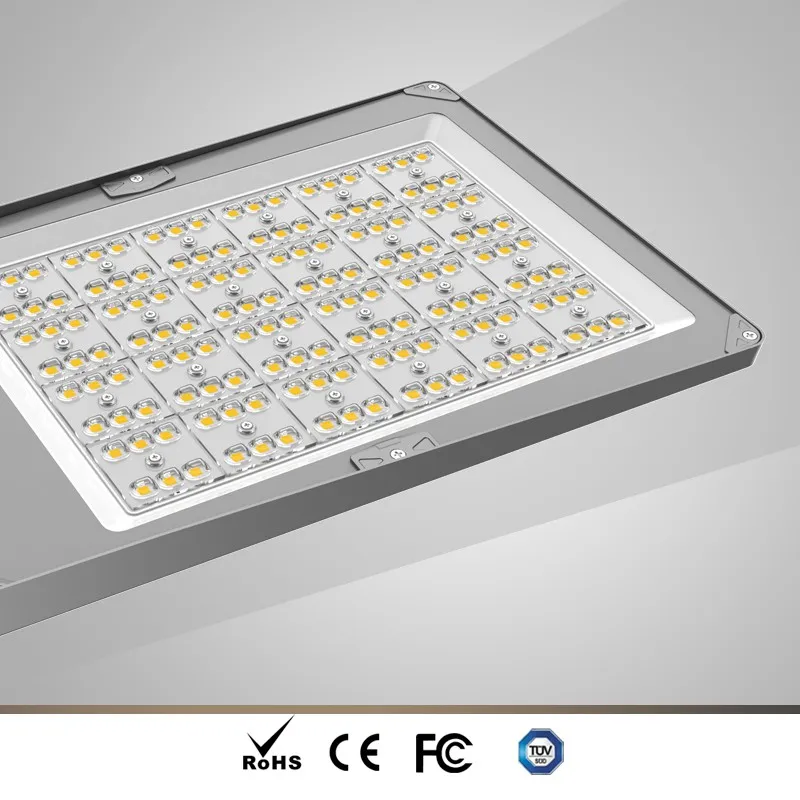
Modern smart LED street lights deliver clear improvements over traditional fixtures. Good-quality units reach 140–180 lm/W, roughly double the efficiency of old sodium lamps, while lasting 50,000 to 100,000 hours. This translates to fewer replacements and lower labor costs. The improved color rendering also makes night-time areas safer and easier to navigate.
Different markets have different priorities. European clients often focus on energy certifications and ESG reporting. In the Middle East, heat and dust resistance matter most. Southeast Asian buyers typically want reliable performance with a fast return on investment. These patterns come from years of direct project work.

Making Savings Even Greater with Intelligent Controls
LED upgrades help, but adding intelligent controls unlocks much bigger savings. Motion sensors let lights dim to 20–30% when no vehicles or people are present. Different zones - main roads, side paths, loading areas - can follow their own schedules. Using protocols like DALI, Zigbee, or NB-IoT, managers can monitor everything remotely and receive instant alerts instead of relying on night patrols.
The result is a system that responds to real demand rather than running constantly. Many parks see total energy reductions between 40% and 70%, depending on their starting point and traffic patterns.
A Recent Project Example
Last year we supported an 800,000 m² industrial park in Southeast Asia that was still using older sodium lamps. After switching to smart LED street lights with zoning and motion controls, electricity costs dropped from roughly $1.2 million to about $480,000 per year, while maintenance fell by more than half. Payback came in under two and a half years. The park manager also mentioned fewer security incidents thanks to more consistent lighting levels.
Every project is different, but this example shows what's possible when you combine efficient fixtures with proper controls.

What to Consider Before Purchasing
Focus on total cost of ownership rather than just the initial price. Look for solid certifications (CE, UL, RoHS), at least IP65 weather protection (IP66 is better for dusty or rainy areas), and a minimum five-year warranty on the fixtures. Equally important is the supplier's ability to provide local support and spare parts.
When comparing quotes, ask for IES files, real test reports, and examples of similar industrial park installations in your region.

FAQ
Q1: How much can smart LED street lights actually save in an industrial park?
A: Most well-planned projects achieve 40–70% total energy reduction. Motion sensing and zoning usually deliver the biggest additional gains after the LED upgrade itself.
Q2: Is full replacement necessary, or can we retrofit existing poles?
A: Retrofitting with new LED modules and control nodes works well when budgets are tight. Full replacement generally gives better long-term reliability and maximum savings.
Q3: Which certifications matter most for export markets?
A: CE, UL, and RoHS are baseline requirements. Middle East projects often need SASO, while specific markets may have additional local standards.
Q4: How fast is the typical payback period?
A: In most industrial cases we've seen, clients recover their investment within 1.5 to 3 years through lower electricity and maintenance costs.
Q5: Can you help us develop a solution for our site?
A: Yes. Send us basic information about your park size, current lighting, and main concerns, and our team will prepare a preliminary proposal within one or two business days. We can also share detailed case studies and product specifications.





