The Simple Formula for Power Density
The formula for LPD in street lighting is straightforward.
You divide your total lighting power by your lit road area:
Lighting Power Density = Total Lighting Power (watts) ÷ Illuminated Road Area (square meters)
Let's walk through a real example. Say you have a road section that's 4,000 square meters with twenty LED street bulbs that each use 150 watts. Your total lighting power is 3000 watts.
Using the formula: 3000 watts ÷ 4000 square meters= 0.75 watts per square meter.
When calculating for your street lighting projects, make sure to account for the power consumption. Could be LED fixtures, LED drivers, control systems, and any smart lighting controllers. Don't forget about photocells, motion sensors, and wireless communication devices if your system uses them.
The formula gets more complex on highways and major roads, but the basic principle stays the same. You add up all the lighting power and divide by the total illuminated area. Just make sure you're consistent with your measurements and include everything that uses electricity for lighting.
What Affects Your Lighting Power Density?
Several factors influence your LPD. The type of fixtures you use makes the biggest difference. Modern high-efficiency LED street lights can achieve 130-160 lumens per watt. This is in comparison to older sodium vapor lights that only produce 80-100 lumens per watt.
The road classification and lighting requirements also matter.
Highways need brighter lights than residential areas.
Arterial roads need a different LPD than local streets.
Each road type has different LPD standards that affect your calculations. This helps to create a balance between energy efficiency and practical lighting needs.
Pole spacing and mounting height also affect your LPD. Wider pole spacing requires more powerful fixtures to maintain uniform brightness, which can increase power density. However, taller mounting heights with appropriate LED lights can sometimes allow wider spacing while maintaining efficiency.
Light distribution and optical design also play a big role. LED street lights with precisely engineered optics can direct light exactly where it's needed. This helps to reduce wasted light and promote the use of lower-wattage lights. Asymmetric light distribution is also particularly effective for street lighting.
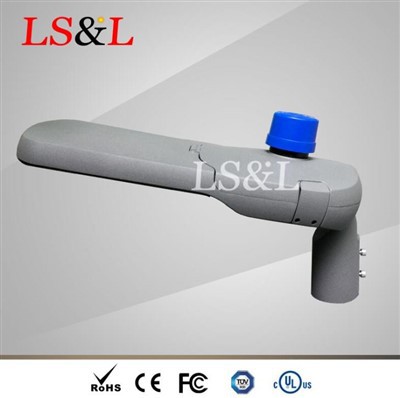
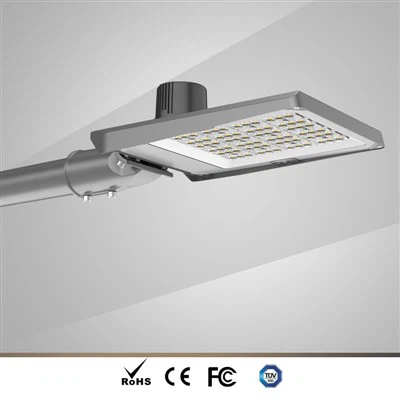
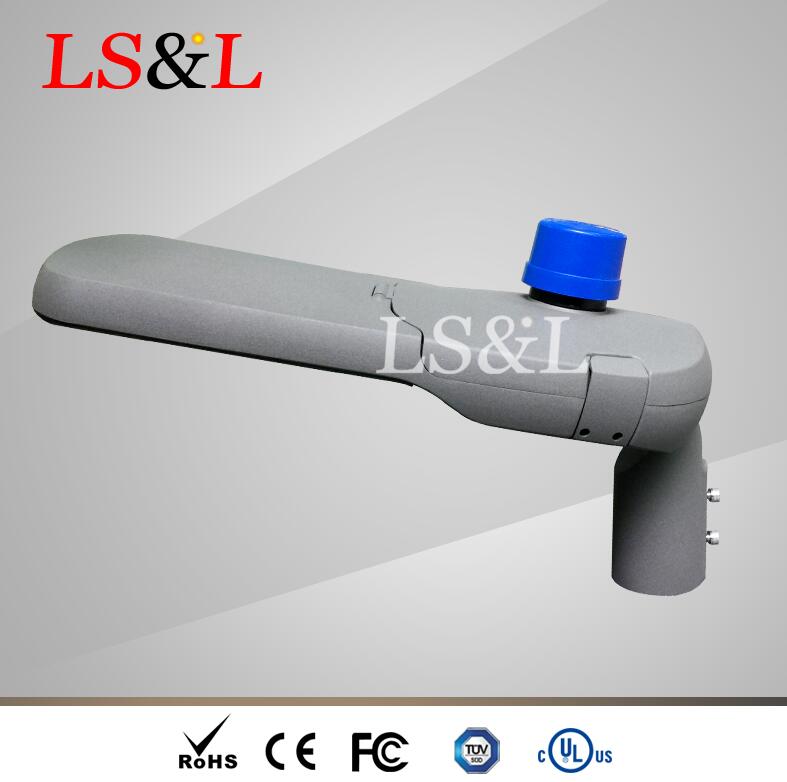
Best choice to choose--Luxsky Lighting ' s New Street Light
External integrated power supply with a unified interface reduces maintenance costs.

NFC wireless programming requires no wiring and cuts installation costs.

94.5% efficiency and automatic dimming enable round-the-clock energy savings and lower electricity costs.
If you're interested, please click https://www.luxsky-light.com/led-street-lights/the-innovative-design-of-led-street-lights.html.