Having spent years in the street lighting export business, I've watched this industry shift from "just make it bright enough" to clients now opening conversations with IoT, AI algorithms, and carbon neutrality. Talking with buyers across Europe, the Middle East, and Southeast Asia over the past couple of years, a few clear trends have started to take shape. Let me walk you through what I'm seeing.
Trend 1: From Standalone Fixtures to Fully Connected Networks
A street light used to be an isolated unit. Now, more and more projects require networked management across an entire road or district. This is exactly where Smart outdoor light systems are heading - every fixture becomes a node on the network, sending data back via NB-IoT or LoRa modules so operators can monitor brightness, energy use, and fault status in real time, even adjusting brightness zones based on traffic and pedestrian flow. Going forward, roadway LED lighting projects won't just be about selling fixtures - they'll be about delivering a full lighting management solution.
Trend 2: Energy Consumption and Carbon Footprint Become Hard Requirements
In the past couple of years, carbon footprint and energy efficiency ratings have become near-mandatory line items in European tender documents. Demand for solar street lights and integrated photovoltaic storage designs is rising fast, with many municipal projects requiring fixtures that run reliably off-grid or on weak power grids. Energy savings are no longer a "nice to have" - they're a threshold requirement for winning the bid, which is pushing suppliers to genuinely invest in luminous efficacy and driver efficiency.
Trend 3: Human-Centric Lighting Design
Beyond energy savings, more clients are now focused on how lighting actually affects people - dynamically adjusting color temperature and illuminance based on pedestrian density, reducing glare, and improving safety and comfort for pedestrians and cyclists. This human-centric design philosophy is gradually spreading from high-end European municipal projects into road lighting standards across more countries.
Trend 4: Quality and Lifespan Remain the Real Dividing Line
No matter how the technology evolves, one thing never changes: even the smartest system has to be built on genuinely solid hardware. I've seen countless cases where a fixture's spec sheet looked impressive, only for it to suffer lumen depreciation, driver failure, or sensor malfunction within six months outdoors - rendering all the smart features useless. The suppliers that actually hold their ground in this market are the ones committed long-term to strict quality control LED lighting - from chip selection and driver burn-in testing to housing protection ratings and batch inspections, with no step skipped. This is the real dividing line between the companies that survive the next industry shakeout and those that don't.
How We're Responding to These Trends
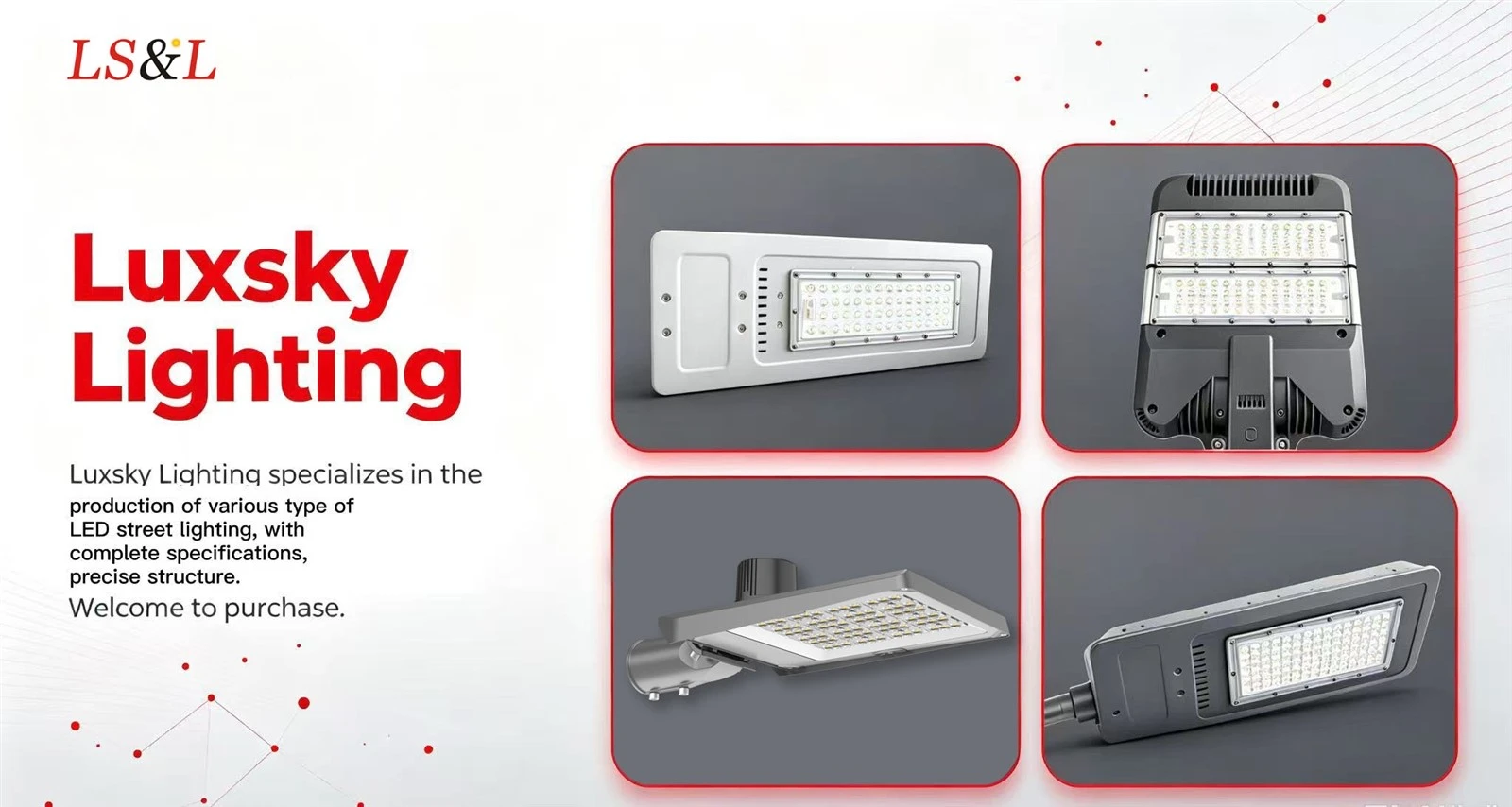
At Luxsky Lighting, we've always believed that smart technology is the means, and quality is the foundation. We've set up 7 quality checkpoints from raw material sourcing through to final shipment, and every batch of our Smart outdoor light products undergoes 72 hours of burn-in testing before leaving the factory. We also continue investing in R&D to adapt to different countries' voltage standards and certification requirements (CE, RoHS, SAA, UL, etc.), ensuring our roadway LED lighting products keep pace with smart lighting trends while standing up to long-term outdoor conditions.
Conclusion
The direction for future urban road lighting is already clear: smarter, more energy-efficient, and more human-centric - but all of it depends on the fixture itself having genuinely solid quality. Luxsky Lighting has focused on LED street light engineering for years, holding to strict quality control and LED engineering standards to deliver dependable Smart outdoor light solutions to clients worldwide. If you're planning your next-generation road lighting project, reach out to us for our product catalog and a quote - we're glad to offer professional advice for your project.