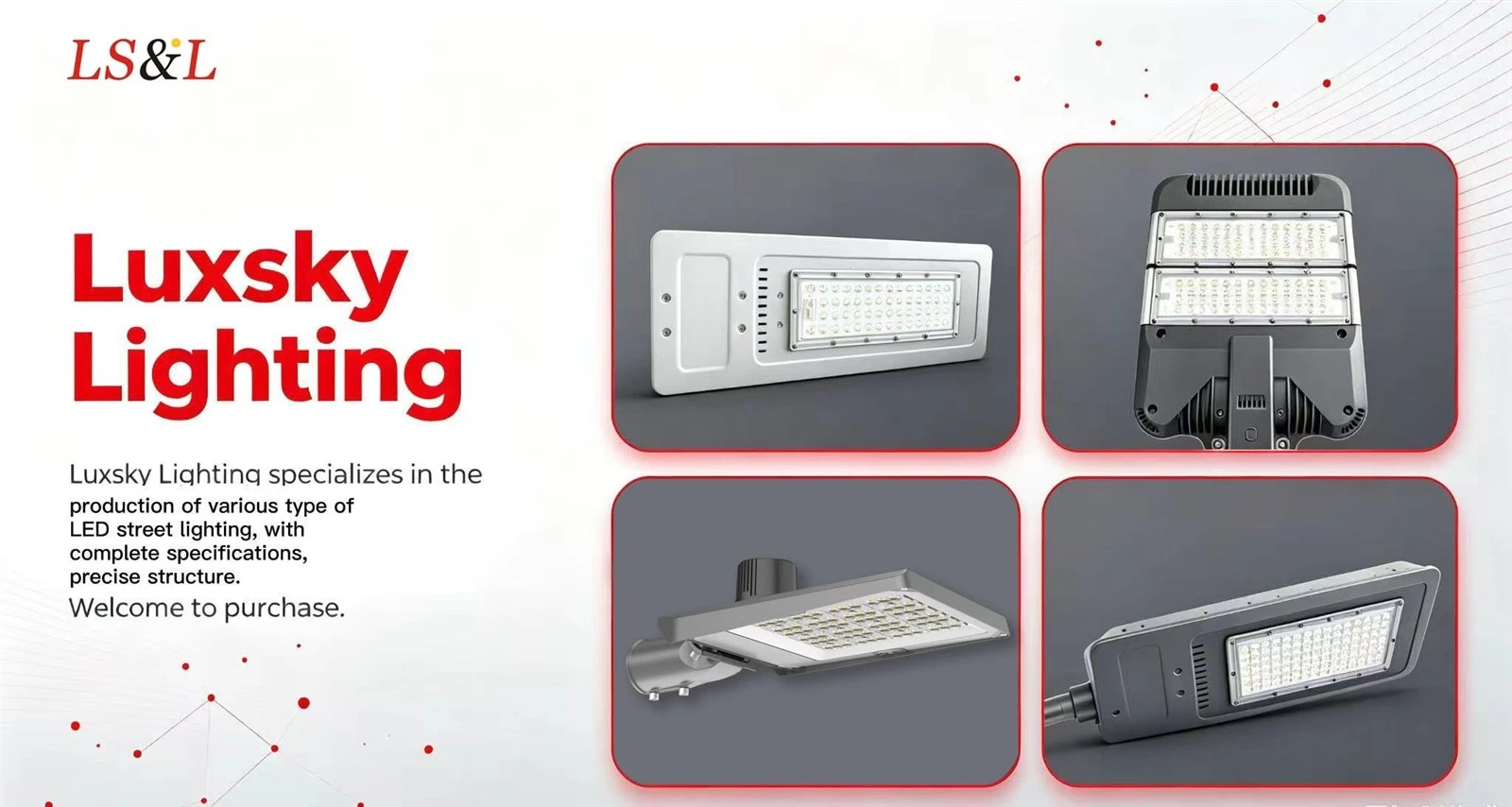
In road and industrial park lighting projects, what size specifications luminaires actually have is a question many project managers often hesitate over. As a veteran with many years of experience in the foreign trade lighting industry, I have seen too many cases where the wrong size specification led to installation mismatches, insufficient illuminance, or difficult later replacement, ultimately resulting in customer complaints. Today, drawing on practical engineering experience, I will discuss the selection of common luminaire size specifications and how this closely relates to Strict quality control in LED engineering lighting, Smart outdoor light, and roadway LED lighting.
Why Must Luminaire Size Specifications Be Carefully Selected?
Size specifications directly determine power matching, installation compatibility, and optical performance. An incorrect specification prevents the luminaire from perfectly matching the pole or arm, creating installation hazards or significantly reducing lighting effectiveness. Especially on main roads, entrances, and key areas in industrial parks, size selection is particularly critical.
Ordinary lighting projects often only look at power, while a professional roadway LED lighting solution needs to comprehensively consider power, external dimensions, mounting interface, and heat dissipation space. Truly reliable specification matching must be built on the foundation of Strict quality control in LED engineering lighting, with strict control from housing mold precision and heat dissipation structure to interface standards.
Key Points of Luminaire Size Specifications
Common Specifications by Power
Common roadway LED lighting luminaires range from 50W, 100W, 150W to 200W and 300W. Lower power corresponds to compact sizes, suitable for parks and secondary roads; higher power uses larger housings to ensure heat dissipation and luminous flux output.
External Dimensions and Mounting Interfaces
Side-mounted luminaires usually have clear ranges for length, width, and height, while top-mounted ones focus more on vertical height and base diameter. Common mounting interfaces include standard sizes such as 60mm and 76mm, which must precisely match the pole or arm. Smart outdoor light systems often reserve space for sensors, so size design must also accommodate functional expansion.
Impact of Heat Dissipation and Protection on Size
Higher-power luminaires require larger heat dissipation areas, resulting in correspondingly larger housing sizes. At the same time, an IP65 or higher protection rating must be maintained, and the sealing structure also affects overall volume. Strict quality control and LED engineering lighting ensure a balance between size and performance through complete thermal simulation and actual testing.
Customization and Standardization Selection Principles
Prioritize standardized sizes for easier mass production and later maintenance. Special projects can be customized, but interfaces, weight, and wind resistance must be confirmed in advance. Selection should comprehensively consider pole height, road width, and actual illuminance requirements.
These requirements may seem simple, but actual implementation requires combining site conditions, illuminance simulation, and practical verification. Only suppliers with a complete quality system can provide solutions that meet lighting performance while offering engineering-level reliability.
Practical Value of Choosing the Correct Size Specifications
In foreign trade projects, customers care most about installation compatibility and maintenance costs after installation. Selecting the right size specifications significantly improves installation efficiency, ensures lighting performance, and facilitates later replacement, while leaving a professional and standardized first impression on visiting clients. Many successful cases prove that a reasonable size specification solution combined with Smart outdoor light intelligent control not only enhances overall system reliability but also achieves lower long-term operating costs.
Conversely, if size specifications are chosen incorrectly, repeated rectifications due to installation mismatches or insufficient heat dissipation later will result in higher costs and damage overall cooperation trust.
Conclusion
Our street lights always put size specification matching, lighting performance, and strict quality control first. The products perform stably in actual factory and road projects with a solid reputation. If you are looking for reliable roadway LED lighting or Smart outdoor light solutions, please contact Luxsky Lighting directly and choose our professional LED street light products to make lighting truly safe, professional, and efficient.