

After more than a decade in foreign trade, clients often ask specifically about the fire rating and related standards for tri-proof light housings. This matters because the housing material directly affects product safety and service life. Here is a clear summary based on our daily discussions with factories and buyers.
The fire resistance and related safety performance of a tri-proof light housing must meet multiple domestic and international standards. The focus is on flame retardancy and insulation properties. A proper LED triproof lamp addresses these requirements in design and material selection rather than as an afterthought.
Domestic general standards
In China, products must follow the GB 7000 series of national standards. These cover lamp safety, performance and protection ratings. Exact details adjust according to the actual use and installation environment. This is the basic requirement for the domestic market or projects that need to meet Chinese standards.
UL material flame-retardant rating
If the housing uses energy-saving lamp materials or transparent polymer, it normally needs to reach UL V-1 or higher. The thickness must also match the V-1 level shown on the corresponding UL yellow card. Many overseas clients pay close attention to this point, as it affects entry into the North American market.
IEC international standard requirements
When tested to IEC 60598-2-1, an LED tri-proof light must meet these performance points:
- Flame retardancy: Non-metallic housings must pass the 750°C glow-wire test, with a glow-wire ignition temperature (GWIT) ≥ 775°C.
- Tracking resistance: The relative tracking index (CTI) of the insulating material must be ≥ 175 to avoid tracking problems.
- Glass cover safety: If a glass diffuser is used, it must pass the fragmentation test so that it does not produce flying fragments when broken, reducing safety risks.
From our shipments, products meeting these standards work more reliably in warehouses, workshops and ports. Many clients also check the IP65 waterproof light rating together with fire requirements. Projects with higher safety needs may choose an Explosion-proof linear light.
Market quality varies. Some makers only claim "fireproof" without full test reports. Always review the certificates, UL yellow cards and test reports. Housing material, thickness and circuit details decide real safety. We recommend the right LED warehouse light according to your target market and site conditions.
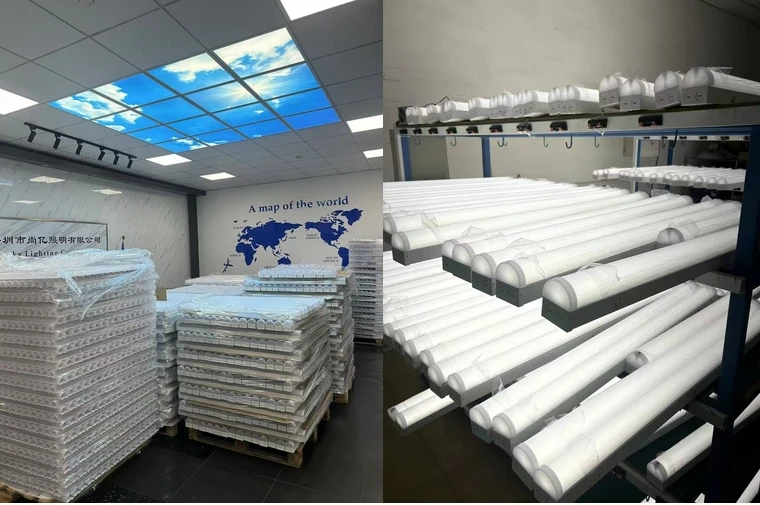
If you need to confirm a tri-proof light's housing fire rating or the requirements for different markets, share the target market and environment with us. We will check the key points based on real experience. Leave a message or send an inquiry-we reply with practical advice.





