I've spent over a decade in the street lighting export trade, and clients frequently ask me: "Should I go with a wider or narrower beam angle?" There's no standard answer - beam angle selection is fundamentally a trade-off between mounting height, coverage area, and illuminance uniformity. Let's dig into this detail to help you avoid detours during selection.
What Beam Angle Actually Means
Beam angle, also called the light distribution angle, refers to the range of spread of light emitted from a fixture in space, typically defined as the angle between the two points where light intensity drops to 50% of its maximum value. Simply put: a narrower angle means more concentrated light, reaching further but covering a smaller area; a wider angle means more spread-out light, covering a broader area but with a shorter effective throw distance.
Mounting Height Sets the General Direction for Beam Angle
This is the most basic logic for choosing a beam angle:
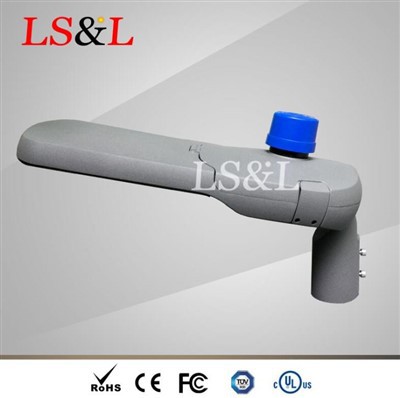
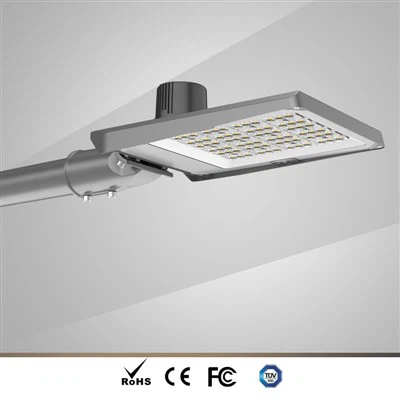
Low mounting height (10-15 meters), common in roadway LED lighting applications on port roads, generally calls for a medium beam angle (60°-90°), which ensures adequate throw distance without spreading light excessively beyond the road;
Medium mounting height (15-20 meters), suited to most yard perimeter areas, can use a somewhat narrower angle (50°-70°), paired with proper pole spacing to achieve even coverage;
High mounting height (20-30 meters, high mast), the common solution for core yard work areas, usually requires a narrower angle (30°-50°) to concentrate light on the work area below, avoiding excessive spread and insufficient illuminance from the higher mounting position.
Site Shape Also Affects Angle Selection
Long, narrow sites (port roads, aisles along yard edges) are best served by asymmetric beam distribution, directing light mainly along the road or aisle direction to reduce spill on both sides. Open square or rectangular yards are better suited to symmetric beam distribution, paired with centrally-placed high masts for even coverage. Choose the wrong beam shape, and even the right angle parameter will underperform in practice.
Angle Selection Also Needs to Balance Glare Control
A fixture with too narrow a beam angle, if the mounting angle or height doesn't match up, can easily create a harsh bright spot at certain viewing angles, causing glare discomfort for yard workers and passing vehicles. Professional beam design factors in UGR glare rating during optimization, keeping glare within a reasonable range while maintaining illuminance and coverage - this depends on the real design capability of the optical team under a strict quality control LED engineering lighting system, not something you can solve by simply adjusting an angle number.
Don't Guess - Verify With Software Simulation
Beam angle selection should be based on a specific project's mounting height, pole spacing, and site shape, verified through professional software like DIALux by importing the fixture's IES photometric file and simulating illuminance distribution and uniformity data across different angle options - rather than simply applying a generic "rule of thumb," since every project's site conditions are a little different.
Smart Dimming Doesn't Change the Angle, But Improves Overall Performance
Pairing with a Smart outdoor light dimming system doesn't change the beam angle itself, but it can lower brightness output during non-operational hours, reducing unnecessary energy consumption and letting the chosen beam solution deliver better overall value across its full lifecycle.
What We Can Support
At Luxsky Lighting, we offer products with a range of beam angle options and can run photometric simulations using IES files based on the site parameters clients supply, helping find the most suitable beam angle solution. We hold to strict quality control LED engineering lighting standards, with lens designs verified through rigorous optical testing and burn-in validation, ensuring real-world performance matches simulation results.
Conclusion
Choosing the right beam angle comes down to a comprehensive judgment of mounting height, site shape, and professional simulation - not guesswork. Luxsky Lighting has focused on LED street light engineering for years, holding to strict quality control to deliver dependable roadway LED lighting solutions to clients worldwide. If you're selecting beam distribution for a port project, reach out to us for IES files and professional advice.