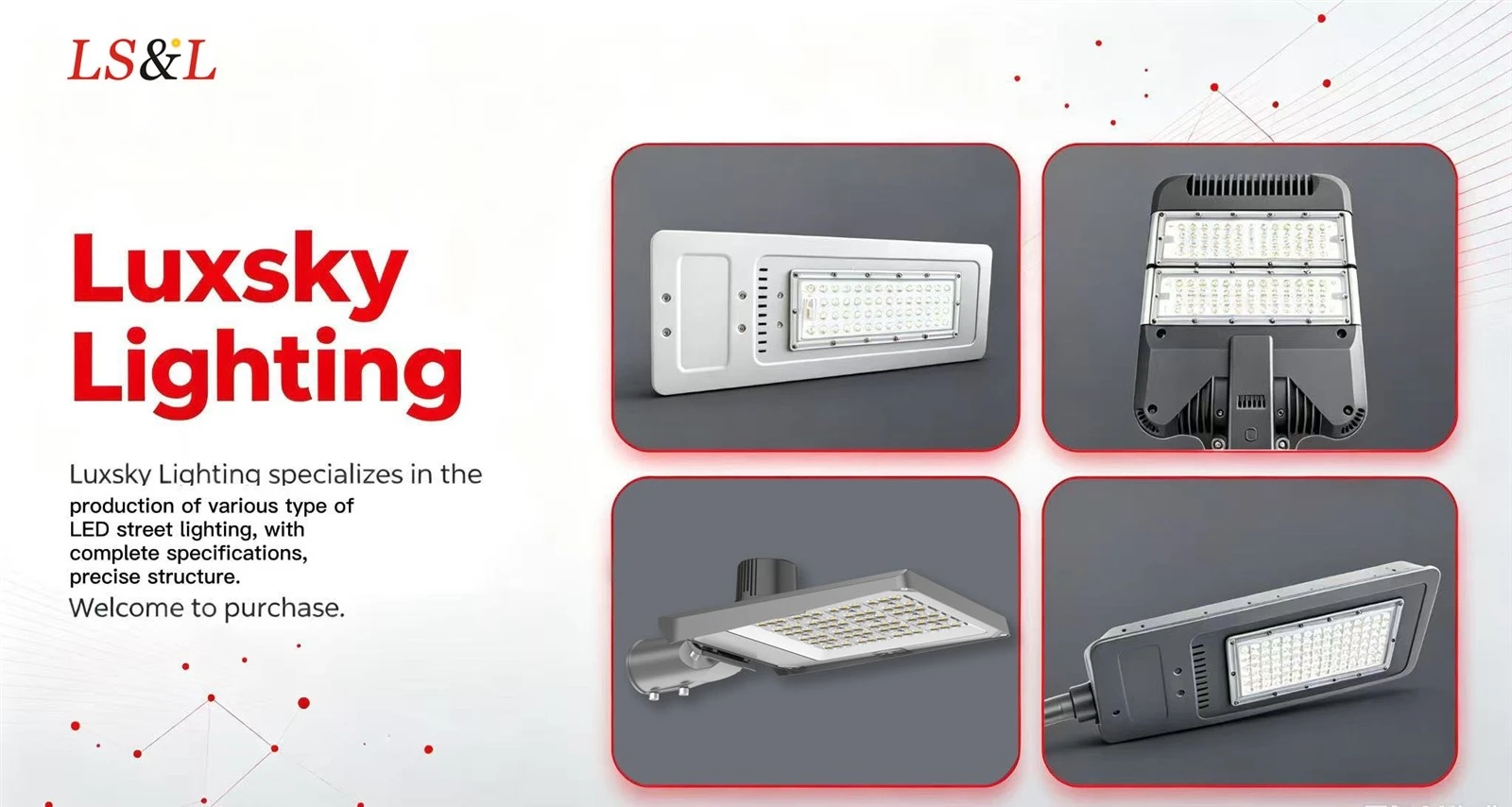
As an LED street light manufacturer with more than twelve years of export experience, I have supplied lighting to farms, logistics parks, hospitals and industrial zones in the Middle East, Southeast Asia, Africa, and South America. A farm manager once told me: "Two suppliers both promised 50,000 hours. One set of lights is fine after five years, and the other is mostly dark after two." The printed number is the same, but real life is not. On a farm, service life depends on several factors working together. Here are the ones I check with every customer.
Chip and Driver Quality
The LED chip decides how slowly the light fades, and the driver decides whether the light keeps working at all. In my experience, the driver is the most common failure point. Choose branded chips and a branded driver with protection functions, and ask for both brands in writing. Good LED street lights for farms should also state what the rated life means, usually L70, the time until output falls to 70%.
Heat and Heat Dissipation
Heat is the silent enemy of LEDs. Summer temperatures above 40°C, strong sun on the housing, and dust on the fins all push the junction temperature up and shorten life. Choose a die-cast aluminum housing with a large, open fin design that is easy to clean, and wipe the fixtures once or twice a year. Running a fixture below its rated power also keeps it cooler.
Moisture, Dust, Ammonia and Corrosion
Farms mean humidity, heavy rain, dust, fertilizer, and, near livestock, ammonia. These attack seals, coatings, and fasteners. I recommend IP66 as the minimum, IK08 impact resistance, an anti-corrosion coating, a UV-resistant lens, and a sealed driver compartment. Poor housings in barn areas often fail within one or two years.
Voltage Instability and Lightning
Long cable runs, weak rural grids and big motors cause sags and spikes, and open fields attract lightning. These burn drivers faster than almost anything else. Choose a wide input voltage range, built-in surge protection of 6kV to 10kV, an external SPD in storm-prone areas, and low-resistance grounding for every pole. Follow your local electrical code and your engineer's design.
Control, Maintenance and Supplier Support
Photocells, motion sensors and dimming reduce running hours at full power, which lowers heat and slows fading. Quality LEDs already save about 50% to 70% electricity compared with old sodium or metal halide lamps. Solar versions can suit remote areas. A tractor driver can also be dazzled, even for two seconds, by a light whose optics have aged badly, so quality matters for safety too. Finally, a real warranty shares the risk. Replacing one fixture on a 6-meter pole means hiring equipment and stopping work, so I suggest an LED lighting supplier with a 5-year warranty and a real factory behind it. As an LED lighting OEM manufacturer, we also customize wattage, beam angle, color temperature, and branding for project buyers and distributors. Our quality standards include:
- Branded LED chips and wide-voltage, flicker-free drivers, 100% aging test before packing
- Die-cast aluminum housing, IP66 / IK08, 6kV to 10kV surge protection, CE and RoHS certified, with real IES files and test reports for DIALux design
When a customer asks me for a 5-year warranty, I can say yes with confidence, because we test before shipment, not after complaints.
Conclusion
Farm LED street light life depends on chip and driver quality, heat control, protection against moisture and corrosion, voltage and lightning defense, and a supplier you can trust. Our LED street lights are built with strict quality control, so they stay bright, stable and dependable for years.
If you are planning a new farm project or upgrading an old one, choose Luxsky Lighting. Contact us today for a free DIALux layout and a competitive quote.