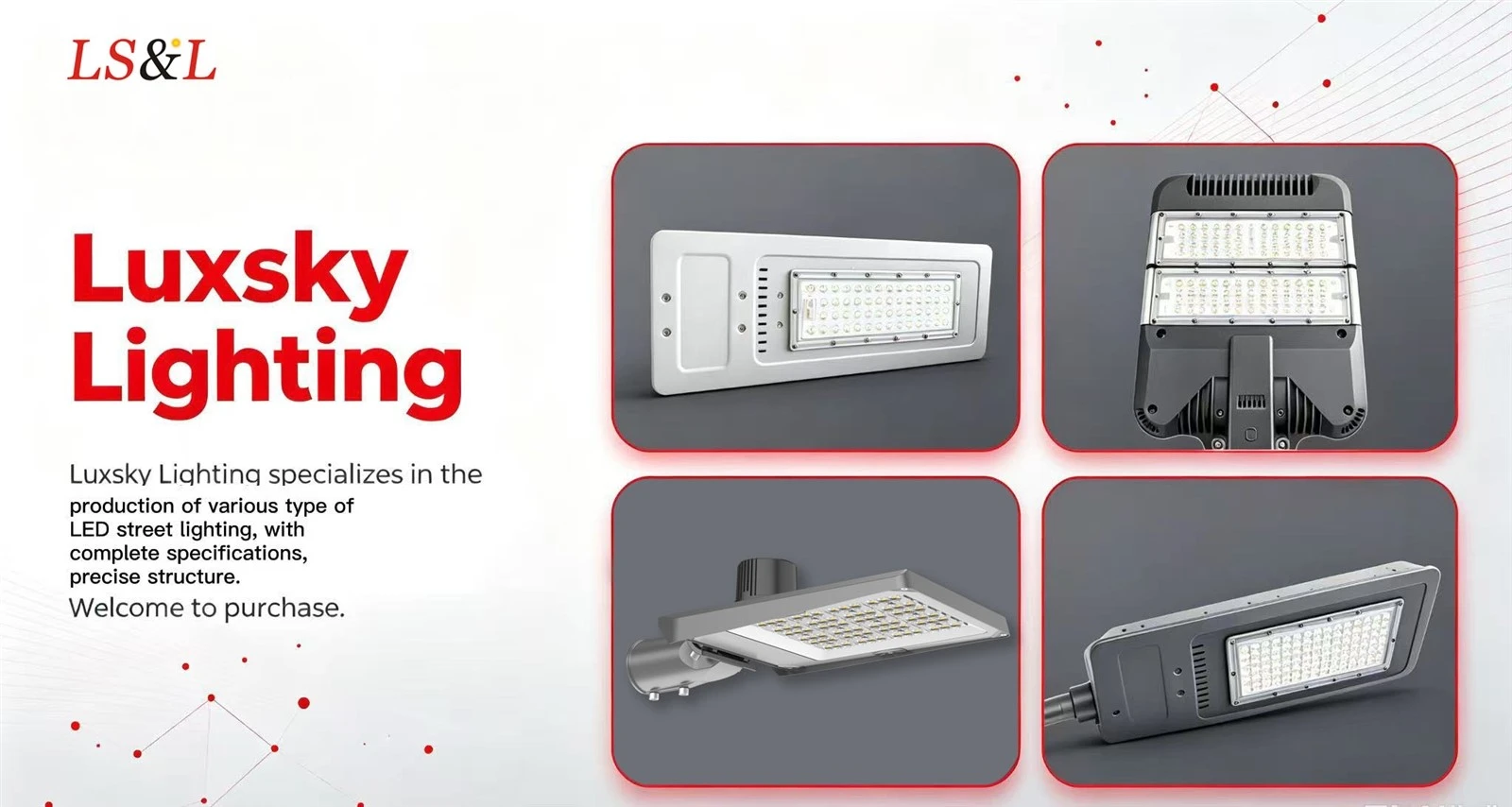
As an LED street light manufacturer with more than twelve years of export experience, I have supplied lighting to farms, logistics parks, hospitals and public roads in the Middle East, Southeast Asia, Africa and South America. Some buyers ask me: "A street light is a street light. Why not use the same model as the city road?" My honest answer is that the product may look similar, but the working environment is very different. A city road is built for traffic flow and clean air. A farm is built for work, dust, animals and long distances. Here are the main differences.
Lighting Goal: Traffic Flow vs Working Safety
City roads serve fast, continuous traffic, so lights are designed for long spacing, high poles and wide coverage, often with 100W to 250W fixtures at 8 to 12 meters. A farm has slow tractors, trucks, workers on foot and animals. The goal is clear vision at low speed and safe work around barns, yards and paths. For this reason, LED street lights for farms usually use lower poles of 4 to 8 meters and moderate wattage, with the light placed where work actually happens.
Tougher Environment
City lights face traffic fumes and rain. Farm lights face dust, humidity, ammonia from livestock, fertilizer, pesticide spray, strong sun and heavy rain. These conditions attack seals, coatings and drivers. I recommend IP66 or higher, IK08 impact resistance, a UV-resistant lens and an anti-corrosion coating. Poor housings in a barn area often fail within a year or two.
Glare, Animals and Light Control
In a city, some spill light is normal. On a farm, sudden strong light can disturb livestock, and light shining into barns or neighboring houses causes problems. Use cut-off optics, keep the tilt near zero degrees and choose Type IV or Type V beams for open yards. A driver can also be dazzled, even for two seconds, so low glare helps tractor and truck safety as well. Check the layout with a DIALux simulation using real IES files.
Power Supply and Smart Control
City roads have stable grid power. Farms often have long cable runs, limited capacity or even no grid at all, so energy efficiency matters more. Quality LEDs already save about 50% to 70% electricity compared with old sodium or metal halide lamps. Motion sensors, photocells and dimming add more savings on quiet paths and fence lines, and solar versions can suit remote areas. Lightning is also common in open fields, so choose surge protection of 6kV to 10kV and proper grounding. These values are general references, so follow your local standard.
Maintenance and Supplier Support
A farm is often far from town, so a failed light costs time and a lift or crew. Replacing one fixture on a 6-meter pole means hiring equipment and stopping work, so I suggest an LED lighting supplier with 5 year warranty and a real factory behind it. As an LED lighting OEM manufacturer, we also customize wattage, beam angle, color temperature and branding for project buyers and distributors. Our quality standard includes:
- Branded LED chips and drivers, 100% aging test before packing
- Die-cast aluminum housing, IP66 / IK08, 6kV to 10kV surge protection, CE and RoHS certified, with real IES files and test reports for DIALux design
When a customer asks me for a 5-year warranty, I can say yes with confidence, because we test before shipment, not after complaints.
Conclusion
Farm street lights differ from city road lights in their goals, environment, light control, power needs and maintenance demands. Our LED street lights are built with strict quality control, so they stay bright, stable and dependable for years.
If you are planning a new farm project or upgrading an old one, choose Luxsky Lighting. Contact us today for a free DIALux layout and a competitive quote.