

Confused by different mounting types? Choosing the wrong option can lead to delays, rework, and unexpected costs. Understanding the fundamental difference helps ensure the correct fixture is specified from the very beginning.
The core distinction lies in how the light is installed. Surface mounted fixtures are fixed directly onto the ceiling surface. Recessed mounted fixtures are installed into the ceiling and sit flush with it. Because of this, recessed lights require space above the ceiling, while surface mounted lights do not. This makes surface mounted lighting a practical solution for solid or concrete ceilings where cutting is not possible.
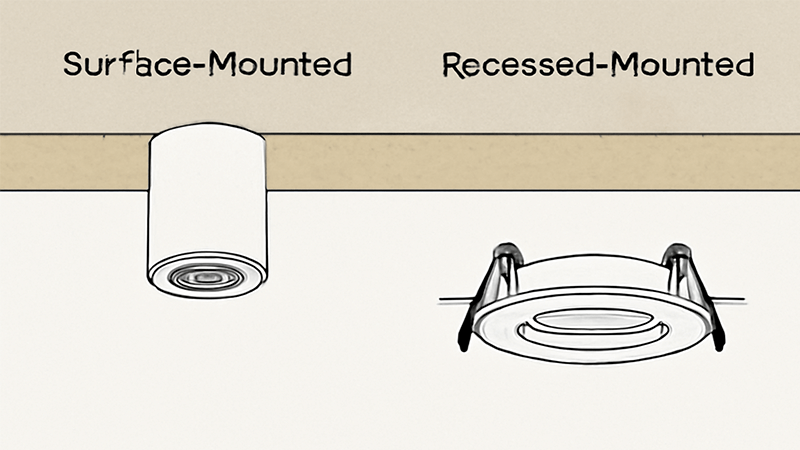
In real projects, this difference often determines whether a lighting plan can be executed smoothly. We frequently see cases where recessed downlights are selected early on, only to later discover that parts of the building use solid concrete ceilings. When this happens, the specification must be adjusted to a surface mounted alternative that still meets the original lighting requirements. This reinforces an important principle in lighting planning: confirming the ceiling structure early is essential for keeping a project on track.
Installation Requirements
Installation method is the most important factor separating surface mounted and recessed mounted lighting, as it directly affects construction conditions, installation time, and overall cost.
Surface mounted lights are installed by fixing a mounting plate directly onto the ceiling surface, connecting the wiring, and securing the fixture in place. This process is straightforward and does not require cutting into the ceiling, making it well suited for retrofit projects and buildings with solid ceilings.
Recessed mounted lights require a cut-out in the ceiling, typically in plasterboard or ceiling tiles. The fixture is inserted into the opening and held in position with spring clips from above. This method requires sufficient ceiling depth to house the fixture body and allow for proper heat dissipation, which is why it is only suitable for suspended or false ceilings.
Aesthetic and Visual Impact
Beyond installation, the visual effect of each option plays a major role in the final lighting outcome.
| Feature | Surface Mounted | Recessed Mounted |
|---|---|---|
| Visual Profile | The fixture remains visible and becomes part of the interior design | The fixture body is hidden, with only the trim visible |
| Ceiling Appearance | Creates a layered, modern look with visible elements | Results in a clean, seamless ceiling surface |
| Design Style | Common in industrial, modern, and minimalist spaces | Widely used in contemporary and traditional interiors for a discreet look |
Ultimately, the choice between surface mounted and recessed mounted lighting depends on both the building structure and the desired visual effect. Solid ceilings naturally call for surface mounted solutions, while suspended ceilings allow more flexibility based on design intent. Understanding this difference early helps avoid costly changes later and ensures a smoother project process.

Luxsky Lighting offers both high-quality surface mounted and recessed mounted downlights, designed to suit different ceiling structures and project requirements. If you are interested, please click https://www.luxsky-light.com/led-ceiling-lights/4-5-6-8-frosted-cover-led-recessed-down.html for more details.





