

In night road lighting design, glare is one of the key factors affecting driving safety. Excessive or poorly distributed lighting can reduce visual clarity, delay driver reaction time, and increase traffic risk.
In real-world engineering projects, a common issue is that brighter lighting does not always mean safer lighting. In fact, poor optical design can create stronger visual interference.
Studies show that poor lighting conditions may delay driver reaction time by about 0.5–1.5 seconds and increase nighttime accident risk by 20%–60%.This leads to the key question: what lighting design reduces glare for drivers?

What is driving glare?
Driving glare refers to visual discomfort or reduced visibility caused by excessive brightness or improper light distribution.
It is generally classified into two types: discomfort glare, where light is irritating but visibility remains, and disability glare, where visibility is directly reduced and driving safety is affected.
Glare is commonly caused by excessive light intensity, light entering the driver's field of view, poor optical distribution design, or high blue-light content from high color temperatures.
Engineering studies show that lighting with a higher blue-light ratio can increase perceived glare by about 15%–30%, significantly affecting night driving comfort.
Lighting designs that effectively reduce glare
1. Full cut-off optical design
Full cut-off design ensures all light is directed downward, preventing upward light spill and reducing light entering the driver's line of sight.
In practical applications, this design can reduce unnecessary glare by about 30%–50%, improving lighting focus and uniformity.
2. Beam angle optimization
Proper beam angle control ensures light is concentrated on the roadway instead of spreading into unwanted areas.
Typical beam angles range from 60°–120° for urban roads, while highways require narrower beams for better precision.
Engineering practice shows that optimized beam angles can improve visual comfort by about 20%–35%.
3. Installation height and spacing control
Installation parameters have a direct impact on glare performance.
Low mounting height may cause direct glare, while excessive height may reduce uniformity. Improper spacing can also create alternating bright and dark zones that increase visual fatigue.
Typical recommendations are 6–10 meters for urban roads and 10–15 meters for highways.
Proper installation significantly improves visual continuity and driving comfort.
4. Appropriate color temperature selection (4000K optimal balance)
Color temperature strongly influences glare perception.
3000K is softer but less bright, 5000K and above are brighter but contain more blue light and higher glare risk, while 4000K is widely considered the optimal balance for urban roads.
In multiple projects, 4000K lighting has been shown to reduce visual fatigue by about 20%–30% while maintaining good road recognition performance.
5. UGR (Unified Glare Rating) control
UGR is a key metric for evaluating glare levels; lower values indicate better visual comfort.
In road lighting, a UGR below 19 is generally considered comfortable for drivers.
High-quality LED street lights reduce UGR through optimized optical design and light distribution control.
Improving glare control through luminaire selection
Beyond design parameters, luminaire quality also plays a critical role in glare reduction.
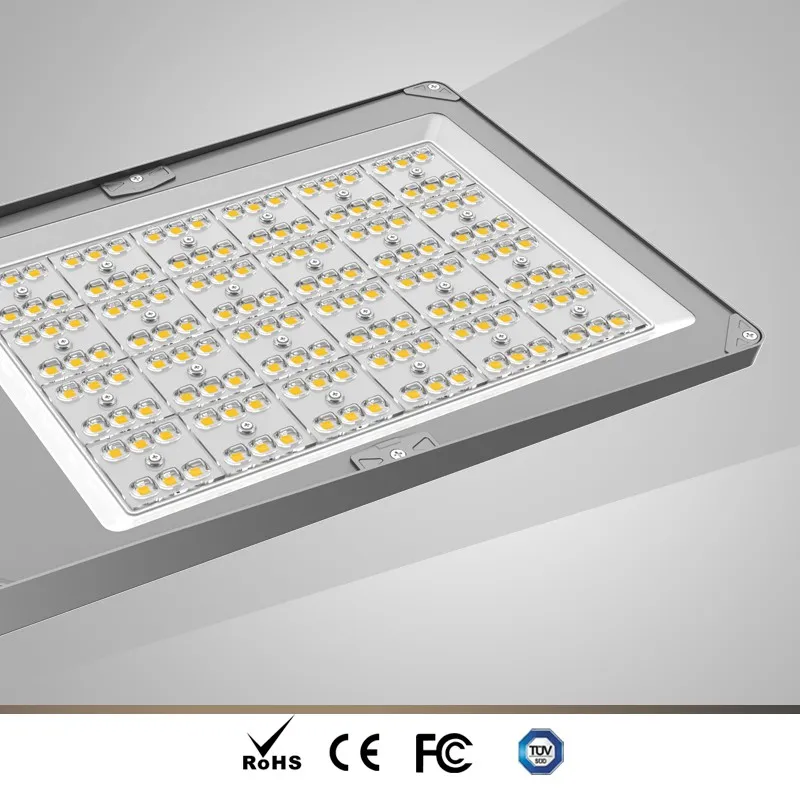
High-quality LED street lights use advanced optical lens systems to achieve more uniform light distribution and reduce unwanted scatter.
Stable driver systems are equally important, as current fluctuations can cause light instability and increase visual fatigue. Stable drivers can reduce discomfort by approximately 15%–25%.
Anti-glare lens technologies such as honeycomb or micro-prism structures further improve light direction control.
In procurement, selecting a capable LED street light supplier China or a reliable LED street light factory is essential, as professional suppliers can provide IES files, Dialux simulations, and customized optical designs.
Products compliant with CE and RoHS standards also ensure long-term optical stability and safety performance.
FAQ
Q1:What causes glare in street lighting?
Glare is mainly caused by excessive brightness, poor optical design, or incorrect installation angles.
Q2:How do you reduce glare from LED street lights?
Through cut-off optics, optimized beam angles, proper color temperature, and correct installation design.
Q3:What is the best color temperature to reduce glare?
4000K is generally the most balanced and comfortable option.
Q4:Does higher brightness increase glare?
Yes, without proper optical control, higher brightness can increase glare risk.
The core logic of glare control in LED street lighting is shifting from simply increasing brightness to precisely managing light distribution.
Through full cut-off design, beam angle optimization, proper installation layout, and appropriate color temperature selection, glare can be significantly reduced, improving driving safety and comfort.
From an engineering perspective, an effective lighting system not only enhances visibility but also reduces driver fatigue and accident risk, contributing to safer and more efficient urban transportation systems.
If you are looking for reliable LED street lighting solutions, welcome to contact us for more details. Please click https://www.luxsky-light.com/led-street-lights/.





