

When designing lighting for food-processing workshops, one of the most common questions is what illuminance level is appropriate. Set it too high and energy is wasted; set it too low and both operational accuracy and quality judgement suffer. Different processes have different needs, so a single figure does not work for every zone. Here is a practical summary based on common standards and project experience.
General processing areas typically need 200–300 lux
For routine tasks such as raw-material handling, sorting, cutting and conveying, this range lets staff see the work surface and equipment status clearly without over-lighting. Uniformity matters more than simply raising the average-avoid bright centres with dark edges or heavy shadows under equipment.
Fine inspection and packing benefit from higher levels
Visual inspection, foreign-body checks and label verification usually require 300–500 lux, with selected spots even higher if needed. Clear brightness helps reduce misjudgement.
Choosing tri proof lights with even light distribution makes it easier to hold illuminance within the target range while coping with the humid workshop environment.
Wash-down zones must balance brightness and protection
These areas are humid and frequently rinsed. Illuminance can follow the general-processing range, yet the fixtures must be reliably waterproof.
A robust LED tri proof lamp provides the necessary light level while lowering the risk of failures caused by water ingress.
Storage and corridors can be lower
Raw-material and finished-goods stores mainly need recognition and safe passage, so 150–200 lux is often sufficient. Corridors only require basic visibility; strong contrasts between light and dark should still be avoided.
Ceiling height and fixture type also influence the result
Greater mounting height reduces the illuminance that reaches the floor, so lumen output or spacing may need adjustment. Food plants must also meet hygiene and waterproof requirements.
A weatherproof LED light that is easy to clean and properly protected helps maintain the design illuminance over the long term.
There is no single mandatory global figure, yet the ranges above are widely validated in food-processing projects and receive consistent positive feedback. Setting targets by process, then matching them with suitable fixtures and layout, produces lighting that is both practical and energy-efficient.
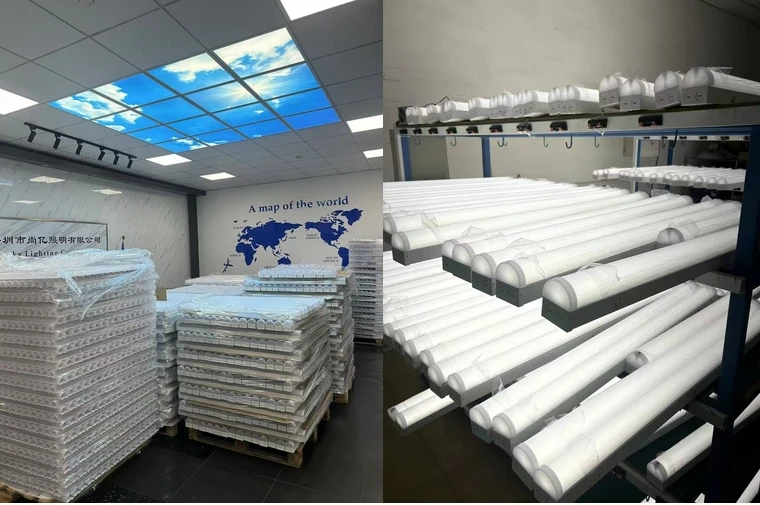
If you are establishing illuminance standards or upgrading lighting in a food workshop, share the main processes and ceiling height. I can help identify a suitable range based on experience. When the targets are set correctly, both performance and energy use improve.





