

Food-processing workshops place higher safety demands on lighting than ordinary plants. Fixtures must prevent electric shock and fire, avoid fragmentation that could contaminate product, and withstand humid, wash-down conditions. Focusing only on brightness and price easily overlooks these critical points. Here are the main safety requirements based on practical experience.
Electrical safety is the foundation
Fixtures must provide reliable insulation and earthing to prevent leakage. High humidity in food plants amplifies electrical risks. Confirm that products carry relevant safety certifications and have complete insulation and withstand-voltage test records.
Protection rating must match wet-zone conditions
Routine wash-down and persistent humidity require adequate dust and water resistance. For most food-processing areas, IP65 handles splashing and damp air.
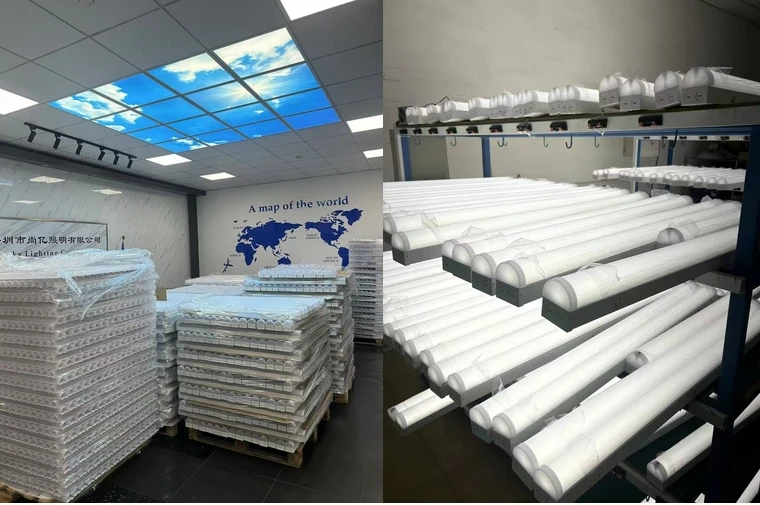
Selecting a well-constructed LED tri proof light reduces the risk of short circuits and electric shock caused by water ingress.
Prevention of foreign-body contamination
If a fixture breaks, fragments must not fall into food or equipment. Prefer cover materials that resist shattering and ensure the housing remains intact.
When a weatherproof LED batten light is used above production lines, a robust enclosure helps limit contamination risk from accidental damage.
Material and hygiene compatibility
Housings and gaskets should tolerate common cleaning agents. Surfaces ought to be smooth with minimal crevices so they are easy to clean and do not collect residue. Avoid materials that age quickly or shed particles, as these can affect workshop hygiene.
Safe installation and maintenance
Fixings must be secure to prevent fixtures from loosening or falling. Cable entries need proper sealing and earthing must be reliable.
Even a product that meets the standard of an IP65 LED tri proof light can leave safety hazards if installation is careless. Always isolate power during maintenance and keep adequate access for inspection.
Emergency lighting must not be overlooked
Basic illumination is required for evacuation and emergency response during power loss. Emergency lights should also offer matching water resistance and reliable change-over so they remain available when needed.
The core safety requirements for food-processing LED lights are reliable electrics, adequate protection, contamination prevention and ease of safe maintenance. When these are met, workshop lighting is both practical and secure.
If you are selecting lights for a food plant or checking whether existing fixtures meet safety expectations, share the main zones and cleaning methods. I can help review the key points against your conditions. Once safety requirements are satisfied, everyday use becomes far more reassuring.





