When working on port lighting projects, one of the most frequent questions I hear from clients is: "How far apart should the poles actually be?" Spacing that is too close wastes money; spacing that is too far creates blind spots and fails to meet uniformity requirements. Port roads are wider, vehicles are heavier, and operating hours are longer-once the spacing is calculated incorrectly, the cost of later rework becomes very high. As someone who has been exporting LED engineering lighting for more than a decade, I'll explain the practical considerations for installation spacing of port LED street lights based on real project experience.
Why Spacing Matters Especially in Ports
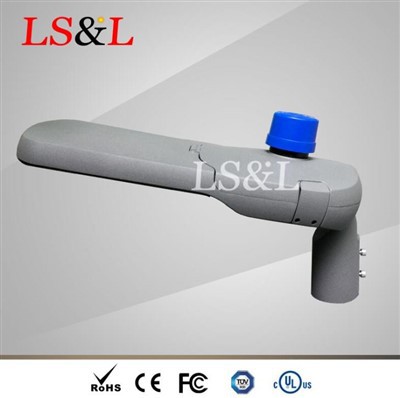
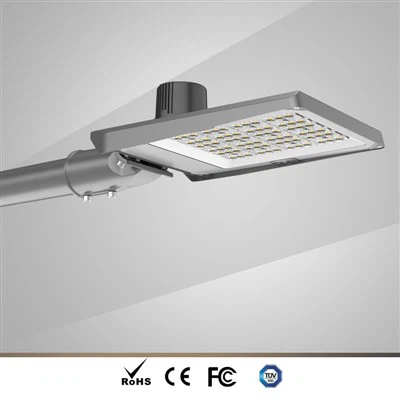
The port environment differs significantly from ordinary city roads: pavements are often wider, containers and cargo stacks easily block light, and nighttime operations demand higher illuminance and uniformity. Excessive spacing creates dark bands in the middle; spacing that is too tight keeps the road bright but increases the number of poles, raising both initial investment and long-term maintenance costs. The right spacing must balance safety, energy efficiency, and long-term stability. This is exactly where high-quality roadway LED lighting and Smart outdoor light products prove their value.
Key Factors That Affect Installation Spacing
There is no single fixed number that fits every port project. The main factors include:
Pole height
Main port roads commonly use poles of 8–12 meters. As a rule of thumb, spacing is usually kept at 3–4 times the pole height. For a 10-meter pole, a spacing of roughly 30–40 meters is often reasonable.
Road width and light distribution type
Narrow roads (6–9 m) often use T2 distribution and can tolerate slightly larger spacing. Main roads of 12–18 m prefer T3, where spacing needs more precise calculation. Extra-wide roads or yard ring roads exceeding 20 m benefit from T4 distribution combined with appropriate height to maintain coverage at greater distances.
Required illuminance and uniformity
Port roads typically need to meet specific average illuminance levels while keeping uniformity within acceptable limits. When spacing is increased, insufficient lumen output or poor optical design causes uniformity to drop rapidly.
Actual luminous efficacy and optical stability of the fixtures
Lamps of the same wattage can have very different effective lighting distances depending on optical design. Only products manufactured under strict quality control can ensure that the photometric curve remains consistent on site over the long term.
Common Reference Ranges (for preliminary guidance only)
Narrow roads and access lanes (single-sided mounting): 8–10 m poles, spacing approximately 25–35 m.
Main port roads and entry/exit routes: 10–12 m poles, spacing approximately 30–40 m.
Extra-wide roads or large yard ring roads: depending on T4 distribution and actual height, spacing may be adjusted to 35–45 m, but must still be verified with illuminance calculations.
These figures are only experiential references. Before finalizing any project, proper illuminance simulation and on-site confirmation are essential. Blindly applying fixed numbers often leads to problems.
How to Determine the Correct Spacing
The best approach is to first clarify road width, target illuminance, and pole height, then select the matching light distribution (T2/T3/T4), and finally run professional simulation software. At the same time, choose fixtures with low lumen depreciation and stable optics so that the designed spacing remains effective throughout the service life. Having specialized in Strict quality control LED engineering lighting for many years, we perform photometric testing and aging verification on every batch. This ensures the fixtures customers receive perform on site exactly as designed and will not lose effectiveness later due to optical degradation.
Many port clients initially stretch the spacing to save money, only to find obvious dark zones after six months and then have to add poles or replace fixtures. The later cost ends up higher. Selecting the right fixtures and calculating spacing accurately is the real way to save money.
Conclusion
There is no absolute fixed value for the installation spacing of port LED street lights. The key is to calculate comprehensively based on pole height, road width, light distribution type, and illuminance requirements. Proper spacing avoids blind spots, improves uniformity, and controls costs. High-quality fixtures with stable light distribution form the foundation for keeping that spacing effective over the long term.
If you are currently planning a port street lighting project or would like to verify whether existing spacing is appropriate, feel free to contact us at any time. Luxsky Lighting specializes in high-quality LED engineering lighting exports, with strict quality control, precise light distribution, and fast after-sales response. Need spacing recommendations, a lighting plan, or samples? Just let me know-we'll get the solution right together.