

When purchasing LED lights for supermarkets, do not judge fixtures merely by appearance and unit price. With years of experience in lighting foreign trade, I've seen many projects face rework and extra costs because the protection rating and illuminance failed to match site conditions after goods arrival. Supermarket sales floors, backrooms and cold storage have distinct operating environments. Before placing orders, go through the key checks listed below one by one.
1. Verify Site Conditions and Ingress Protection Rating
Classify installation zones first. Sales aisles have low dust resistance requirements, while backrooms and fresh food areas contain high moisture and dust, requiring fixtures with reliable protection. Weatherproof lights work well in humid and dusty zones. Confirm the IP rating marked on the nameplate is verifiable, instead of trusting verbal claims. Fresh food zones undergo frequent floor washing. Fixtures with insufficient protection tend to suffer driver damage quickly due to water ingress.
2. Check Optical Parameters and Illumination Plan
When reviewing samples or datasheets, focus on luminous flux, color temperature and CRI. Fresh food areas demand a high CRI to display food colors accurately, while storage zones require adequate brightness. Before ordering the LED tri proof light, ask your supplier for a lighting simulation report to verify if the fixture spacing can reach the designed lux level. Judging brightness only by wattage is one of the most common mistakes made by overseas buyers.
3. Component Quality and Structural Inspection
Inspect internal components by examining samples, paying attention to LED chips, power drivers and sealing gaskets. Poor-quality drivers may cause flickering under voltage fluctuations and bring safety risks. For the IP65 LED tri proof light, housing, buckles and sealing gaskets determine its long-term waterproof and dustproof performance. Check the material of plastic housings. Inferior materials turn yellow and brittle quickly, weakening protection performance.
4. Certifications, Warranty and After-sales Terms
Check complete certifications including CE and RoHS, and ensure the model number on certificates matches your ordered fixtures. Put warranty duration, RMA procedures and fault assessment standards into contracts. For emergency lights, confirm the battery warranty period separately. Many suppliers promise long warranty verbally but refuse responsibility once bulk goods fail, pushing up maintenance costs later in the project.
5. Sample Testing and Bulk Consistency
Run ageing tests on samples before mass orders. Keep the lights powered continuously for 72 hours and monitor temperature rise, flickering and brightness variation. Clearly require consistency between samples and bulk products; this is a major risk for foreign trade projects. Some suppliers use premium components for samples but switch to cheap parts in mass production, leading to widespread failures after delivery.
Supermarket lighting projects involve large quantities of fixtures. Wrong selection leads to time-consuming and costly rework. Full pre-order checks ensure stable fixture operation and reduce total project lifecycle costs.
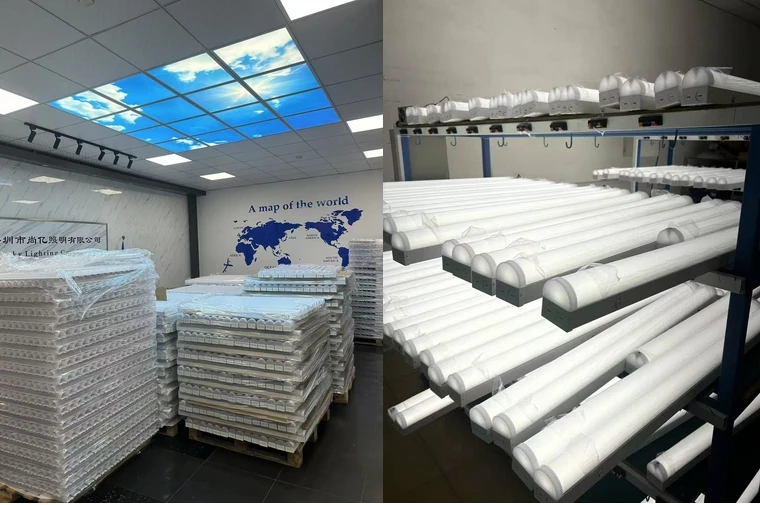
If you are preparing LED lighting procurement for a supermarket, send over your site layout and environmental conditions. I can verify parameters and recommend suitable lighting solutions for you.





